
Last updated September 20, 2026
Free on-site gate assessment - hinges, posts, and your LiftMaster or Nice gate operator checked before anything is quoted
The assessment is free and the quote is the invoice.



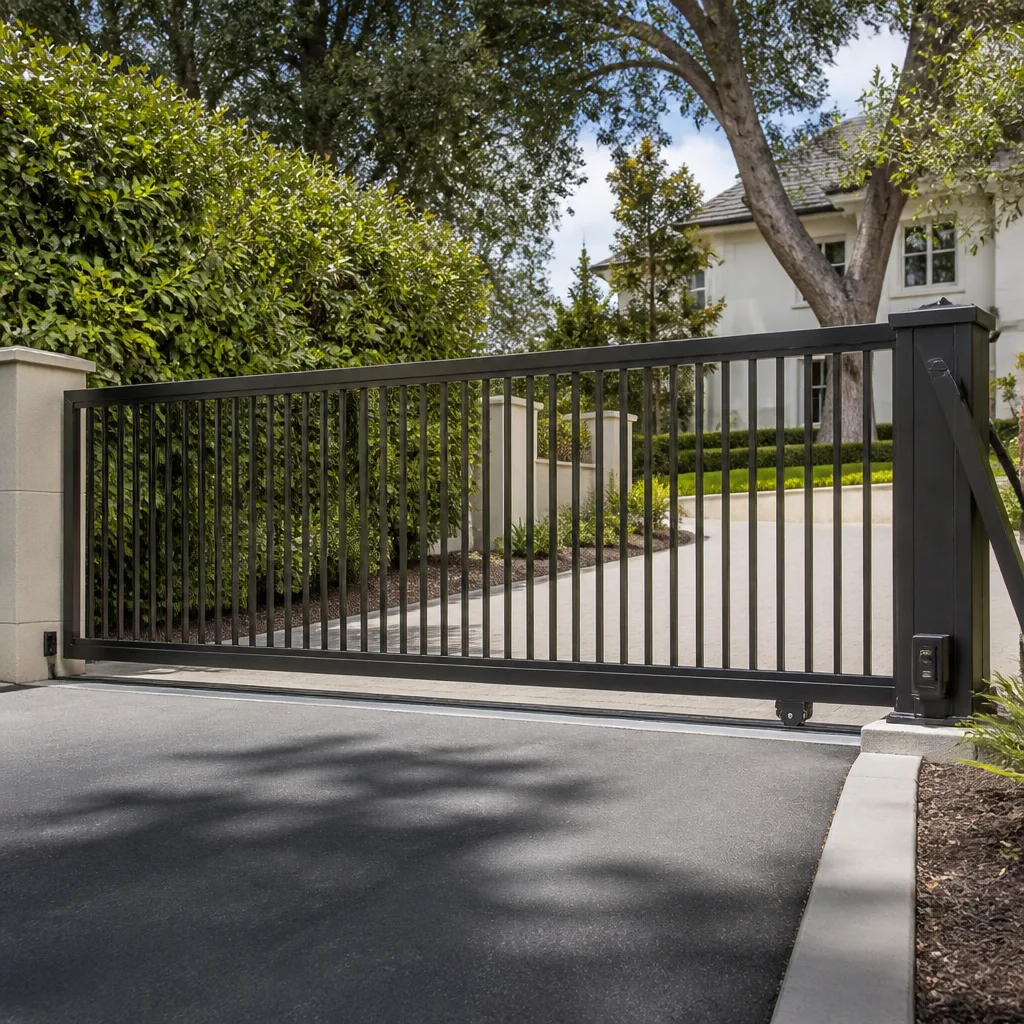
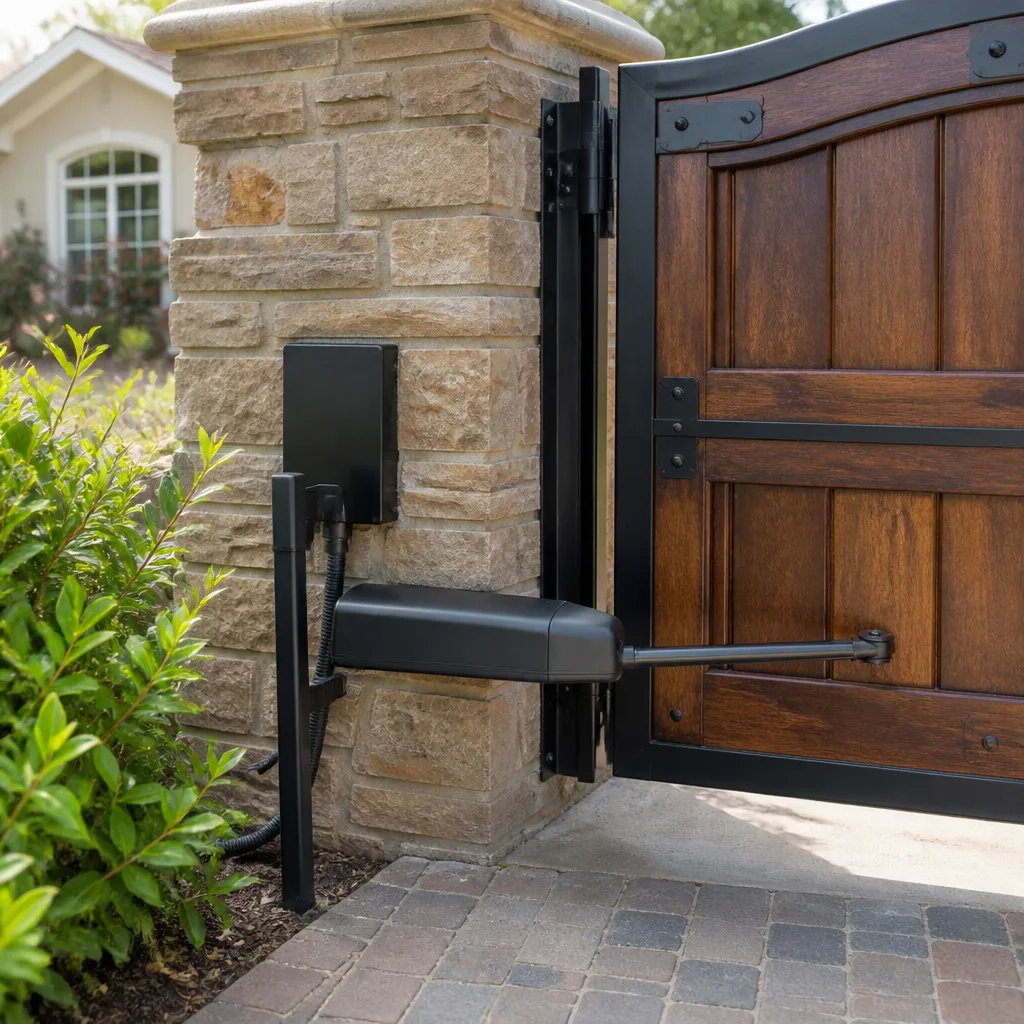
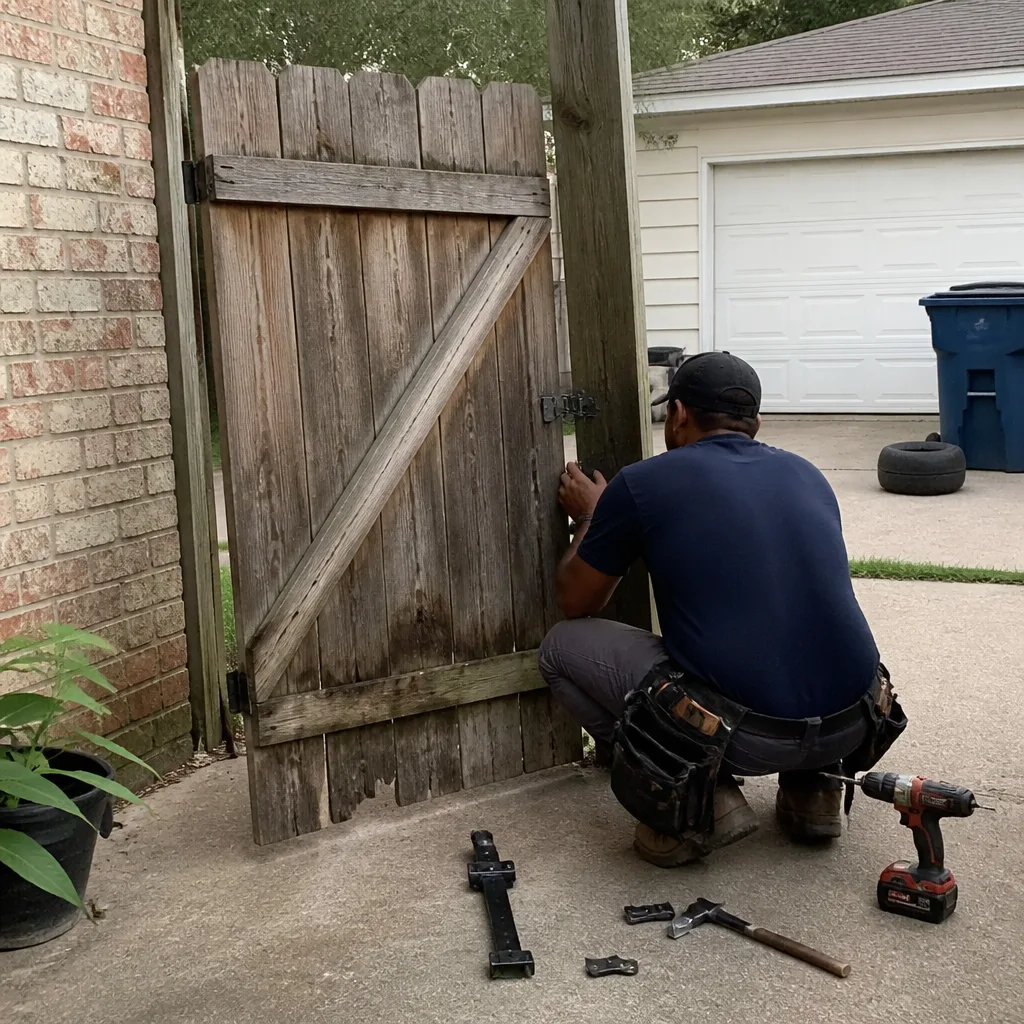 Before
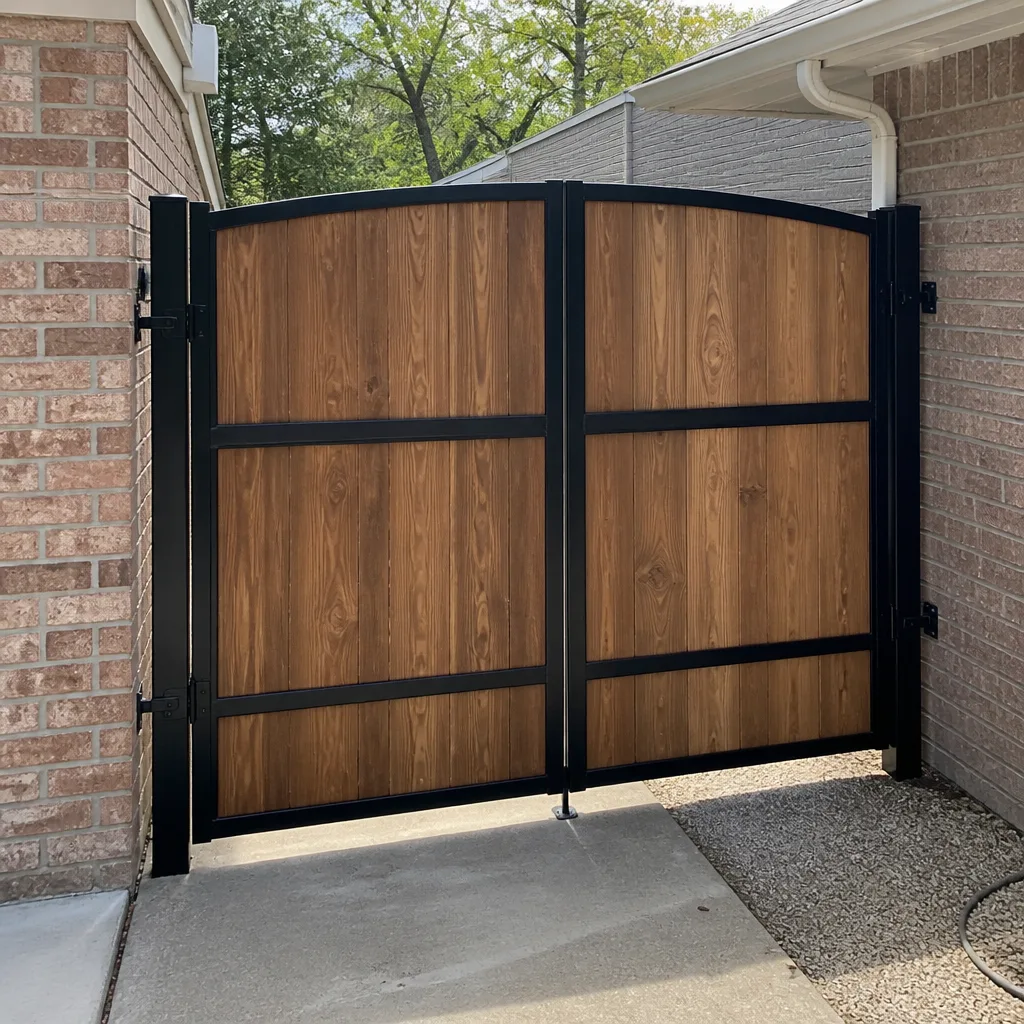 After
After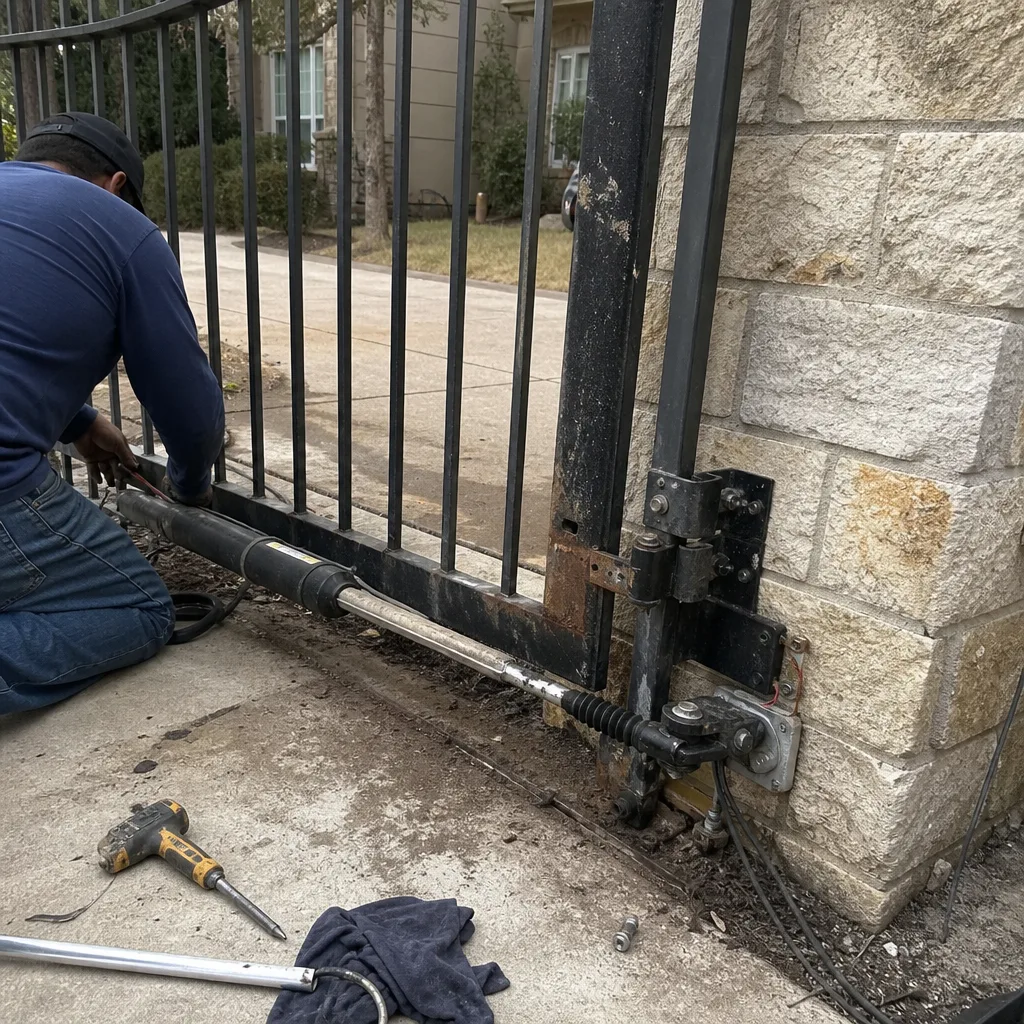 Before
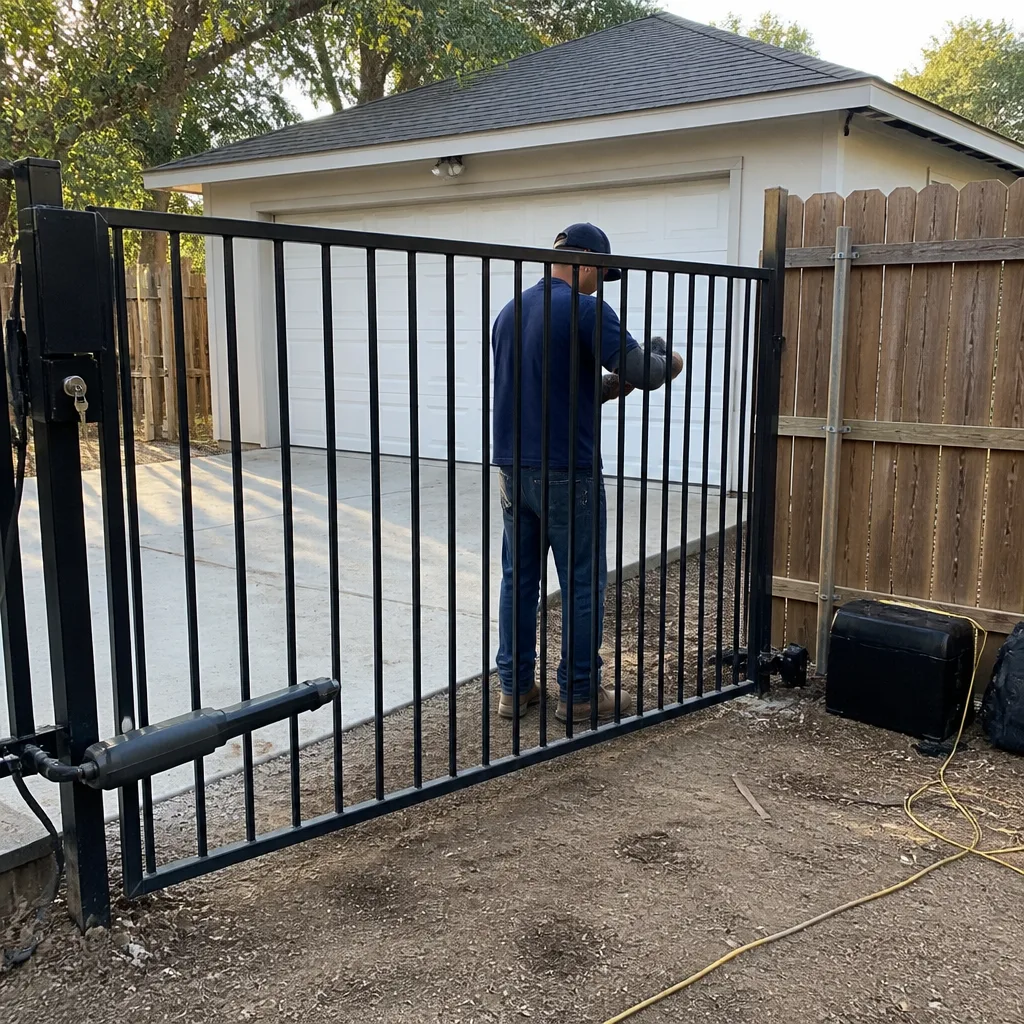 After
After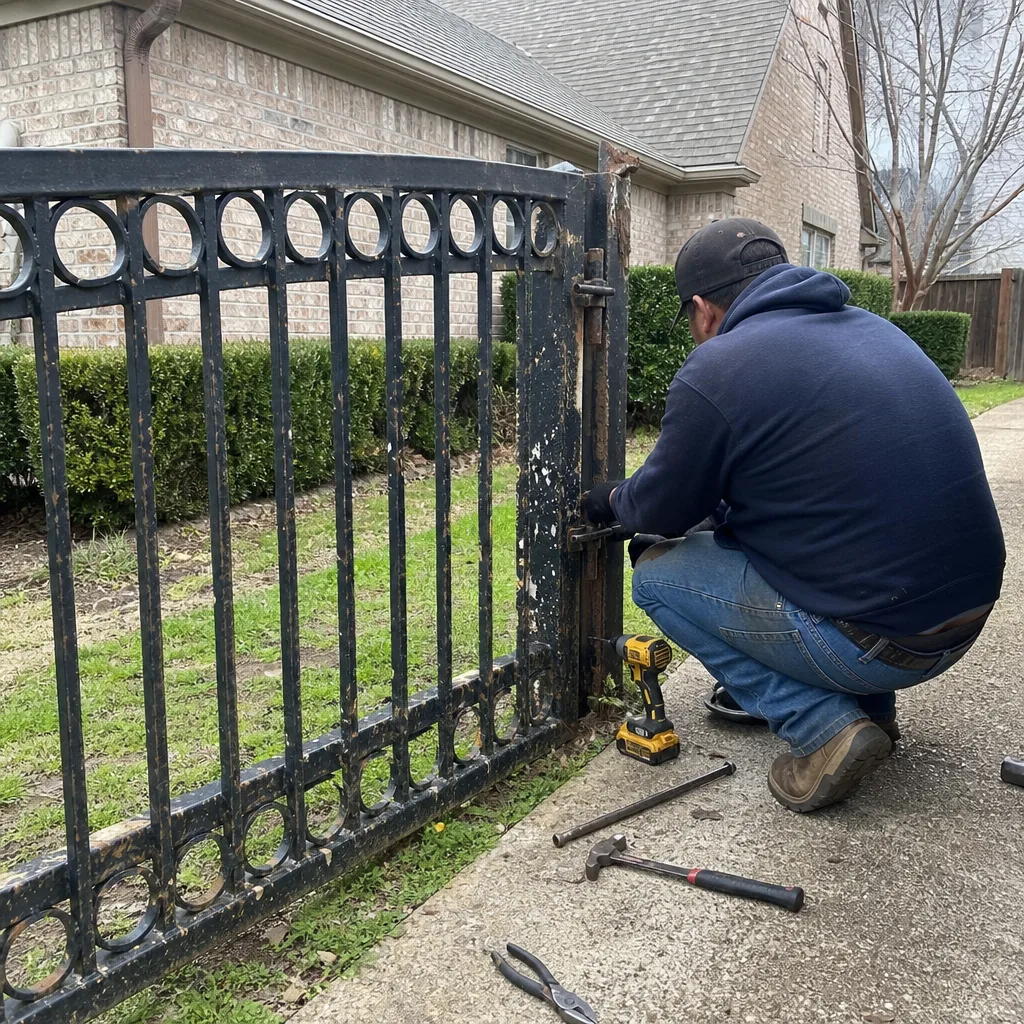 Before
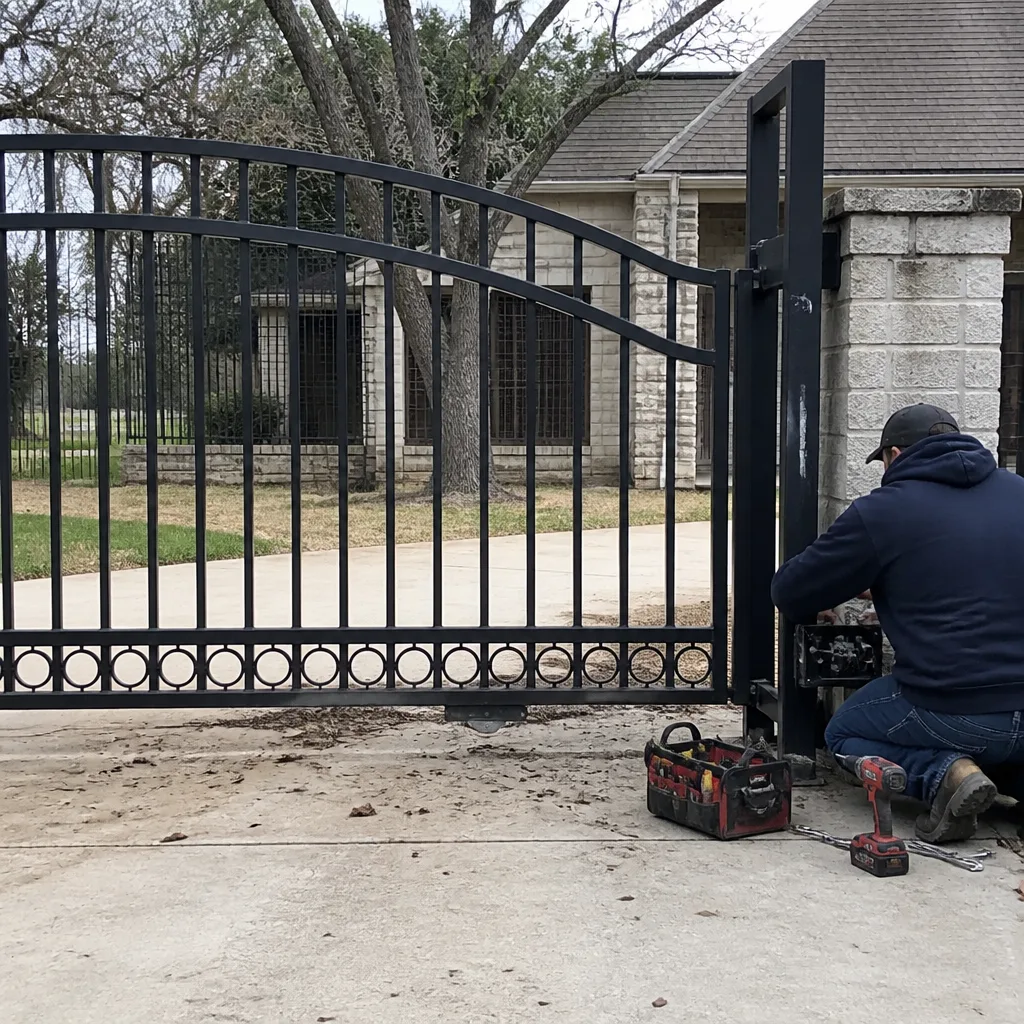 After
AfterGate Repair Permits, Codes & Inspections in TX: What You Need to Know
A swing gate motor swap in Mesquite doesn’t require a permit. Relocating that same gate’s post more than 12 inches almost certainly does. The line between routine repair and permitted construction is narrow, poorly marked, and expensive to cross in the wrong direction. This guide maps that line in plain English so you know exactly what your gate project needs before you spend a dollar. We’ll cover municipal code in Mesquite and Dallas County, HOA covenants that override city minimums, the UL 325 safety standard that governs every automated gate in Texas, and what a municipal inspector actually checks when permitted work is done. If you own a gate in Mesquite, this is the documentation you should have had the day you bought the house.
Quick Answer
Most residential gate repairs in Texas, including motor replacement, hinge welding, and control board service, do not require a city permit. A permit is generally required when the work changes the gate’s footprint, structure, or electrical supply: relocating a post, pouring new concrete footings larger than the original, adding a new electrical branch circuit, or installing a gate opener on a gate that never had one. Before any permitted work starts, the contractor must file with the City of Mesquite Building Inspections Division, and any automated gate operator installed or modified must comply with UL 325 safety standards.
Table of Contents
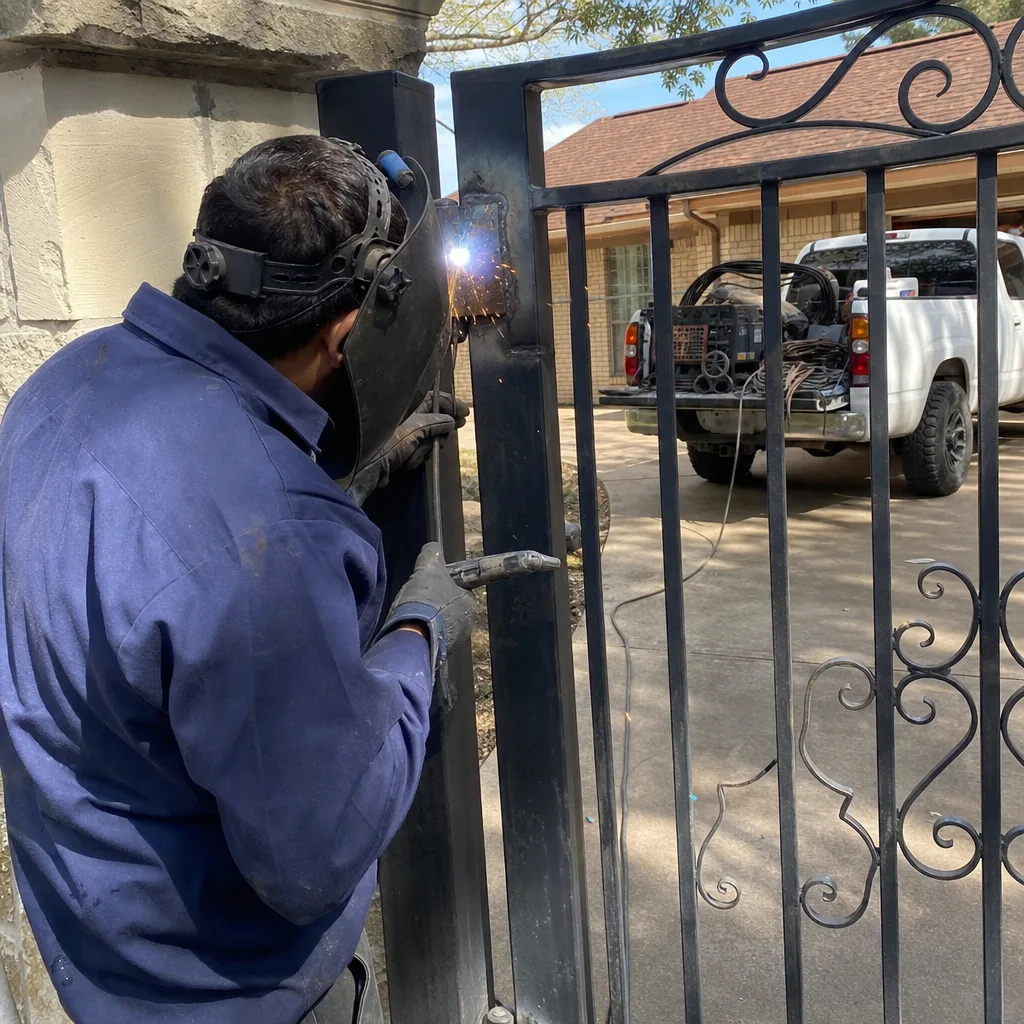
- What Gate Repairs Actually Need a Permit in Mesquite
- What Repairs Don’t Need a Permit (The Full List)
- The Electrical Line Only a Master Electrician Can Cross
- HOA Covenants on Top of City Code: The Post-2005 Mesquite Pattern
- How to Confirm a Contractor Pulled a Permit (And Who Pays When They Didn’t)
- UL 325 Compliance: The Safety Standard Behind Every Texas Gate Opener
- The Inspection Process After Permitted Work: What the Inspector Checks
- Common Mistakes to Avoid
- When to Call a Professional
- Frequently Asked Questions
- The Bottom Line
BeforeAfterWhat Gate Repairs Actually Need a Permit in Mesquite
The City of Mesquite adopts the International Residential Code (IRC) with local amendments. Under the IRC, a building permit is required for any work that alters the structure, footprint, or foundation of a gate installation. The trigger language is structural alteration. Replacing a hinge is not structural. Digging out a gate post and pouring a new footing is. The municipal code does not have a section titled “gates,” so gate work falls under general building, electrical, and concrete provisions. Mesquite’s Building Inspections Division enforces the same permit triggers for a driveway gate as for a fence, a patio cover, or a retaining wall.
Here is the practical list of gate repairs that trigger a city permit in Mesquite:
- Relocating a gate post 12 inches or more from its original position. The 12-inch threshold is the commonly cited rule for “in-kind” repair versus new construction. Under 12 inches is a repair. Over 12 inches is a new installation, which requires a permit.
- Pouring new concrete footings or piers that exceed the volume of the original footing. Any excavation below grade that introduces new concrete is treated as new foundation work.
- Adding a new electrical branch circuit to power a gate opener, intercom, keypad, or loop detector. This is an electrical permit, not a building permit, and it falls under Mesquite’s adopted National Electrical Code (NEC).
- Adding a gate opener to a gate that has never had one. This is the most commonly missed permit trigger. A manual gate converting to an automated gate is a new installation under UL 325 and requires both an electrical permit for the power supply and, in many cases, a building permit for the operator arm mounting if new concrete is poured.
- Widening a driveway gate opening by moving one or both posts. This changes the setbacks from the street and potentially the right-of-way line, which is exactly the kind of work the city wants to inspect.
- Installing a new gate where none existed - a brand-new gate across a driveway that was previously open. This is a new structure and a permit is required.
If your gate repair falls into any of these categories, the contractor’s first job is to file a permit application with the City of Mesquite before any excavation or concrete work begins. If they suggest skipping it “to save time,” keep reading. The liability section below explains who eats the cost when that shortcut goes wrong.
What Repairs Don’t Need a Permit (The Full List)
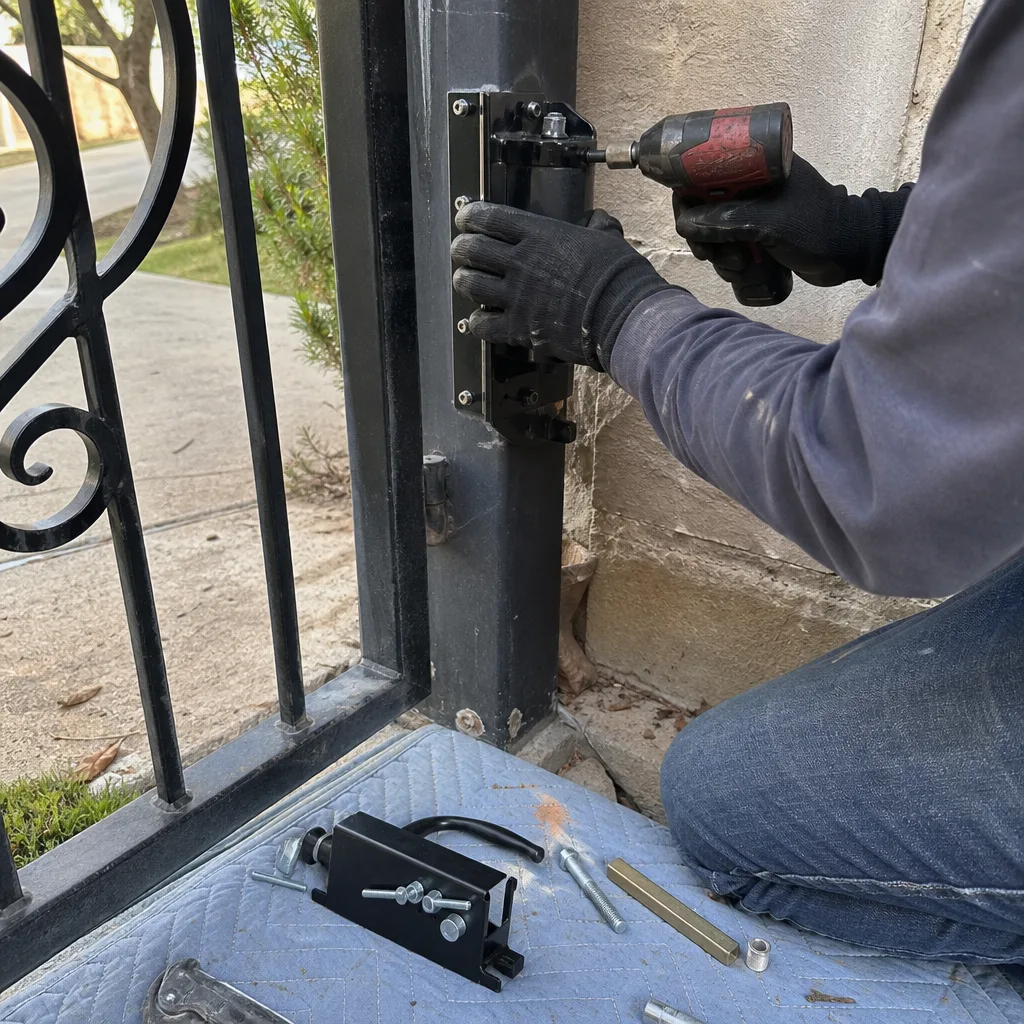
Most of what we do at Vance Gate Repair in Mesquite on a weekly basis falls squarely in the no-permit column. Here is the complete list of gate repairs that do not require a permit in Mesquite or anywhere in Dallas County under current code:
- Gate motor or opener replacement - swapping a failed LiftMaster, Viking, Ghost Controls, or Elite operator for a new unit of the same voltage and similar draw. No permit required as long as the electrical supply is unchanged.
- Control board replacement - replacing a motor controller board, limit switch assembly, or logic board inside an existing operator enclosure.
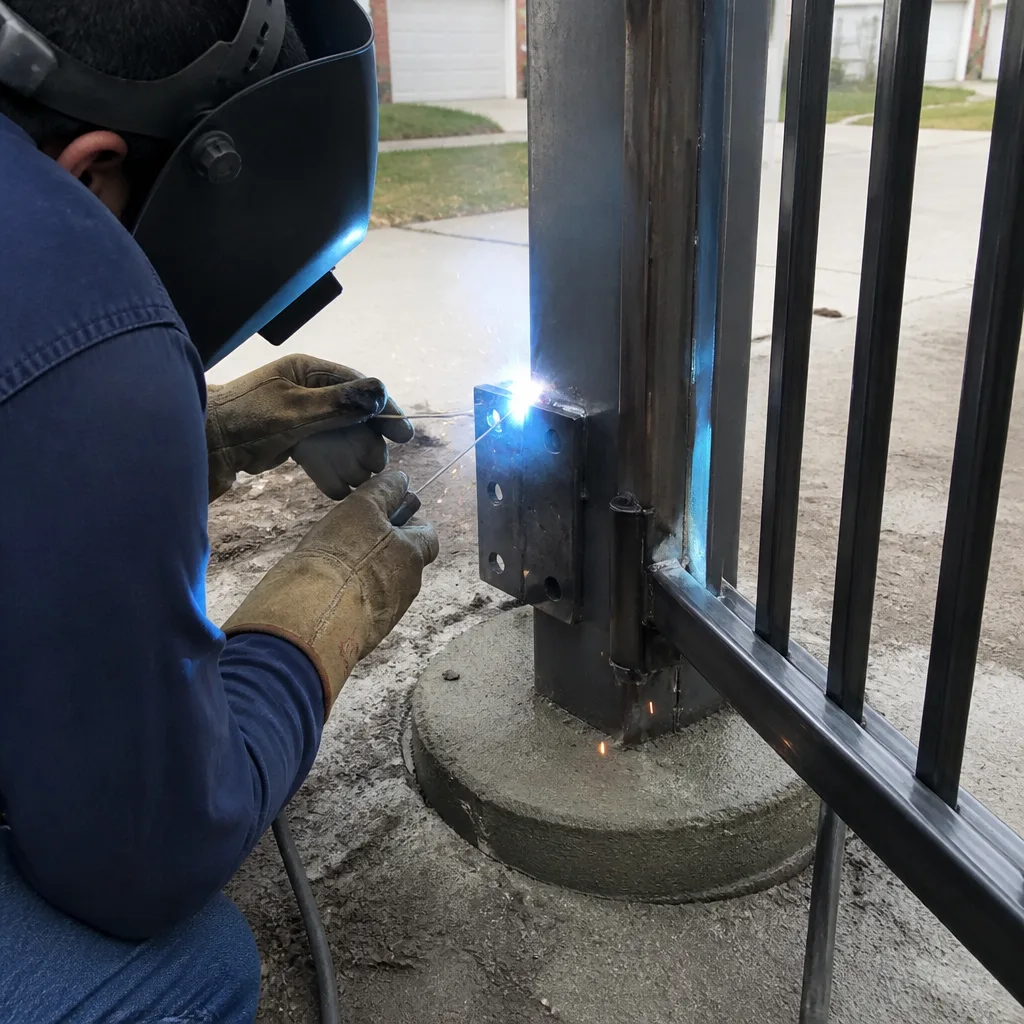
- Hinge and bracket repair or replacement - cutting out a rusted hinge and welding in a new one, or replacing arm brackets and pivot hardware. The gate structure itself is unchanged.
- Photo-eye and safety edge replacement - replacing the infrared beam that stops the gate if something crosses the path, and the pressure-sensitive safety edge strips along the leading edge. No permit required under UL 325 or Mesquite code as long as the wiring path is unchanged.
- Gate wheel or track roller replacement - replacing worn wheels, rail rollers, or cantilever guide hardware on slide gates.
- Keypad, intercom, and remote receiver replacement - any low-voltage access control component using the existing 12V or 24V wiring.
- Weld repair to the gate frame - repairing a cracked weld, re-welding a broken picket, or reinforcing a bent section of the gate leaf. Structural repair that does not change size, location, or foundation.
- Adjusting limit switches and travel stops - recalibrating the open and closed positions. This is routine maintenance, not construction.
- Battery and transformer replacement - swapping a dead backup battery or a control transformer inside an existing enclosure.
One important distinction: replacing an entire gate leaf or complete gate panel is sometimes treated as a repair and sometimes as new construction. If the new gate panel is the same size, same weight class, and connects to the same existing posts and hinges, no permit is required. If the replacement gate is taller, heavier, or longer than the original, a permit may be triggered because the wind load and structural load calculations change. In Mesquite’s clay-heavy soil, a heavier gate on old footings is a real structural concern, and that’s precisely the kind of change a building inspector exists to catch. The rule we follow: any time a replacement gate exceeds the original’s weight by more than 15 percent, call the Building Inspections Division and ask before any work is done.
The Electrical Line Only a Master Electrician Can Cross
The clearest permit trigger in gate work isn’t the gate at all. It’s the wire behind the gate. Under Texas law and Mesquite’s adopted code, any work on the line-voltage side of a gate opener electrical system (the 120V or 240V supply feeding the operator) requires a Texas-licensed electrician and, in most cases, an electrical permit. This is the line we never cross at Vance Gate Repair, and neither should any gate contractor you’re considering for motor or opener work in Mesquite.
Here’s how the electrical boundary works in practice:
- Low-voltage side (12V to 24V): Everything from the control board to the keypad, photo-eyes, loop detector, safety edges, and motor leads. A gate contractor can work on this side without an electrical permit.
- Line-voltage side (120V to 240V): The conduit from the breaker panel to the operator, the disconnect switch, the transformer input, and the outlet the operator plugs into. Any new run, extension, or modification here requires a licensed electrician and an electrical permit from the City of Mesquite.
The practical example: when we install a new automated gate opener on a gate installation in Mesquite where no power currently exists at the gate location, we cannot run the new line-voltage branch circuit ourselves. We bring in a licensed electrician we work with, the electrical permit is pulled, and that portion is inspected as electrical work. The gate operator itself, the low-voltage control wiring, and the mechanical installation are done by our gate technicians. This division of labor is what code expects, and it’s what a responsible company does. If a gate contractor offers to run the 120V line “as part of the package” and they are not a licensed electrician, walk away. That’s an unpermitted electrical installation and a safety defect the homeowner now owns.
HOA Covenants on Top of City Code: The Post-2005 Mesquite Pattern
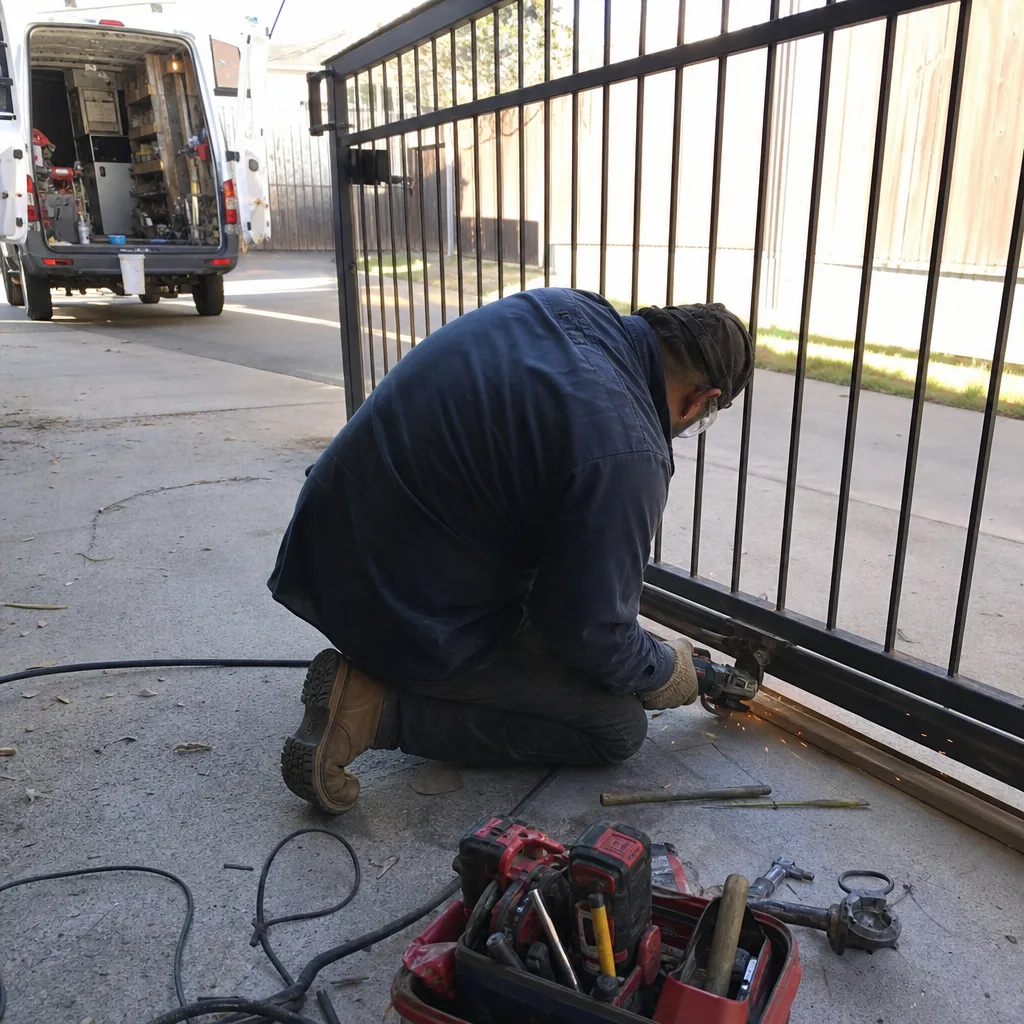
City code is the floor, not the ceiling. In Mesquite, homeowner association covenants are private contract restrictions that run with the land, and they can be stricter than city ordinance. This is not a negotiation. If your HOA’s architectural control committee (ACC) requires a 10-foot setback where the city requires 5, the 10-foot rule controls your property. If you violate it, you can be forced to move the gate at your own expense, even if the city would have approved the placement.
What we see in Mesquite neighborhoods built after 2005 is a consistent pattern: HOA gate rules that exceed city minimums in three specific areas.
- Setback from the street and sidewalk: Post-2005 covenants commonly require the gate face to sit 8 to 12 feet back from the front property line, regardless of what city code allows. This is to keep the gate from blocking the sidewalk while it swings, and to preserve the street-facing appearance of the front elevation.
- Gate height and opacity: Many Mesquite HOAs cap driveway gate height at 6 feet and require a minimum of 50 percent visual opacity (meaning you can see through at least half the gate). A solid steel panel gate that would pass city code may be a covenant violation.
- Operator and automation restrictions: Some HOAs require all automated gates to use an operator brand or model on an approved list, or to match an existing operator in a gated community. We have seen HOAs reject a Gate Operator that is perfectly compliant with UL 325 because the HOA’s approved list only included a different brand. This is why we check the covenant before we order any operator.
The process is simple: request a copy of your HOA’s current gate and fence covenants from the property manager, or pull them from the HOA portal if one exists. Read the architectural review section. Submit any planned gate modification that touches size, location, automation, or material to the ACC before any contract is signed. We do this step for our clients on Mesquite gate installation projects because the ACC approval timeline (usually 30 to 45 days) has to be built into the project schedule. Skipping this step is how homeowners end up paying to move a gate they spent $7,000 to install.
How to Confirm a Contractor Pulled a Permit (And Who Pays When They Didn’t)
The permit is a document, and documents can be checked. Here is the step-by-step verification process we recommend to any Mesquite homeowner before a gate contractor starts work that requires a permit:
- Ask for the permit number before demolition or excavation starts. If the contractor says “we’ll pull it later,” that’s a red flag. The permit must be issued before the work begins, not after.
- Call the City of Mesquite Building Inspections Division at the main city line and ask to verify a permit by number and address. The city will confirm whether a permit is active, what type it is, and what work it covers.
- Ask for a copy of the approved permit set. This is the set of plans or drawings the city stamped as approved. If the contractor can’t produce it, the permit was never pulled or the work being done doesn’t match the approved scope.
- Confirm the inspection scheduling. For permitted work, there will be at least one inspection appointment. Ask when it’s scheduled and ask for the inspection outcome in writing when it’s done.
Now for the liability question, because this is where the system bites. In Mesquite, the property owner is ultimately responsible for work done on their property, whether or not they personally pulled the permit. When a contractor performs unpermitted work and the homeowner later sells the house, the unpermitted gate installation can show up in a title search or a buyer’s inspection. The consequences stack quickly:
- Code enforcement action: The City of Mesquite can issue a stop-work order and a citation for unpermitted construction. The homeowner addresses the citation, not the contractor.
- Disclosure obligations: Under Texas Property Code, the seller must disclose known unpermitted work. Failing to do so is a misrepresentation claim.
- Appraisal and insurance complications: Unpermitted additions or modifications are often excluded from appraised value, and a homeowner’s insurance carrier may decline a claim arising from the unpermitted work.
- Liability for injuries: If an unpermitted gate installation fails and injures someone, the homeowner’s liability exposure increases significantly because the work was never inspected. The contractor’s liability insurance may also decline coverage for work done illegally.
- Look for the UL listing mark on the operator enclosure. It will typically read “UL 325” along with a file number. If the operator predates the current standard and has no mark, the operator is out of compliance.
- Test the photo-eye. With the gate open, block the photo-eye beam with your hand. The gate should immediately stop and reverse to the open position. If it closes through the blocked beam, the photo-eye is failed or misaligned and the operator is out of compliance.
- Test the safety edge (if installed). Press the leading-edge safety strip while the gate is closing. It should stop and reverse. If nothing happens, the edge is failed.
- Check the manual release mechanism. Every automated operator must have a manual release that allows the gate to be moved by hand in a power loss. Test it monthly.
- Verify the warning signs. UL 325 requires permanent warning placards on both sides of a residential automated gate. Missing placards are a compliance defect.
- Concrete and footing work: For relocated posts or new footings, the inspector verifies the footing depth, width, and concrete placement match the approved plan. In Mesquite’s expansive clay soil, footing depth below the frost line and proper drainage matter more than in most of the country. Shallow footings shift.
- Electrical rough-in: If an electrical permit was pulled, the inspector checks the conduit, wire gauge, disconnect switch placement, and grounding on the line-voltage side before the circuit is energized. This rough-in inspection happens before drywall, backfill, or enclosure cover is installed.
- Gate structure and mounting: The inspector verifies the gate’s size, weight, and mounting method match the permit set. A gate that was approved as a lightweight aluminum panel but installed as a heavy steel panel will fail structural inspection.
- UL 325 safety device verification: The inspector tests the photo-eye, safety edge, and manual release on any automated operator. This is the same test protocol we described above, performed by someone whose signature carries legal weight.
- Final electrical inspection: After the operator is powered and running, the inspector verifies the final installation, confirms all safety devices function under power, and signs off the electrical permit.
- Assuming all gate repairs are exempt. Most are, but the exceptions are structural. Relocating a post, widening an opening, or pouring new concrete footings larger than the original triggers a permit in Mesquite. The assumption of exemption is correct for most repairs and wrong for exactly the situations where being wrong is most expensive.
- Letting a contractor run the line-voltage power without an electrical permit. Any new 120V or 240V branch circuit serving a gate opener requires a Texas-licensed electrician and a Mesquite electrical permit. A gate contractor who runs that wire themselves is doing unpermitted electrical work you now own.
- Skipping the HOA architectural review. In Mesquite neighborhoods built after 2005, HOA covenants commonly impose gate setbacks and height restrictions stricter than city code. An ACC approval letter takes 30 to 45 days and prevents a forced gate relocation later.
- Accepting a verbal assurance that “we pulled the permit.” Ask for the permit number, verify it with the city, and get a copy of the approved permit set. A contractor who can’t produce the paperwork hasn’t produced the work.
- Ignoring UL 325 compliance on an existing gate. A failed photo-eye or safety edge is an unpermitted hazardous condition, not a cosmetic defect. Test your gate’s safety devices monthly and repair them immediately when they fail.
- Treating gate repair as a purely mechanical job. The gate may be welded steel and concrete, but the operator is an electrical device governed by NEC and UL 325. The contractor you choose needs to understand both sides of that line, or you’ll pay someone later who does.
The clean way to handle this is to make the permit a written requirement in the contract. Add one line: “Contractor shall obtain all required permits and provide proof of permit issuance prior to the commencement of work.” A contractor who pushes back on that sentence is a contractor to avoid. The permit is the third-party proof that the work meets code. No permit means no proof, and no proof means every future problem is the homeowner’s problem to rediscover at their own expense.
UL 325 Compliance: The Safety Standard Behind Every Texas Gate Opener
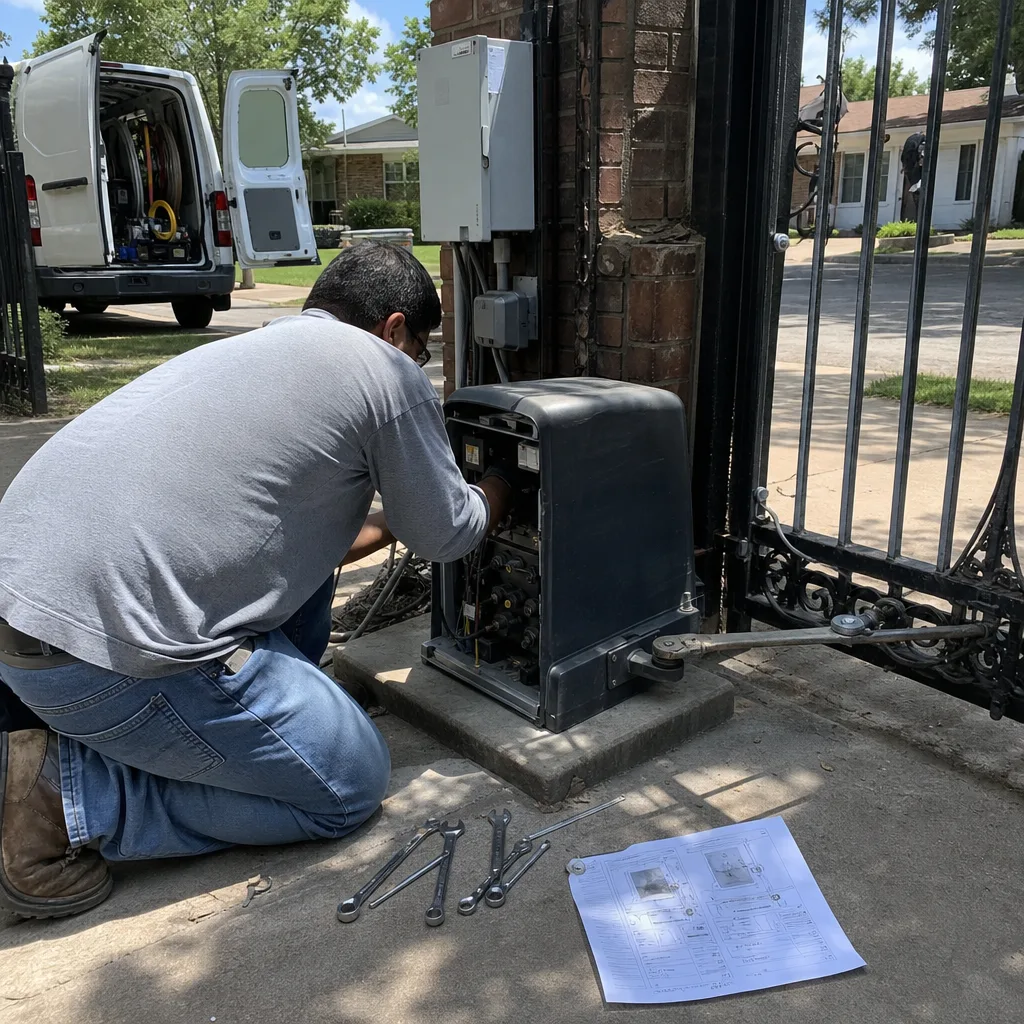
UL 325 is a safety standard published by Underwriters Laboratories for automatic gate operators and door operators. It is not a building code and it is not optional. In Texas, every automated gate operator installed on a residential property must comply with UL 325. The standard defines the safety devices and performance characteristics that prevent a gate from crushing, pinching, or dragging a person or a vehicle.
The requirement exists because automated gates have killed people. A gate operator that reverses when it hits resistance is not optional; it’s the difference between a gate that closes firmly and a gate that closes through a child on a bicycle. Texas has no state-specific gate safety law that supersedes UL 325; the standard applies through the National Electric Code’s reference and through manufacturer installation requirements. The practical effect: any gate opener installed after UL 325’s current revision must have a listed operator (bearing a UL mark), a photo-eye or other secondary entrapment protection device on every moving gate leaf, and a safety edge or equivalent on the leading edge of any gate that could close on a person.
Here’s how to verify your existing automated gate meets UL 325 today:
In our experience, the most common UL 325 failures we find in Mesquite are photo-eyes that have drifted out of alignment over years of sun and soil movement, and safety edges that have been pinched so many times the pressure sensing strip no longer triggers. These are not theoretical defects. A misaligned photo-eye is a gate that will close on a car parked in the gate path. A failed safety edge is a gate that will close on a person leaning against the gate. Both are repairable without a permit, and both should be repaired the day they’re discovered. For Viking, Ghost Controls, DoorKing, and Elite operators, the photo-eye and edge testing procedure is included in every Mesquite gate motor service visit we perform.
The Inspection Process After Permitted Work: What the Inspector Checks
When a gate project requires a permit in Mesquite, the inspection is not a formality. The inspector is there to verify that the installed work matches the approved permit set and meets the adopted building and electrical code. Here is what a typical permitted gate inspection covers:
A failed inspection is not the end of the world, but it does reset the clock. The contractor receives a correction notice listing the specific defects, has a defined window to fix them, and schedules a re-inspection. Each re-inspection in Mesquite carries a small fee, and the project cannot be considered complete until the permit is closed. In practical terms, a failed inspection adds three to ten days to a gate project, depending on the defect and the city’s inspection schedule. The alternative - closing the permit without a final inspection - leaves an open permit on the property record. Open permits are exactly what a future buyer’s title company and lender will flag, and they can delay or kill a home sale.
The right contractor treats the inspection as a checkpoint, not a hurdle. We’ve had inspectors catch things we missed, and we’re glad they did. That is the point of the system. Our documentation habit at Vance Gate Repair’s Mesquite operation is built around this: we photograph every footing, every wiring connection, and every limit switch position before and after the work, so if an inspector asks a question, we can answer it in pictures instead of from memory.
Common Mistakes to Avoid
When to Call a Professional
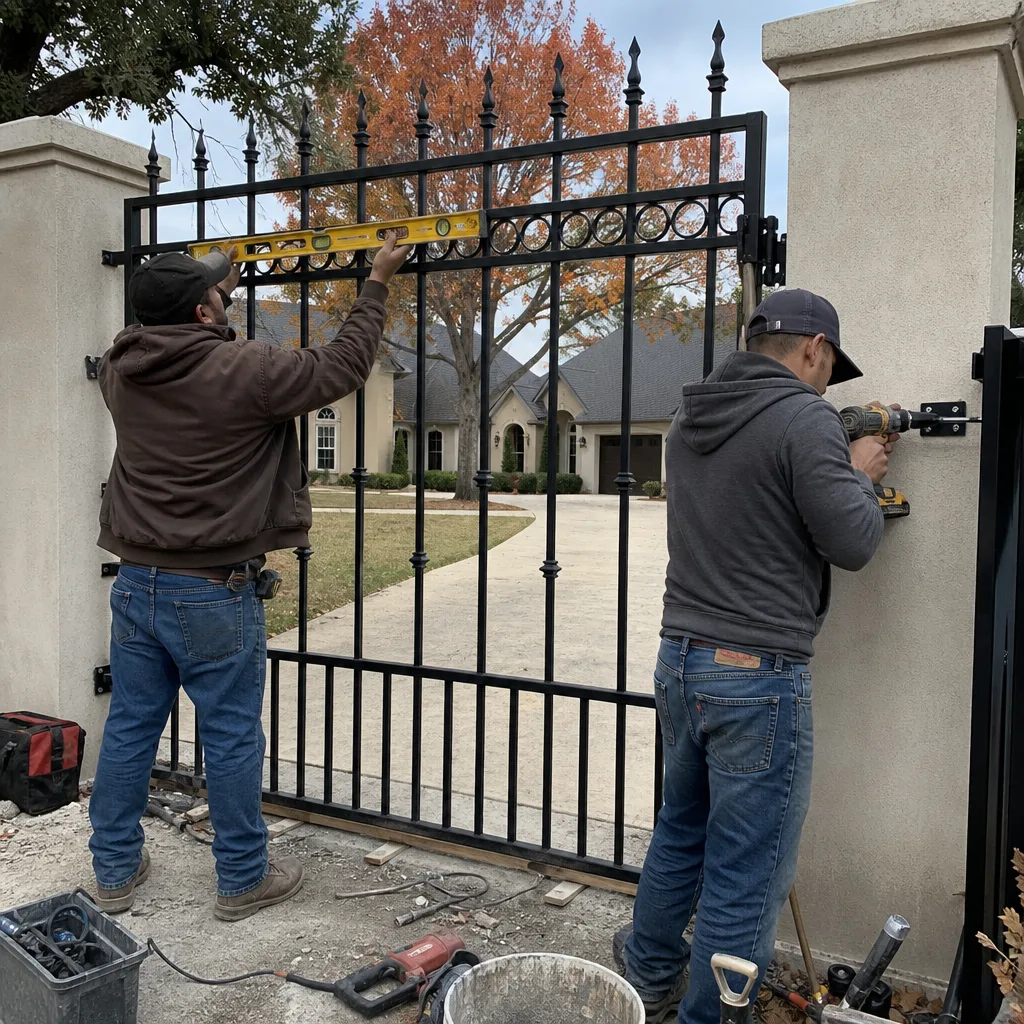
You need a gate contractor who understands Mesquite permits, HOA covenants, and UL 325 compliance when: you’re relocating a gate post, widening a driveway opening, adding automation to a manual gate, converting a gate from manual to electric operation, or installing a brand-new gate where none existed. Any of these projects carries a permit obligation, an inspection timeline, and a documentation trail you should not have to manage alone. A professional who works in Mesquite weekly knows which projects need a permit, which HOA rules apply to your specific neighborhood, and which electrical work requires a licensed electrician. Vance Gate Repair offers free estimates on gate repairs in Mesquite. Call (469) 916-7097 and we’ll tell you on the phone whether your project needs a permit, and we’ll put that in writing before any work starts.
Frequently Asked Questions
No, replacing a gate opener motor with a like-voltage unit on the existing electrical supply does not require a permit in Mesquite. The gate structure and electrical supply are unchanged, so the work falls under routine repair. The new operator must still be UL 325 listed and the photo-eye and safety edge must function. Call (469) 916-7097 for a written quote on your specific operator brand.
Building permit fees in Mesquite are calculated based on the valuation of the work, not a flat gate-specific rate. Small structural modifications like a post relocation are typically in the low hundreds; new electrical permits add a separate fee. Your contractor should include the permit cost as a line item in the written estimate. Call (469) 916-7097 and we’ll confirm current City of Mesquite fee schedules before quoting.
Most repair work on gates, including motor replacement, hinge welding, and safety device replacement, is exempt from permitting and can be done by the homeowner. Structural work like relocating a post, widening an opening, or pouring new footings requires a permit, and electrical work on the line-voltage side requires a licensed electrician. UL 325 compliance still applies to any automated operator regardless of who installs it.
Unpermitted gate work can surface in a buyer’s inspection or a title search. Texas Property Code requires sellers to disclose known unpermitted work, and failing to do so creates a misrepresentation claim. The unpermitted work may also be excluded from appraised value and can delay or derail the sale. Pulling the permit retroactively is possible but generally costs more than pulling it before the work started.
Routine repairs that do not change the gate’s size, height, location, or appearance generally do not need HOA approval in Mesquite. Any change to setback, height, opacity, or automation type typically does. Check your covenant language and submit any planned exterior modification to the architectural control committee before signing a contract.
Look for the UL 325 listing mark on the operator enclosure. Then test the photo-eye by blocking the beam while the gate is open - it should immediately stop and reverse. Test the safety edge by pressing it while the gate closes - it should also stop and reverse. If either test fails, the gate is out of compliance and should be repaired immediately. Call (469) 916-7097 for a UL 325 safety inspection in Mesquite.
The Bottom Line
Gate repair in Mesquite is permit-exempt for the vast majority of work, including motor replacement, hinge repair, and safety device service. The permit triggers are specific and predictable: structural changes, new electrical circuits, and new construction. HOA covenants add a second layer of review that is frequently stricter than city code, especially in neighborhoods built after 2005. UL 325 compliance applies to every automated gate operator regardless of permit status, and failed safety devices are the most common code violation we see. The surest way to stay on the right side of Mesquite code is to get the answer in writing, before the work starts, from a contractor who has pulled permits in this city and can show you the paperwork. That is exactly how Vance Gate Repair in Mesquite works. Call (469) 916-7097 for a free estimate, and we’ll tell you whether your project needs a permit - in writing, before any work begins.
Written by Adrian Vance, Owner at Vance Gate Repair Mesquite, serving Mesquite since 2014.