
Last updated September 20, 2026
Free on-site gate assessment - hinges, posts, and your LiftMaster or Nice gate operator checked before anything is quoted
The assessment is free and the quote is the invoice.



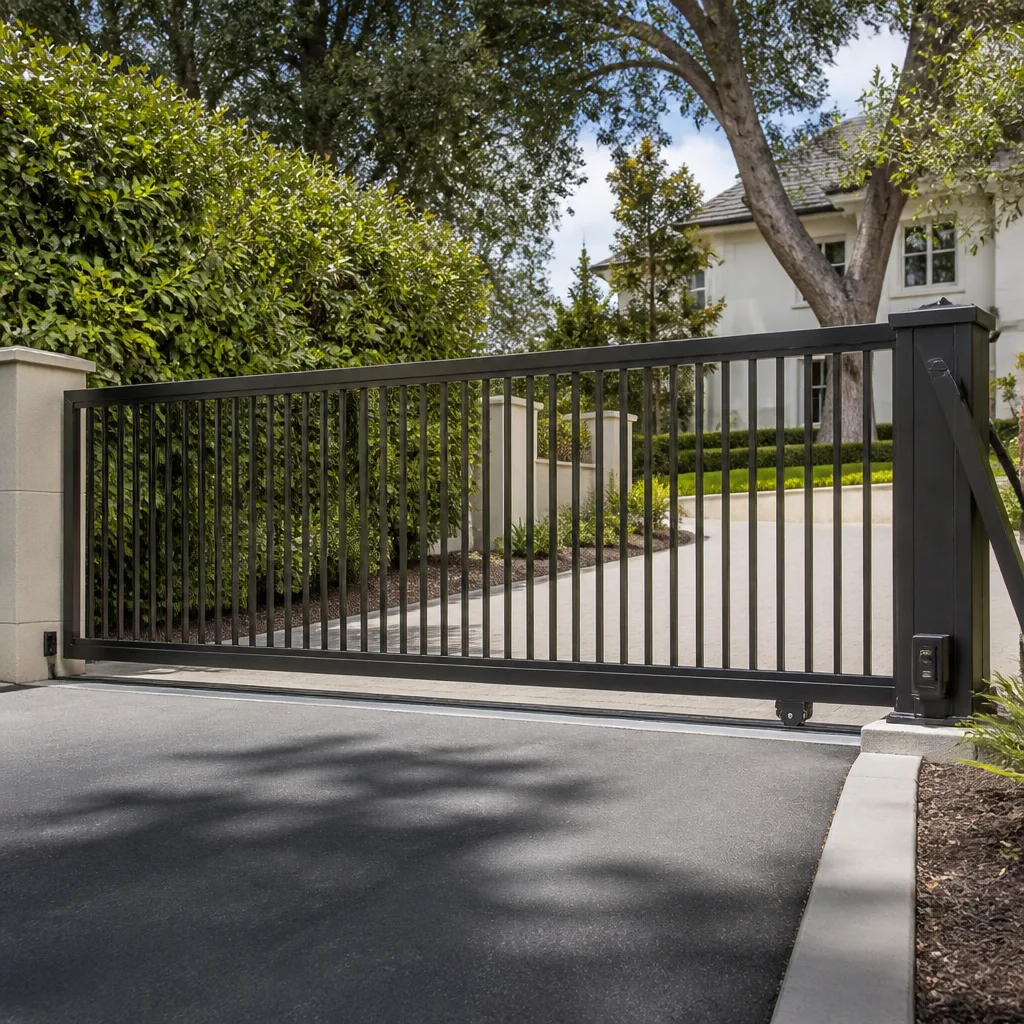
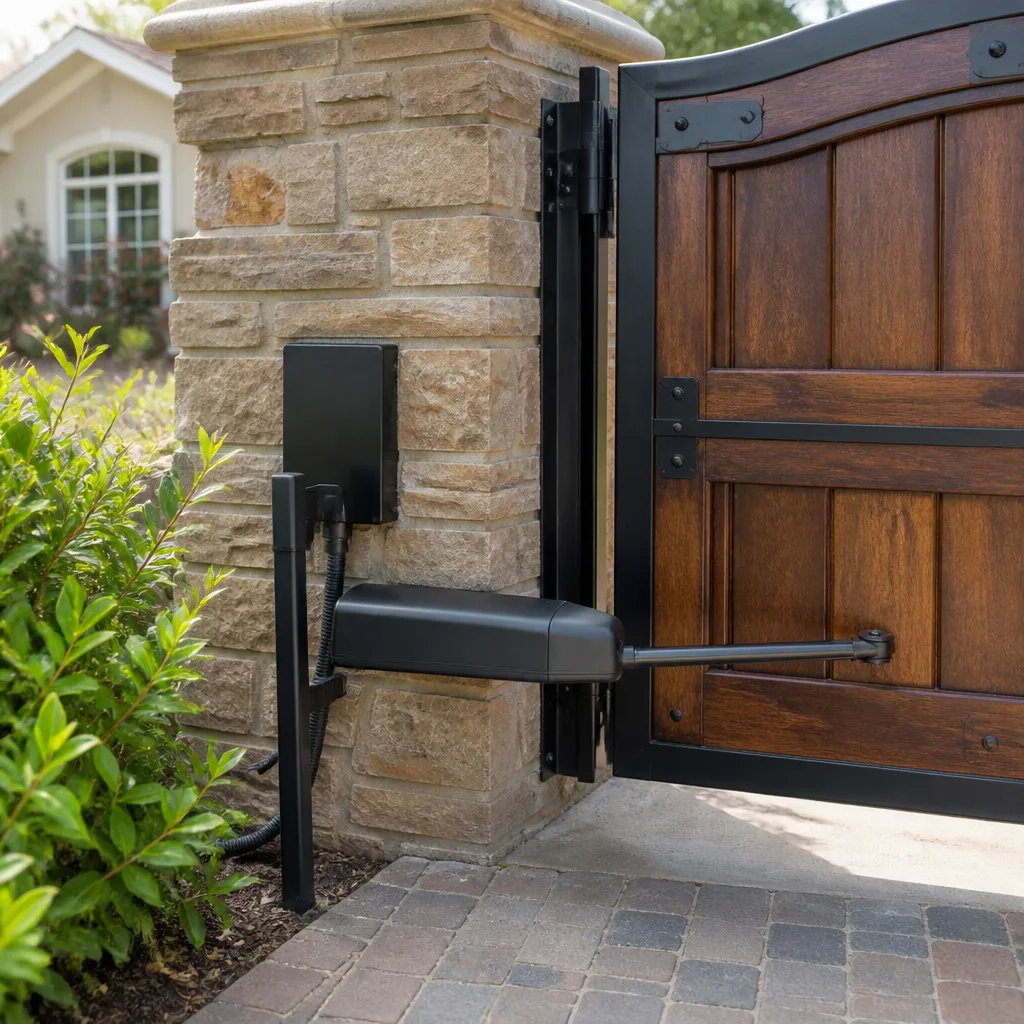
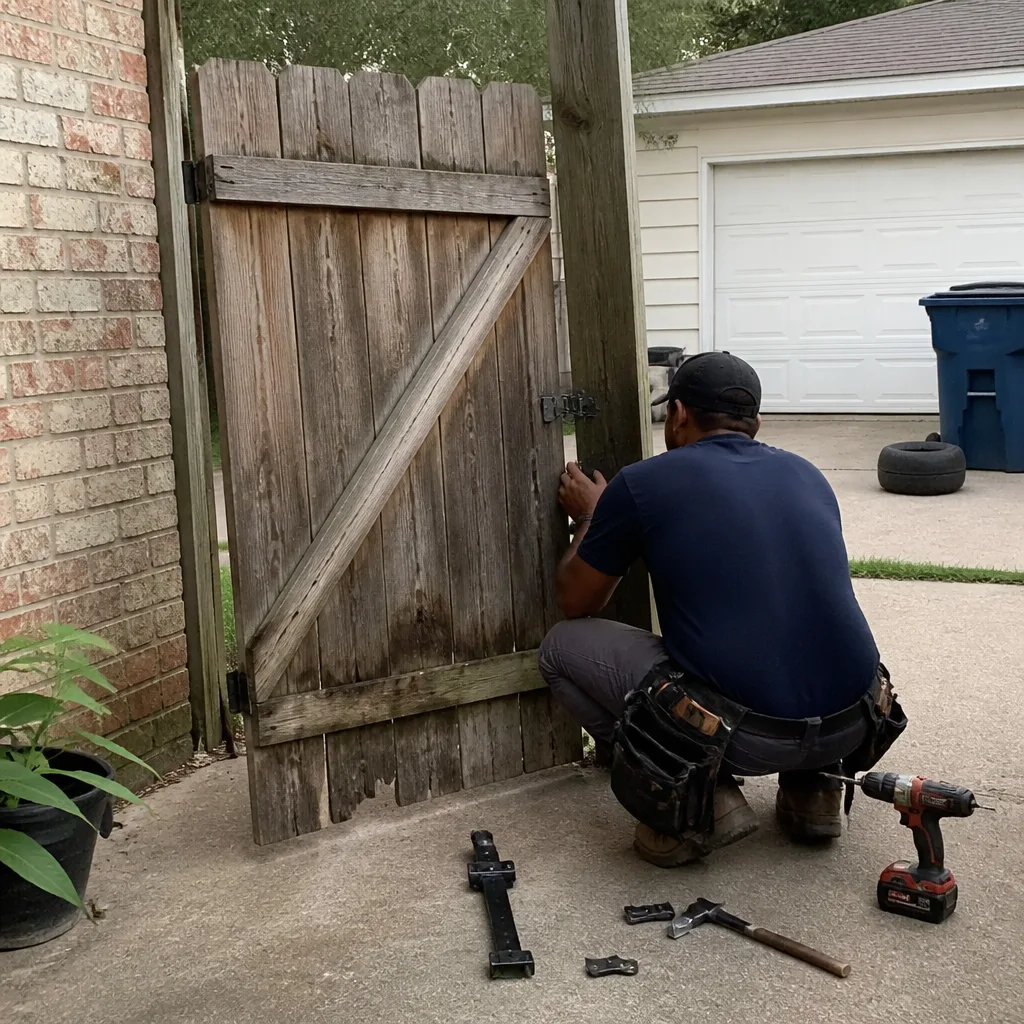 Before
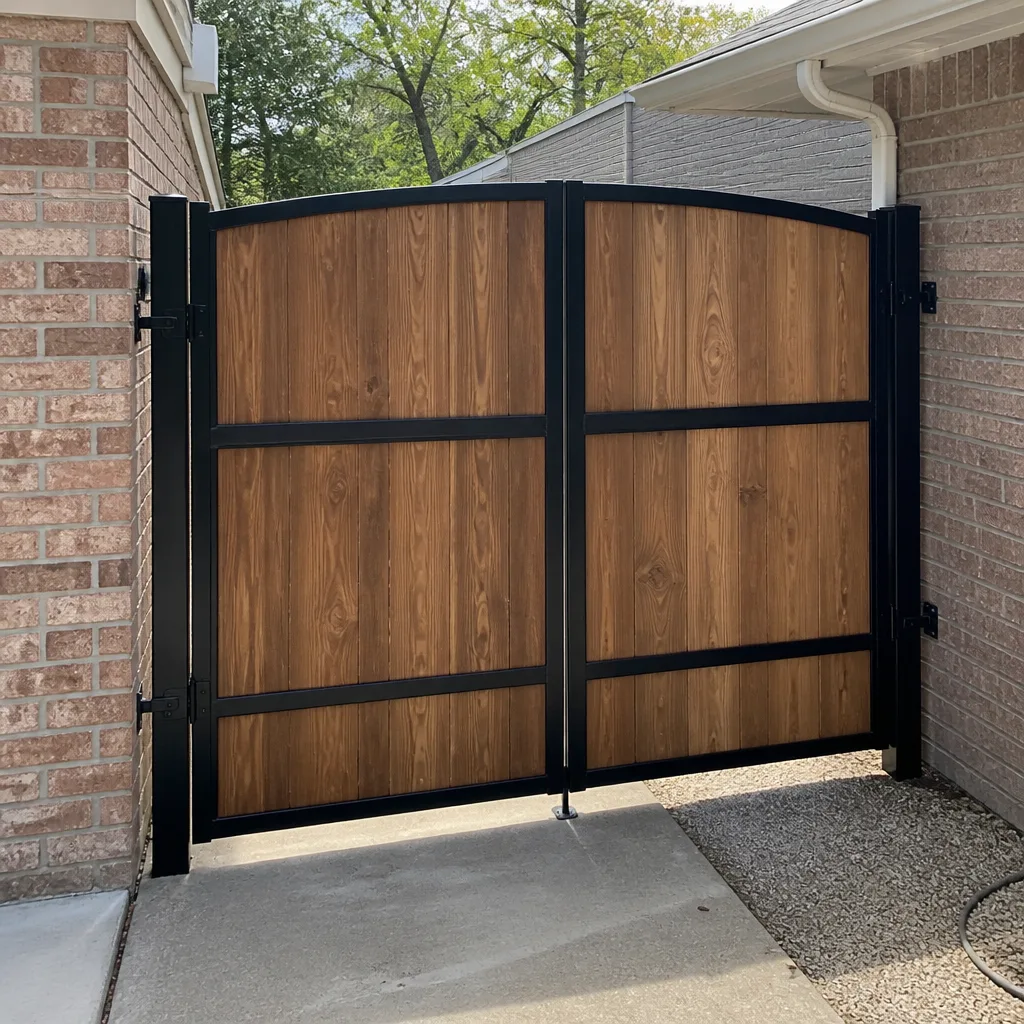 After
After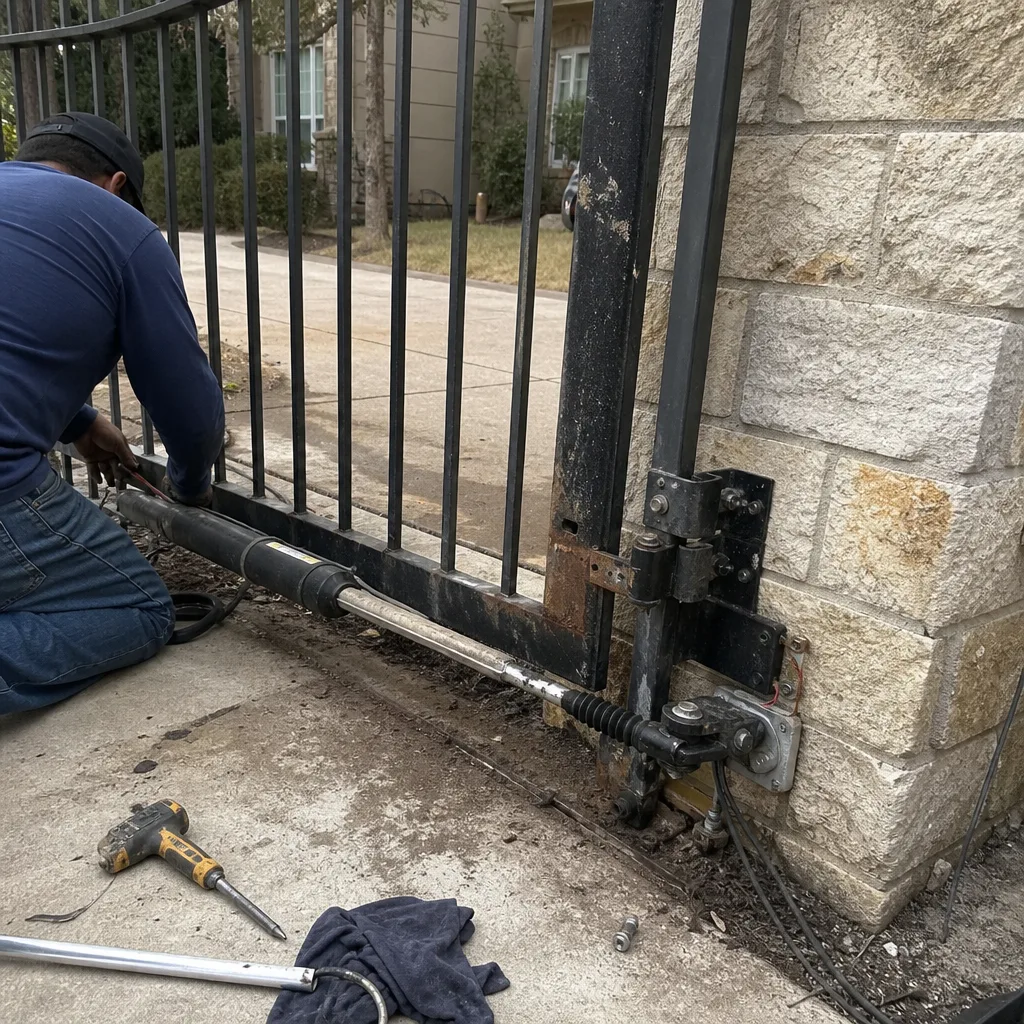 Before
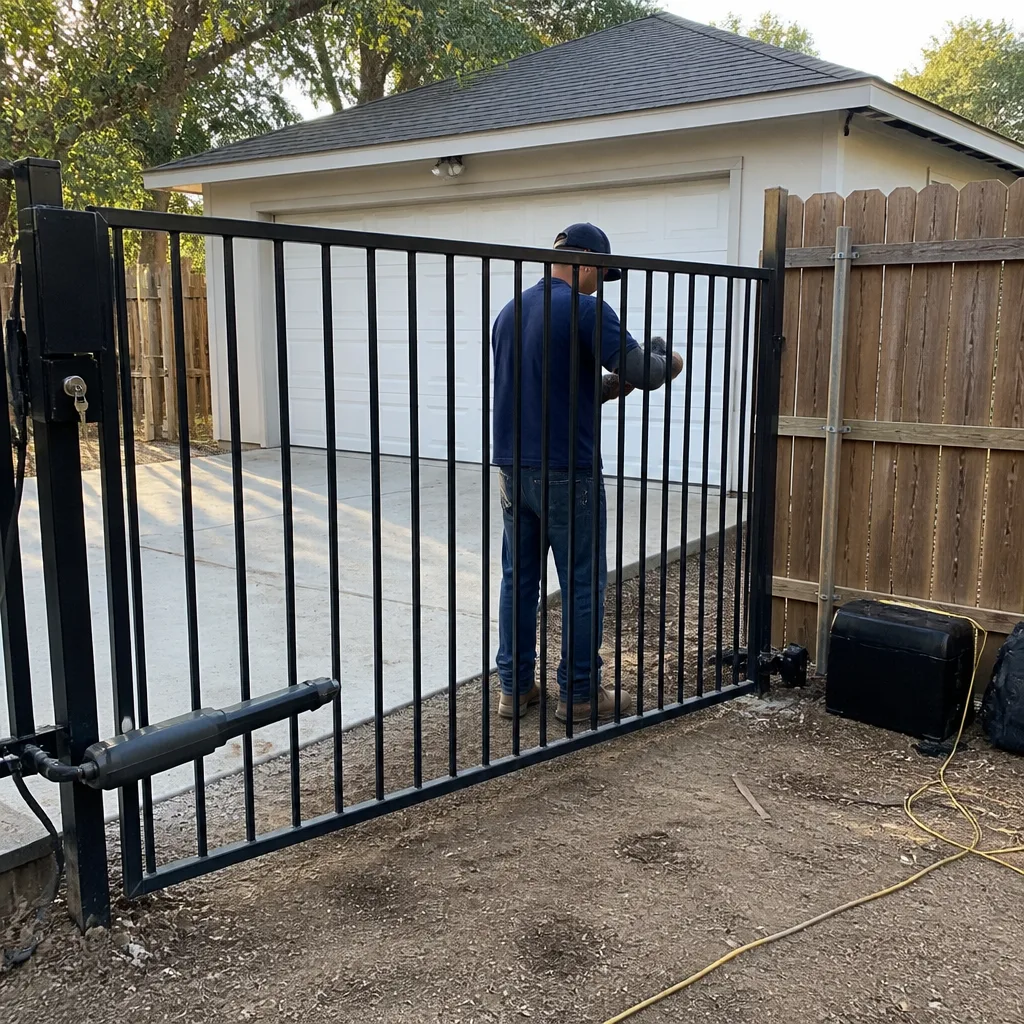 After
After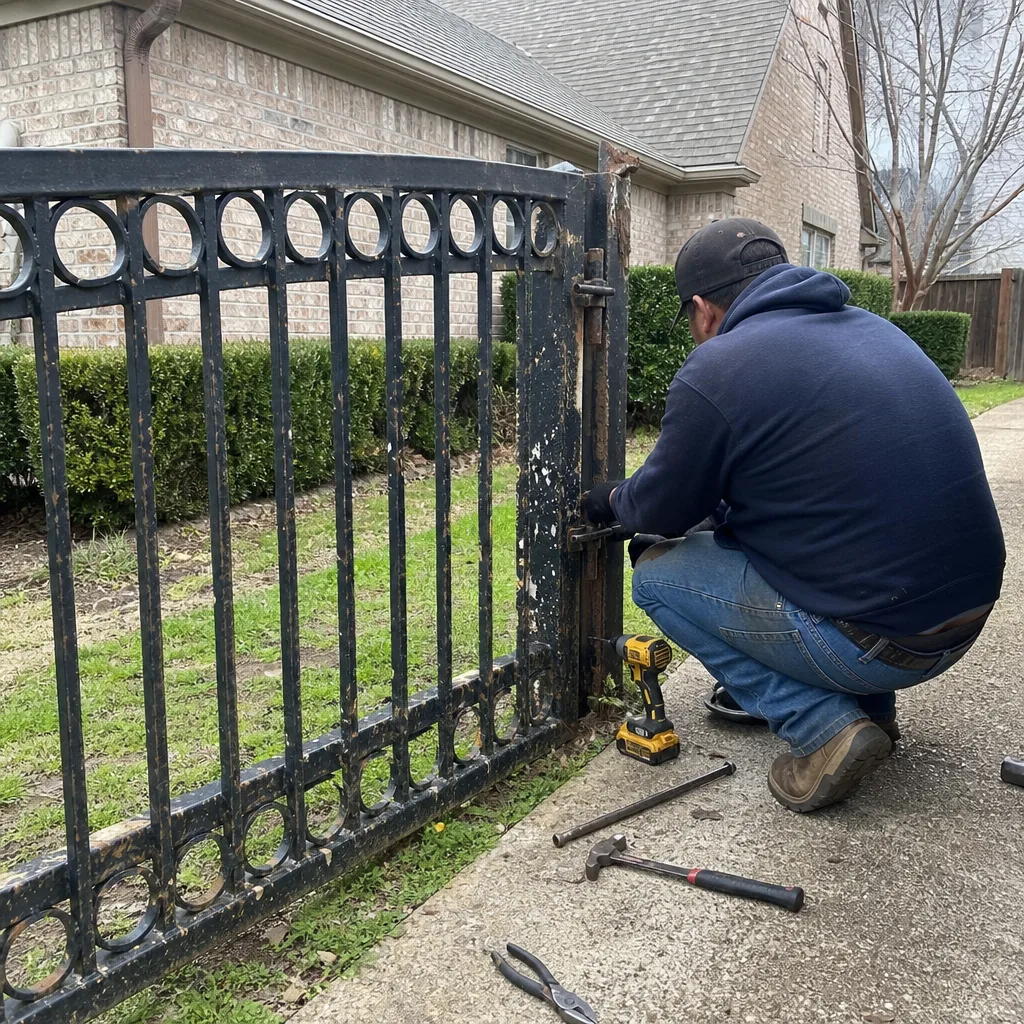 Before
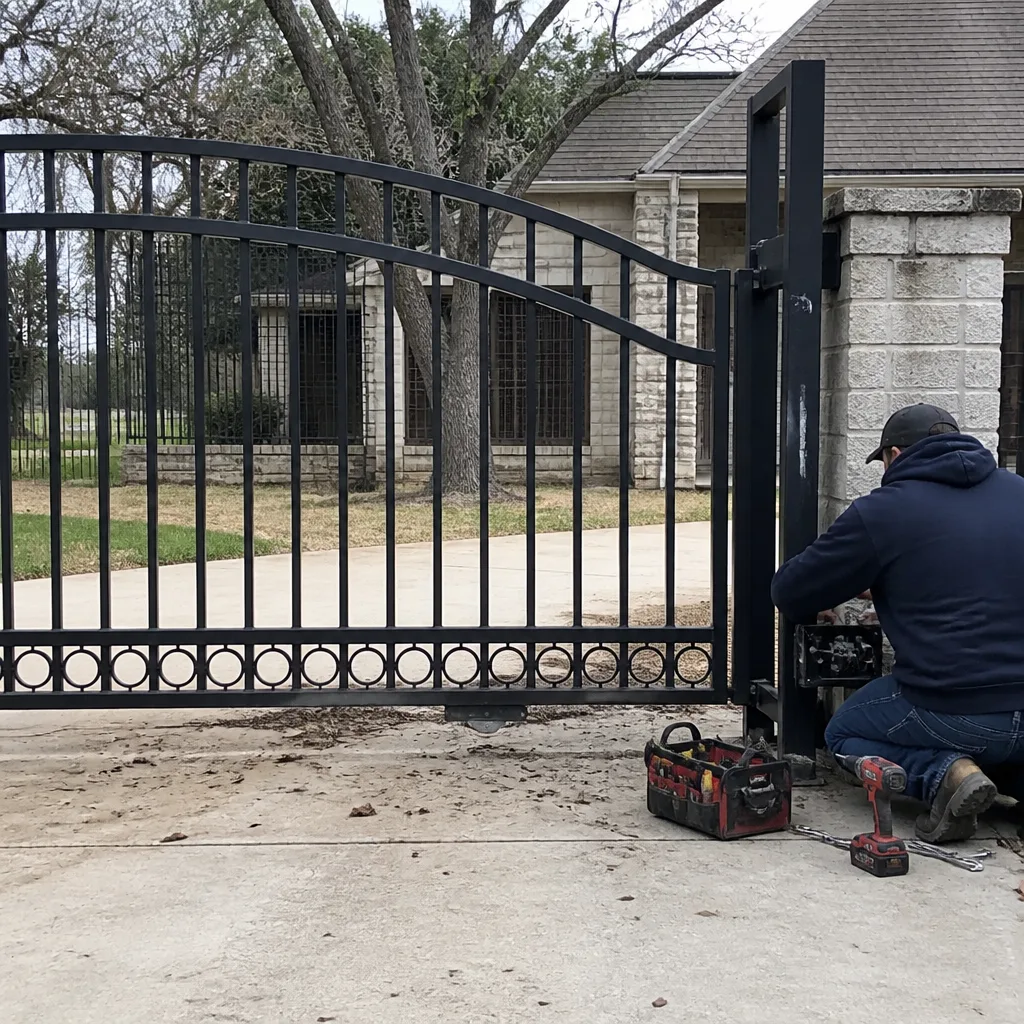 After
AfterDIY vs Professional Gate Repair: The Mesquite Homeowner’s Decision Guide
Here’s a statistic that should stop any Mesquite homeowner mid-search: according to industry safety data, a gate that closes with more than 40 pounds of force can break a child’s arm. Most automatic gate operators ship from the factory in a testing mode with force settings deliberately cranked high enough to move a gate during installation. The installer, or the homeowner who watches a YouTube video and decides to “just tighten it up a bit,” is the person responsible for dialing that force back down to a safe threshold. The question of DIY versus professional gate repair in Mesquite isn’t really a question about how handy you are. It’s a question about which repairs carry liability and which ones only carry cost, and most people don’t know where that line falls. This guide will show you exactly where it is, task by task, in plain language.
Quick Answer
For a Mesquite homeowner, gate repairs break cleanly into DIY-safe tasks (battery replacement, photo-eye cleaning, hinge lubrication, basic bolt tightening) and professional-only tasks (anything touching the operator’s force settings, safety edge circuits, or UL 325 compliance). The deciding factor isn’t mechanical skill, it’s legal exposure: some repairs void your operator warranty or shift liability to you if performed incorrectly, and a professional should leave behind written documentation that a DIY repair never will. If the gate is heavy, motorized, or your only way in for a vehicle, the answer is usually simple: call a professional.
Table of Contents
- The Liability Line: Why This Decision Isn’t About Skill
- What’s Actually DIY-Safe: The Short List
- What Requires a Technician: Liability, Not Just Complexity
- UL 325 in Plain Language: What Texas Homeowners Can’t Self-Certify
- Warranty-Voiding Repairs: When Saving $200 Costs You $1,500
- The Real DIY Cost: Parts, Time, and the Second-Visit Tax
- The Documentation Gap: What a Pro Leaves Behind
- Three Repairs Where DIY Wins, Three Where It Always Loses
- Common Mistakes to Avoid
- When to Call a Professional
- Frequently Asked Questions
- The Bottom Line
BeforeAfterThe Liability Line: Why This Decision Isn’t About Skill
A homeowner who replaces their own gate battery made a smart call. A homeowner who adjusts their own safety-reversal force setting may have just accepted liability for a UL 325 violation. Same toolbox, completely different legal exposure. That’s the line this entire guide walks, and once you see it, the DIY-versus-pro decision stops being a gut check and becomes a checklist.
The distinction works like this: some gate failures are mechanical conveniences, and some are safety systems. A hinge that squeaks is a convenience. A photo-eye that misaligns and stops sensing an obstruction is a safety system. A chain that slackens is a convenience. A force setting that lets the gate crush a trash can and keep pushing is a safety system. In our experience across Mesquite neighborhoods like Creek Crossing Estates and Valley Creek, most homeowners can identify the mechanical issues by sight or sound. They cannot identify whether a safety circuit is functioning correctly because that requires a force gauge and a stopwatch, not just a pair of eyes.
There’s a reason gate automation is regulated by UL 325, the same safety standard that governs other entrapment hazards. An automatic gate is a machine that moves unassisted. It doesn’t care if a child is in the path. The safety devices installed on it, the photo-eyes, the edge sensors, the reversal mechanism, are the only things standing between a convenience and a crushing injury. Those devices need to be verified after any repair that touches the operator, the control board, the limit switches, or the motor. That verification requires a technician who knows what a passing test looks like and who will document it. The liability line isn’t about whether you can turn a wrench. It’s about whether you can prove, on paper, that the machine on your property meets a published safety standard. Most DIY repairs, no matter how competently executed, leave no paper trail at all.
For Mesquite homeowners, the climate adds a layer. North Texas heat bakes control boards and dries out lubricant. Spring storms knock limbs onto arms and tracks. Freeze-thaw cycles shift concrete pads and throw gates out of plumb. A gate that worked perfectly in October can bind in February. The failure is environmental, but the repair still falls on one side of the liability line or the other. The binding is mechanical. The fix might involve adjusting limits, which is mechanical too, until it isn’t. The moment the adjustment touches the operator’s internal logic, you’ve crossed over.
Let’s be precise about what that means. If you own an automatic gate in Mesquite, you own an entrapment hazard that is regulated. If that gate injures someone and the investigation shows the force setting was too high, the question becomes: who last touched it? If the answer is you and you cannot produce documentation showing the gate met UL 325 after your work, your homeowner’s insurance may not cover the claim. That’s not scare language. That’s the way liability works. A professional repair doesn’t eliminate the hazard. It transfers the documentation burden to a company with a written record and a service history. That’s the line. Skill decides whether the repair works. Documentation decides whether you’re protected. Those are two different problems, and only one of them fits in a toolbox.
For a local frame of reference, see our full guide to Gate Repair in Mesquite, which covers the most common failure points we see across the city.
What’s Actually DIY-Safe: The Short List
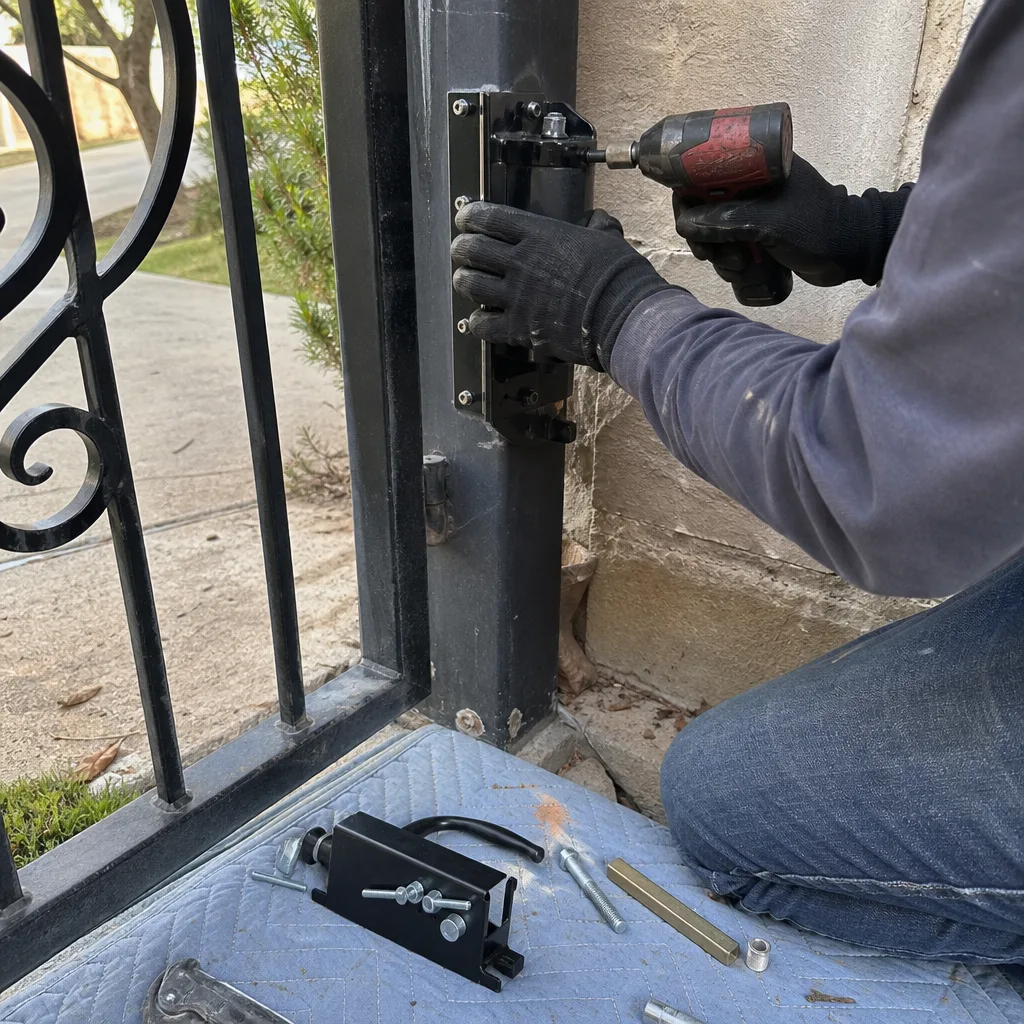
Let’s start with what a competent homeowner in Mesquite can genuinely handle without crossing the liability line. These tasks touch the physical gate, not the operator’s safety logic. They don’t require a force gauge, don’t involve wiring, and don’t alter any UL 325-protected setting. If you’re comfortable with basic hand tools and can follow a torque spec, these are fair game.
- Battery replacement on solar or DC backup systems. If your gate opener runs on a 12V battery and it’s dead, swapping in a new one is a parts-and-screwdriver job. Note the battery type before you buy. Most Mesquite gate systems use sealed lead-acid batteries, and the label will tell you the amp-hour rating.
- Photo-eye cleaning. The photo-eye is the small infrared sensor near the base of the gate posts. Mesquite’s dust and pollen season films over the lens, and the gate starts acting like it’s haunted, stopping halfway or refusing to close. A soft cloth and glass cleaner fix this in two minutes.
- Hinge and wheel lubrication. A dry metal-on-metal scrape is an easy call. Use a silicone or lithium spray, not WD-40, and hit every hinge pin, roller, and the gate’s track if it has one. Do this quarterly in Mesquite because summer heat evaporates lubricant faster than most homeowners expect.
- Visual inspections. Walking the gate line once a month and checking for loose bolts, cracked welds, rust at the base, or debris in the track is free and catches small problems before they become operator-killers.
- Track and path clearing. Gravel, mulch, overgrown grass, or a shifted paver can bind a sliding gate. Clearing the path is pure elbow grease.
- Keypad battery replacement. If the exterior keypad has a 9V battery and it’s dead, open the case and swap it. That’s not a gate repair. It’s a remote-control refresh.
None of these tasks require you to open the operator cover, touch a limit switch, or change a circuit board setting. That’s the clean test. If the repair is outside the box, you’re probably fine. If the repair is inside the box, stop and read the next section.
What Requires a Technician: Liability, Not Just Complexity
This is the section that saves Mesquite homeowners from expensive mistakes. The tasks below aren’t always mechanically difficult. Some are. But difficulty isn’t the reason they belong with a professional. The reason is that each one either touches a safety circuit, alters an operator setting that must be verified to UL 325, or creates a risk that you, as the homeowner, cannot independently certify as safe after the work is done.
- Any adjustment to the operator’s force or reversal settings. This is the big one. The force setting controls how much resistance the gate will push against before the motor reverses. Set it too high and the gate will crush instead of stop. Set it too low and the gate won’t close against a stiff Mesquite wind. The correct setting requires a force gauge and a timed reversal test. You cannot do this by feel. You cannot do this by watching a video. You can only do this with the right instrument and a documented record of the reading.
- Safety edge replacement or wiring. The safety edge is the pressure-sensitive strip on the leading edge of the gate that tells the operator to reverse when it touches something. If the edge is cracked, the wiring is frayed, or the internal ribbon is damaged, the gate may not reverse on contact. Replacing the edge means wiring it into the operator’s safety circuit and then testing the reversal under load. A failed test means a gate that will pin someone and keep pushing.
- Limit switch adjustment or replacement. The limit switches tell the gate where open and closed are. If they’re off, the gate slams into the post or stops short. Adjusting them requires setting the travel distance precisely, then testing the safety-reversal at both ends. A limit switch set 12 degrees past travel is the kind of error that bends an arm or burns a motor.
- Control board replacement. The board is the brain. Replacing it means re-connecting power, re-learning limits, re-setting force, and re-testing every safety function from scratch. It’s the deep end of the pool.
- Motor or gearbox work on a cantilever or slide gate. A cantilever gate is a several-hundred-pound steel structure that rolls on a track. The motor and gearbox are under real load. Opening that gearbox without the right retaining tools can release stored tension and send parts flying.
- Any work on a gate over 8 feet long or over 300 pounds. Once a gate passes house-door dimensions, it becomes a serious pinch-and-crush hazard. Even replacing hinges on a heavy gate requires proper jacking and support. If the gate falls while you’re under it, it’s not a sprained ankle. It’s a hospital visit or worse.
If you’re looking at one of these and weighing the cost, read the section on Gate Motor & Opener in Mesquite for what a professional service actually includes.
UL 325 in Plain Language: What Texas Homeowners Can’t Self-Certify
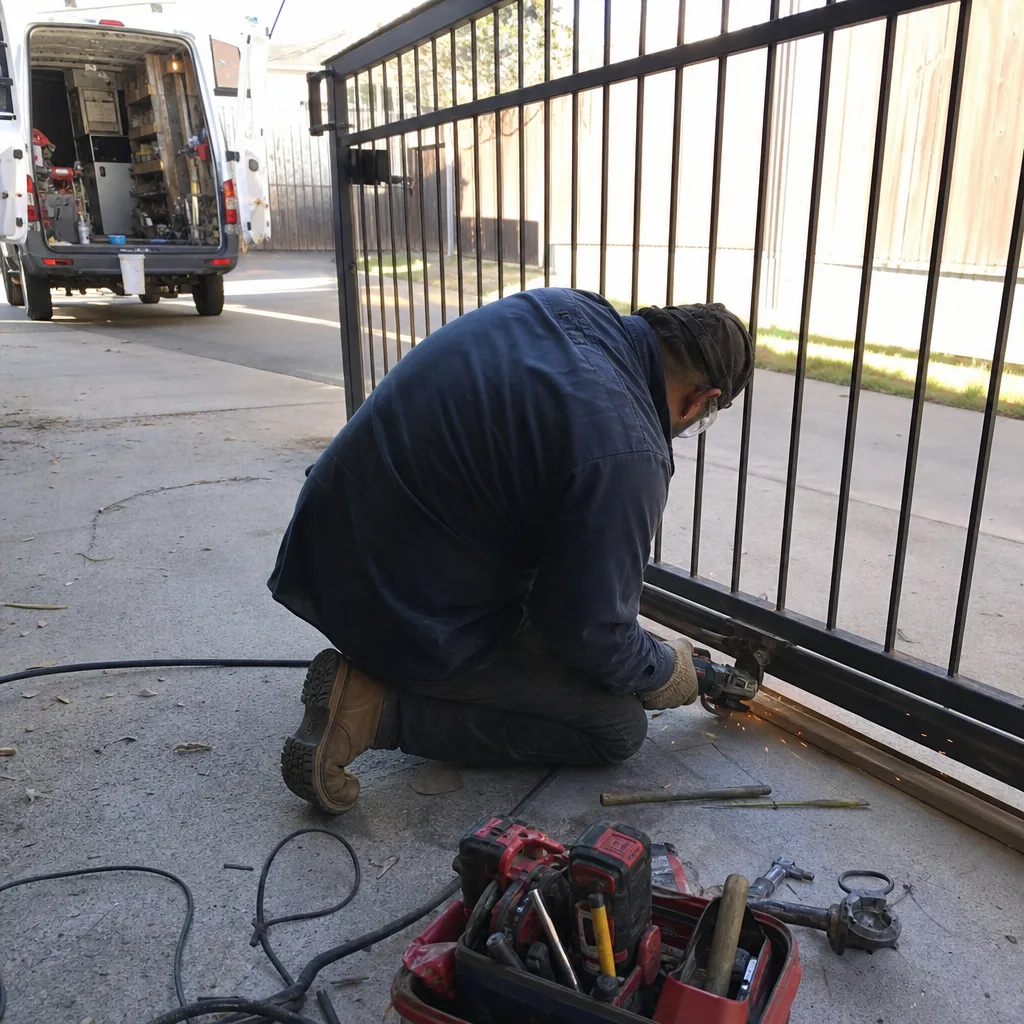
UL 325 is the Underwriters Laboratories standard for automatic gate operators. Since 2000, every automatic gate operator sold in the United States has been required to include entrapment protection: a means to detect an obstruction and reverse or stop the gate before injury occurs. For most residential swing and slide gates in Mesquite, that protection comes from a photo-eye, a safety edge, or both.
Here’s what “certify” means in practice, because it’s less mysterious than it sounds. After any installation, adjustment, or repair that touches the operator, the technician is supposed to run a series of tests: a force test using a gauge that measures the closing pressure in pounds, and a reversal test that times how quickly the gate reverses when it contacts an obstruction. The results are recorded. The homeowner gets a copy. The technician’s company keeps a copy. That record is the certification. It’s not a government filing. It’s a dated, instrumented test result that proves the gate met the standard on the day it was serviced.
A Texas homeowner cannot self-certify a gate operator adjustment. Not because the law says so, but because the test requires a calibrated force gauge and an independent observer to time the reversal. More importantly, a self-administered test has no evidentiary value. If something goes wrong and the gate injures someone, a handwritten note saying “I tested it and it seemed fine” is not documentation. It’s an admission that you adjusted the gate and did not have it professionally verified.
In Mesquite specifically, this matters more than in some other Texas cities because many homes in the area have automatic driveway gates as the primary access point. These aren’t decorative farm gates. They cycle multiple times a day. They close behind every car. A gate that cycles 20 times a day wears out limit switches and shifts force settings faster than a gate that gets used twice a week. That wear creates drift: the force setting creeps up, the reversal time slows down. A gate that was certified at installation may be out of compliance within two years of daily use, and no one knows until someone tests it.
UL 325 isn’t static. The standard has been revised multiple times, most recently to tighten requirements around monitored safety devices and secondary entrapment protection. What this means for a Mesquite homeowner is that a gate installed in 2019 may not meet the current standard in 2026. Older operators, especially budget brands like Mighty Mule, often lack the monitored photo-eye circuits that newer standards expect. A professional repair on that older operator will include a conversation about whether the safety system can be upgraded to current code, or whether the operator itself is the limiting factor.
This is exactly why a written record matters. When we service a gate in Mesquite, the documentation from Vance Gate Repair Mesquite home includes the force reading, the reversal time, and photos of every setting we touched. That’s not a nice-to-have. It’s the only thing that stands between a homeowner and an expensive liability claim if the gate ever fails and hurts someone. If you’re installing a new gate, the standard applies from day one. See Gate Installation in Mesquite for what a compliant install looks like.
Warranty-Voiding Repairs: When Saving $200 Costs You $1,500
Operator warranties are contracts, and contracts have fine print. Most gate operator manufacturers, including LiftMaster, FAAC, and Elite, write their warranty terms to exclude damage caused by “unauthorized service.” The word “unauthorized” does the heavy lifting, and it effectively means anyone who is not a factory-authorized technician using factory-approved parts and procedures.
Here’s how this bites Mesquite homeowners. Your LiftMaster operator fails at three years old. The part that died is a $60 limit switch module. You watch a video, buy the part online, open the operator, and swap it in. The gate works. Six months later, the motor burns out because the new limit switch was set slightly too high and the gate was slamming into the post every cycle, loading the motor beyond its rated torque. The motor is a $400 part, and the full repair is $800. You call the manufacturer. They ask if the operator has been serviced by an authorized technician. You say yes, by you. The warranty claim is denied. You’ve saved $60 and turned a covered repair into an uncovered one.
That’s not a hypothetical. We’ve seen it in Mesquite more than once: a homeowner with a dead operator because a $40 DIY repair invalidated a $1,500 warranty. The math is punishing. The warranty would have covered the full repair. The DIY attempt voided it. The homeowner now pays out of pocket for a repair that should have been free.
Warranty language varies by brand. FAAC, for example, explicitly voids coverage if the operator has been opened by anyone other than a factory-certified technician. Elite’s warranty excludes damage from “improper adjustment.” Ghost Controls, a popular DIY-friendly brand, offers a different calculus: their operators are designed for homeowner installation and their warranty survives most self-service. But even Ghost Controls draws the line at internal control board modification. If the board shows signs of soldering or jumper changes, coverage ends.
The practical takeaway for a Mesquite homeowner is this: before you open the operator housing, find the warranty card. Read the exclusions. Understand that “unauthorized service” is a defined term in that document, and it means you. If the repair is external, DIY away. If it requires opening the operator, the warranty is on the line, and the cost of losing it may be ten times the cost of the repair you’re trying to do yourself.
This is a place where the “Gate Repair in Mesquite” calculation changes: a professional repair preserves the warranty. A DIY repair may burn it.
The Real DIY Cost: Parts, Time, and the Second-Visit Tax
The seduction of DIY is the same everywhere. The part costs $40, the repairman charges $350, so you save $310. That’s the math as far as it goes. It just doesn’t go far enough. The real DIY cost includes three lines most people never write down.
First, parts. The online price is not the real price if the part is wrong. Gate operator parts are notoriously specific. A FAAC limit switch from a 2017 board is not the same as a FAAC limit switch from a 2021 board, even if they look identical in the photo. The wrong part costs you the return shipping, the restocking fee, and three to five days with a gate that’s dead in the open position. That’s not a convenience cost. That’s a security cost.
Second, time. Your time has a value, and not just an hourly-wage value. A DIY gate repair on a Saturday means an hour of research, an hour of disassembly, an hour of frustration because a bolt is rusted or a connector won’t release, and an hour of reassembly. That’s four hours. If you make $40 an hour, the time cost is $160. If you’re a salaried professional spending your only free day under a gate, the opportunity cost is higher. The professional repair looks different when you add $160 of your time to the $40 part. Now you’re at $200 to save $150, and the professional’s work is warranted for a year.
Third, and this is the one people never calculate, the second-visit tax. This is what happens when the DIY repair fails and you call a professional anyway. The technician arrives to find a gate that has been partially disassembled, with parts installed wrong, bolts stripped, and the original problem now buried under a second problem. The repair takes twice as long because the technician has to undo your work before starting their own. That extra time is billed. The $350 repair is now a $475 repair because the gate was in worse shape than when the problem started. We’ve quoted this job dozens of times in Mesquite. The homeowner always says the same thing: “I should have just called you first.”
Add the three together. The $40 part plus $160 of time plus a $125 second-visit surcharge lands at $325. You saved $25, spent four hours of your life, and now have a gate that was worked on twice. The real DIY cost is almost never the part price. It’s the part price plus the time you’ll never get back plus the premium you pay for the professional to fix both the original problem and the attempt.
The Documentation Gap: What a Pro Leaves Behind
Here’s the difference no one tells you about. A DIY gate repair leaves behind a receipt from an online parts supplier and your memory of what you did. A professional gate repair leaves behind a written record. When you sell the house, refinance, or file an insurance claim, that record becomes worth more than the repair itself.
A proper professional repair report includes: the date, the technician’s name, the gate’s model and serial number, the symptom reported, the diagnosis, the test results, the parts replaced with part numbers, the settings adjusted with before-and-after values, and a photo log of every step. That document proves three things: the gate was serviced by a qualified person, the gate met safety standards on the day of service, and the repair used correct parts.
At resale, a Mesquite home with an automatic gate and a service file is a materially different listing than a home with an automatic gate and no documentation. The buyer’s inspector will look at the gate and ask the seller one question: who serviced it? If the answer is “I did,” the inspector flags the gate as a potential liability, and the buyer demands either a professional inspection or a credit at closing. The credit is almost always more than the professional service would have cost.
At insurance-claim time, the documentation gap is even more acute. Let’s say a Mesquite storm knocks a limb onto your gate and the operator is destroyed. The insurance adjuster asks for proof that the gate was installed correctly and maintained. A professional’s service file answers that question. A shoebox of Amazon receipts doesn’t.
This is what The Haven Standard exists for: a written price before work starts, a written record when the work is done, and a photo log of every visit. A DIY repair can be done well, but it cannot produce the documentation that protects you in the future. That’s not a question of craftsmanship. It’s a question of what a professional company, this one included, exists to provide. The gate itself might work either way. The paper trail only works one way.
Three Repairs Where DIY Wins, Three Where It Always Loses
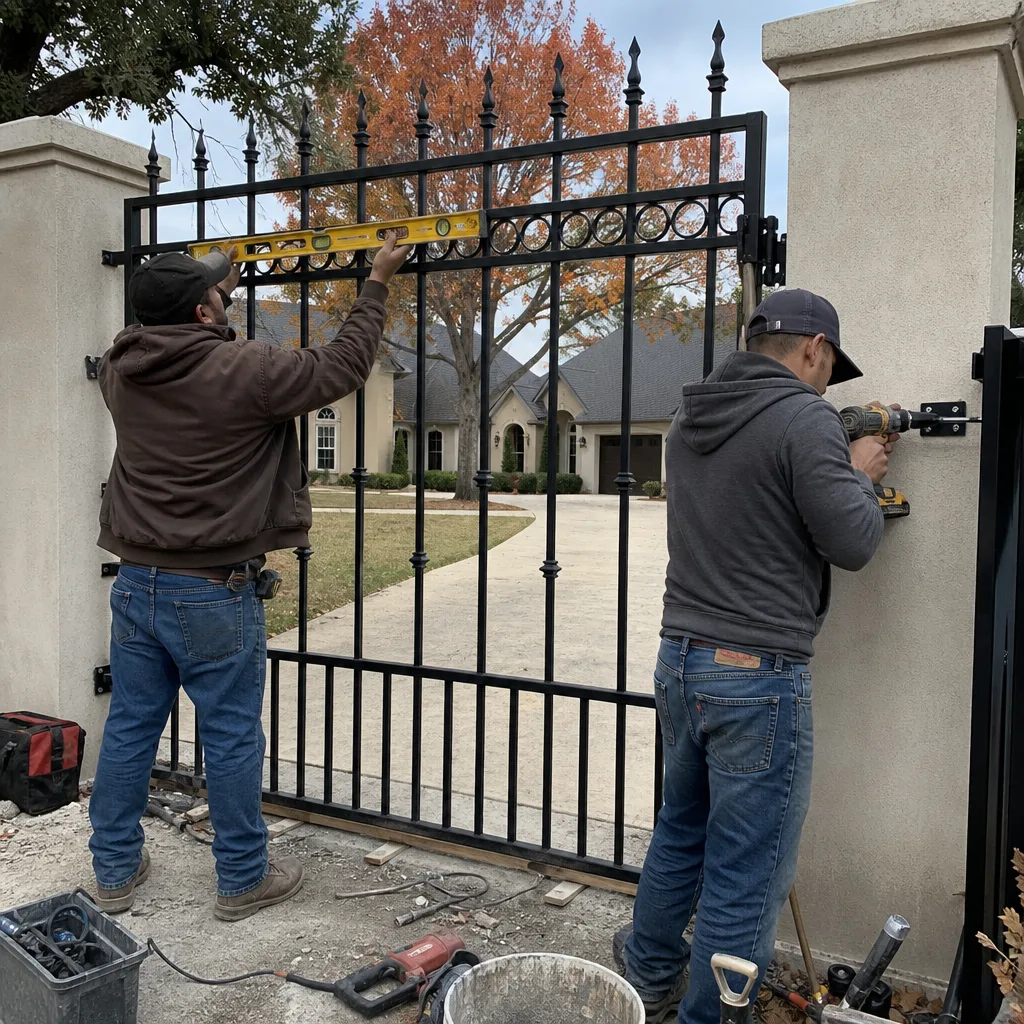
Let’s be honest about where DIY genuinely saves money, because a guide that says “never touch anything” is not credible. There are real wins available to a Mesquite homeowner who knows where to draw the line. And there are real losses waiting for the homeowner who draws it in the wrong place.
Three DIY Wins
- Photo-eye realignment. If the photo-eye is visibly out of alignment, meaning the small light on the receiver is blinking and the gate refuses to close, realigning it is a two-bracket adjustment. No operator settings change. No liability shifts. The sensor either sees the beam or it doesn’t, and the indicator light tells you when it’s fixed. Savings: $150 to $250 service call.
- Battery replacement. On a 12V battery backup system, the battery is the gate’s equivalent of a car battery. It dies after three to five years in Mesquite heat, and replacing it is a disconnect-and-swap job. Savings: $180 to $280 parts and labor.
- Track and wheel cleaning. A sliding gate that drags and shudders often needs nothing more than debris cleared from the track and the wheels wiped clean. No parts, no settings, no danger if you keep hands clear of the gate path. Savings: $100 to $200 visit.
Three DIY Losses
- Force-setting adjustment on an entrapment-protected operator. You’ll spend nothing to do it, then spend the rest of the gate’s life not knowing if the gate is set to crush. If it is, and it injures someone, the liability is yours. You’ve saved $200 and bought a lawsuit exposure worth a hundred times that.
- Control-board replacement on a modern operator. The board costs $200 to $400 online. The setup procedure requires re-learning limits, re-setting force, re-programming remotes, and re-testing every safety function. Miss one step and the gate either slams or won’t close. Most homeowners who attempt this end up calling a professional anyway, and the professional has to undo the partial install before doing it right. Total cost lands higher than just paying for the repair up front.
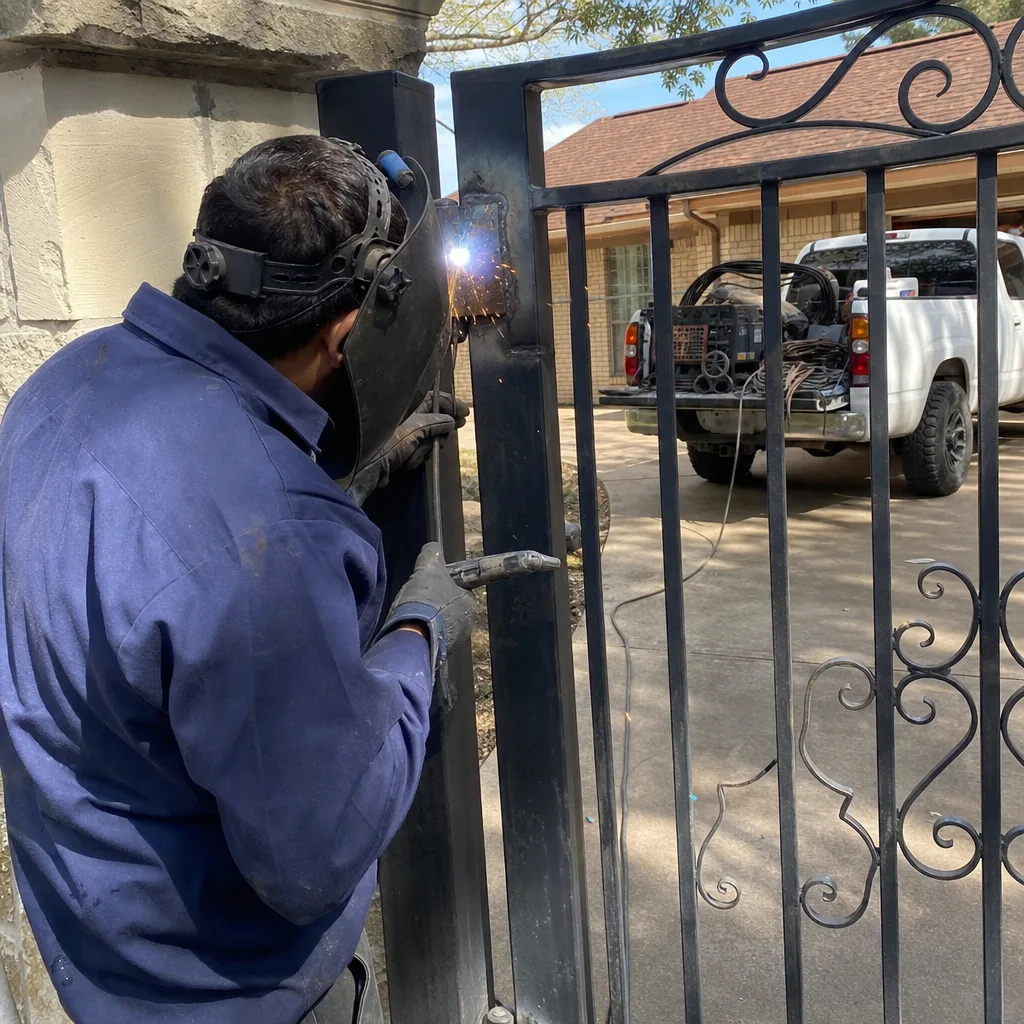
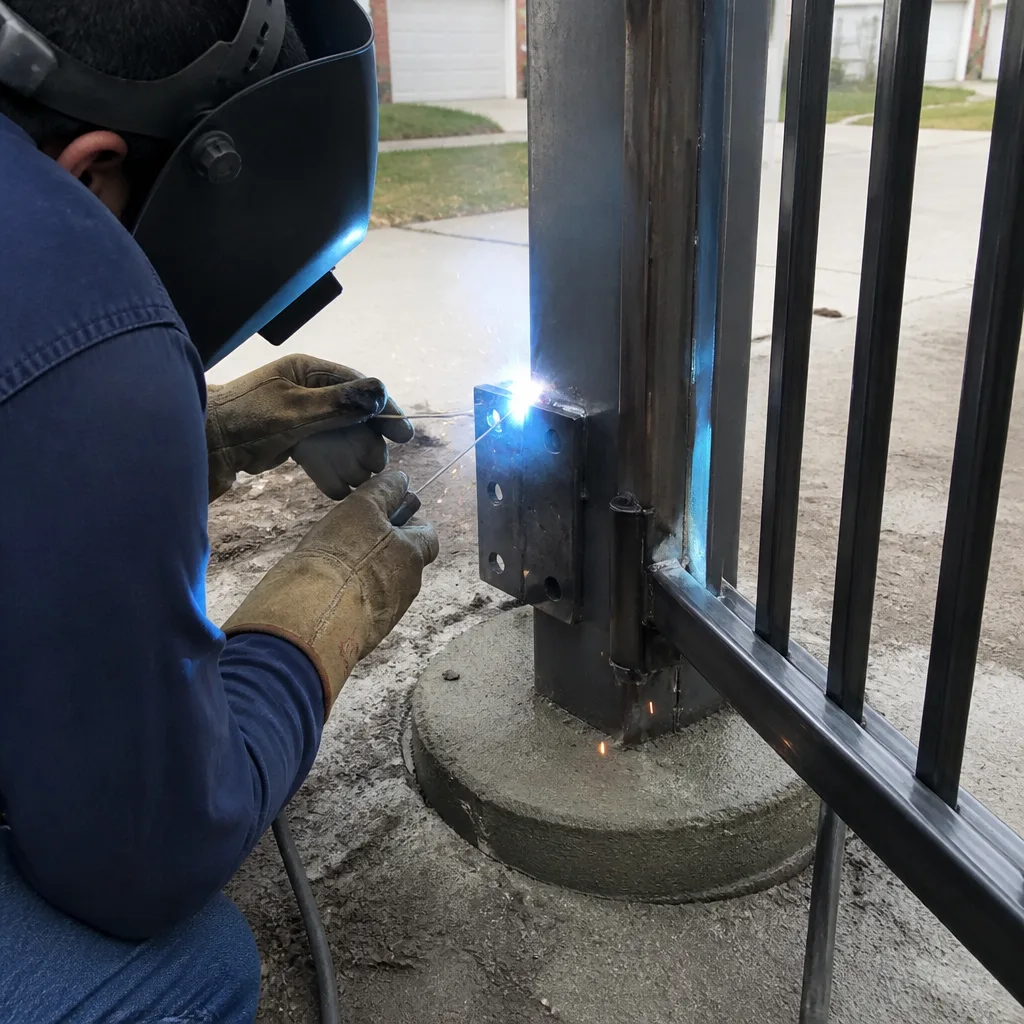
- Weld repair on a heavy gate. A cracked weld on a 400-pound driveway gate is not a Home Depot weekend project. It requires a mobile welder or a gate specialist who can safely support the gate, grind the old weld, and lay a new bead that will hold under daily cycling. A homeowner with a flux-core welder from the garage will produce a weld that looks passable and fails in six months. By the time the gate sags and the operator burns out, you’re paying for both the failed weld and the operator damage it caused.
The pattern is clear. DIY wins are external, low-risk, and reversible. DIY losses are internal, safety-related, and unforgiving. If the repair involves opening the operator, altering a safety circuit, or lifting weight, the arithmetic stops favoring DIY immediately.
Common Mistakes to Avoid
- Testing a safety reversal with your hand. Never test a gate’s reversal by sticking your arm or leg in the path. That’s how people get hurt. A reversal test uses a rigid object like a 2×4 or a dedicated test block, and the proper test timing is measured in seconds. If you’re not using a timer and a gauge, you’re not testing anything.
- Using penetrating oil on the operator. Operators are not like car parts. Spraying WD-40 or similar inside the operator housing attracts dust, degrades wiring insulation, and can cause the control board to short. The operator is a sealed unit. If it needs lubrication, the manual will say so and specify the product.
- Buying parts by photo alone. Online marketplaces are full of gate parts that look identical but differ by voltage, revision, or connector type. The only safe way to buy a part is by the number printed on the old part, and even then, verify it on the manufacturer’s compatibility chart.
- Ignoring a gate that “works fine but makes a new noise.” In Mesquite, a gate that starts grinding, thumping, or whining is sending you an early warning. That noise is a bearing, a wheel, or a gearbox wearing out. Fix it now for a couple hundred dollars or ignore it and replace the operator for a couple thousand.
- Adjusting the close-force to compensate for a sagging gate. This is the most expensive shortcut in the gate world. The gate sags because a hinge or wheel is worn. The homeowner cranks the force so the gate can “push through” the bind. The operator works harder every cycle, burns out in a year, and the sag is still there. The force setting was never the problem.
- Skipping the photo record. Before you disassemble anything, photograph every wiring connection from multiple angles. If you get lost mid-repair, those photos are the only map back. Most DIY gate repairs that fail do so because the homeowner unplugged three wires and couldn’t remember where they went.
- Assuming a working gate is a safe gate. A gate can open and close perfectly while its safety edge is dead and its reversal time is too slow. The fact that it moves doesn’t mean it will stop when it should. The only way to know is to test, with instruments, and document the result.
When to Call a Professional

Call a professional when the repair is inside the operator, touches a safety circuit, involves a gate over 300 pounds, or happens after an injury or near-miss. Call a professional when your warranty is still active and the problem might be covered. Call a professional when you’ve already tried the DIY fix and the gate still isn’t right. And call a professional when the gate is your primary vehicle access and it’s stuck open, because a gate that won’t close is a security problem in any Mesquite neighborhood, and not the kind you want to leave for a convenient weekend. Vance Gate Repair Mesquite offers free estimates in Mesquite - call (469) 916-7097.
Frequently Asked Questions
Yes, you can, but you’ll be taking on the UL 325 certification responsibility, the warranty risk, and the safety-testing burden that a professional carries as a matter of course. A DIY operator replacement is legal and common, especially with DIY-friendly brands like Ghost Controls, but the installation must include working entrapment protection and a proper force setting. If you’re not prepared to buy a force gauge and test the reversal timing, the safe answer is to hire a gate motor professional in Mesquite.
The motor and gearbox on a heavy slide or cantilever gate are the most dangerous parts because they store tension and can release violently if opened incorrectly. The operator’s capacitors also hold a charge even after the power is disconnected. Both areas should be left to a technician who knows how to discharge and secure them safely.
Most residential gate repairs in Mesquite fall between $150 and $600, depending on the failure. A photo-eye realignment or battery replacement runs $150 to $250. A limit switch replacement or hinge rebuild runs $300 to $500. A control board or motor replacement runs $500 to $1,200. Every reputable gate company should give you the exact price before work starts, and you should ask for that price in writing. Estimates from quality companies are free.
It can, depending on the brand and the nature of the repair. LiftMaster, FAAC, and Elite all exclude coverage for damage caused by unauthorized service, and “unauthorized” means anyone who isn’t a factory-certified technician. If the repair is external, like cleaning a photo-eye, the warranty is fine. If the repair involves opening the operator and you do it yourself, the warranty is at risk. Read the fine print before you open the case.
A force setting controls how much resistance the gate will push against before the operator reverses. A limit setting controls how far the gate travels before it stops. Both are safety-critical. Too much force and the gate crushes instead of stopping. Too much travel and the gate slams into the post. Both settings are set and verified with instruments, not by feel, and both should be documented after any professional repair.
A sagging gate can almost always be repaired. The sag comes from worn hinges, loose posts, or a failed wheel, and the fix is usually a replacement hinge, a post re-set, or a wheel swap. What it rarely needs is a new gate. A competent gate repair company will rebuild the hardware and extend the life of the gate by years. The only time replacement makes sense is when the gate itself is rusted through or the frame is cracked beyond welding.
The Bottom Line
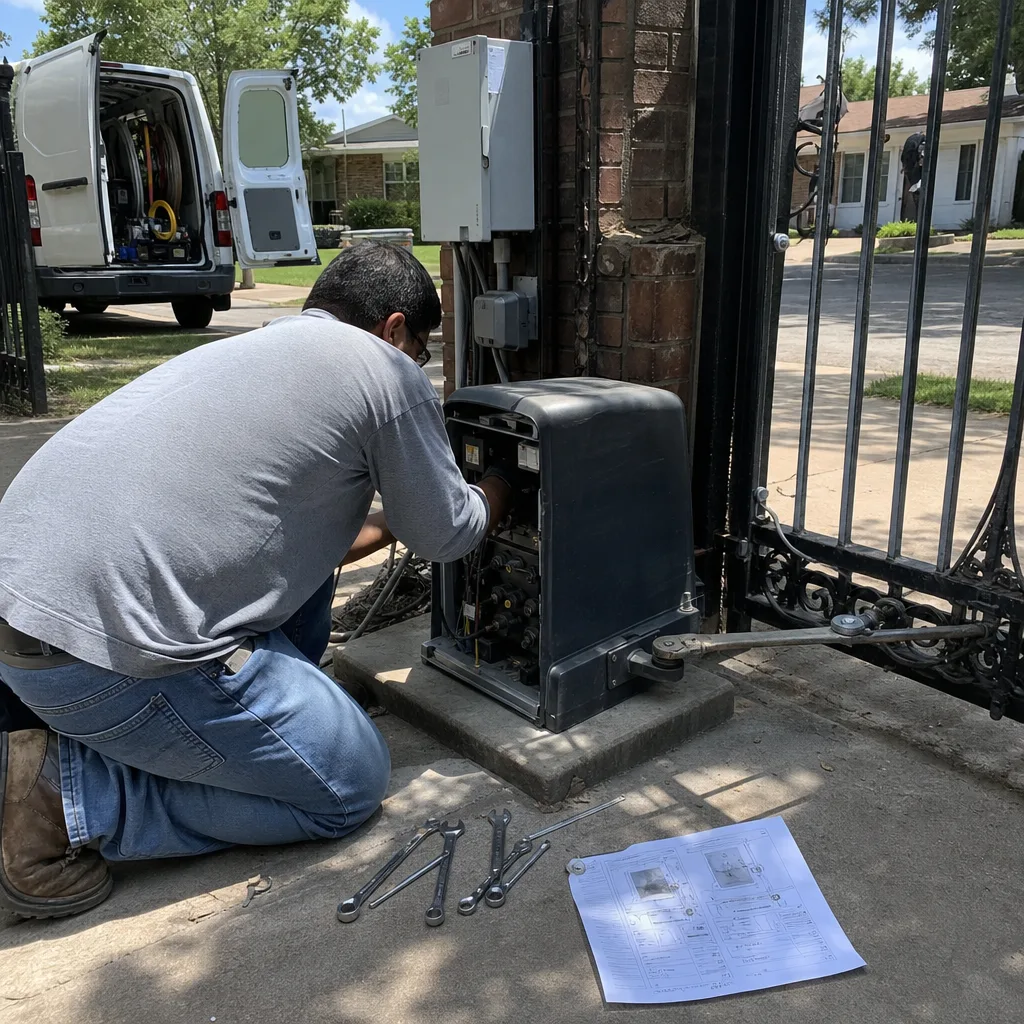
The DIY-versus-professional gate repair decision in Mesquite is not about how capable you are. It’s about which side of the liability line the repair sits on. Clean the photo-eye, replace the battery, lube the hinges: those are yours. Touch the force setting, replace the control board, weld the gate frame: those belong to a professional with the instruments to verify safety and the documentation to prove it. The most expensive gate repair is the one done twice: once by a homeowner who didn’t know where the line was, and once by a technician who did. Know the line, and you’ll make the right call every time.
Written by Adrian Vance, Owner at Vance Gate Repair Mesquite, serving Mesquite since 2014.