
Last updated September 20, 2026
Free on-site gate assessment - hinges, posts, and your LiftMaster or Nice gate operator checked before anything is quoted
The assessment is free and the quote is the invoice.
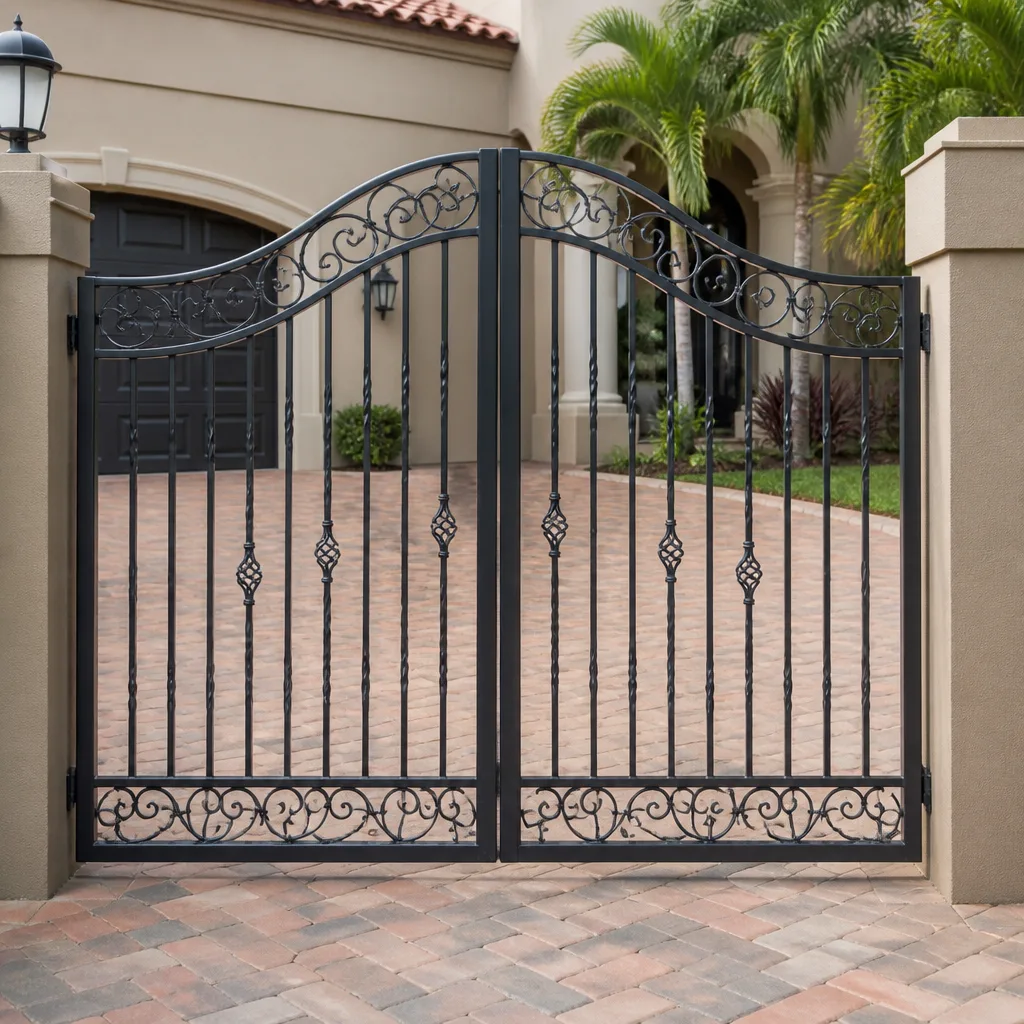


 Before
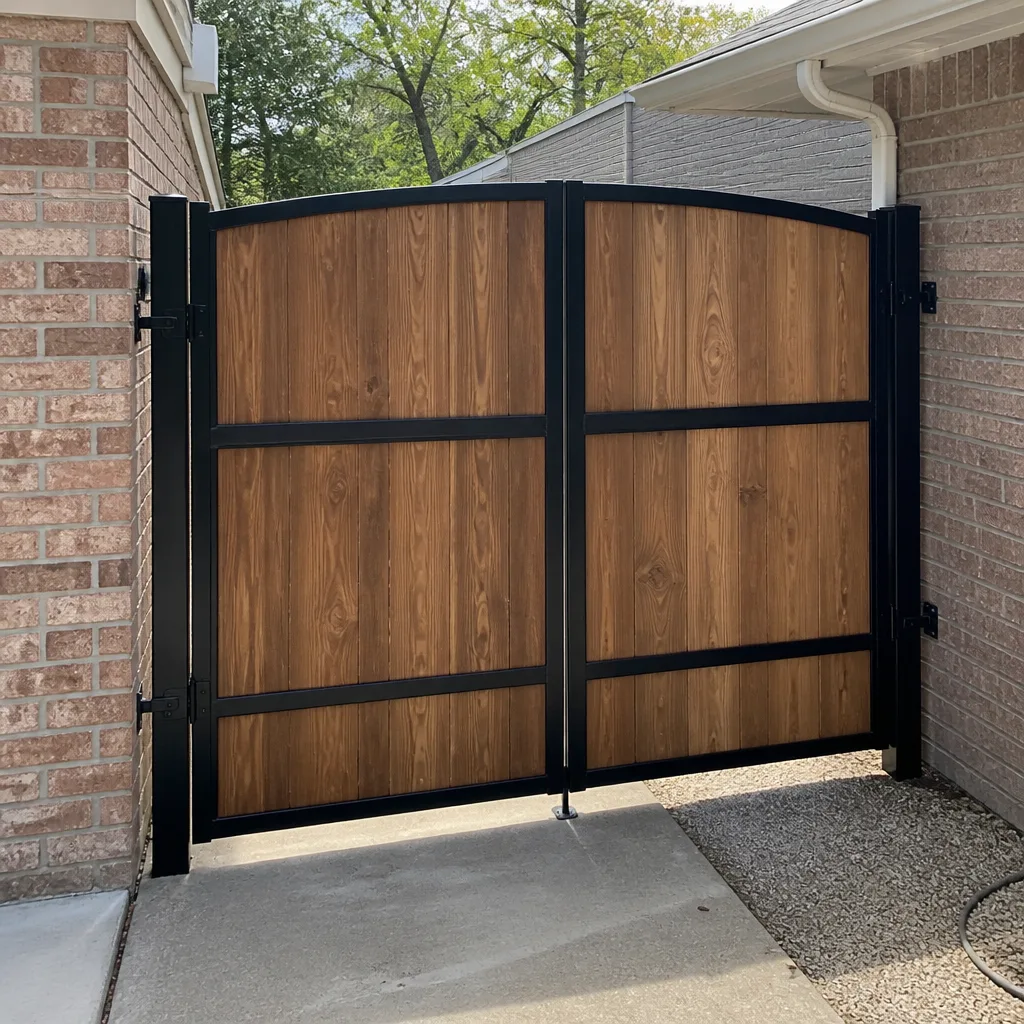 After
After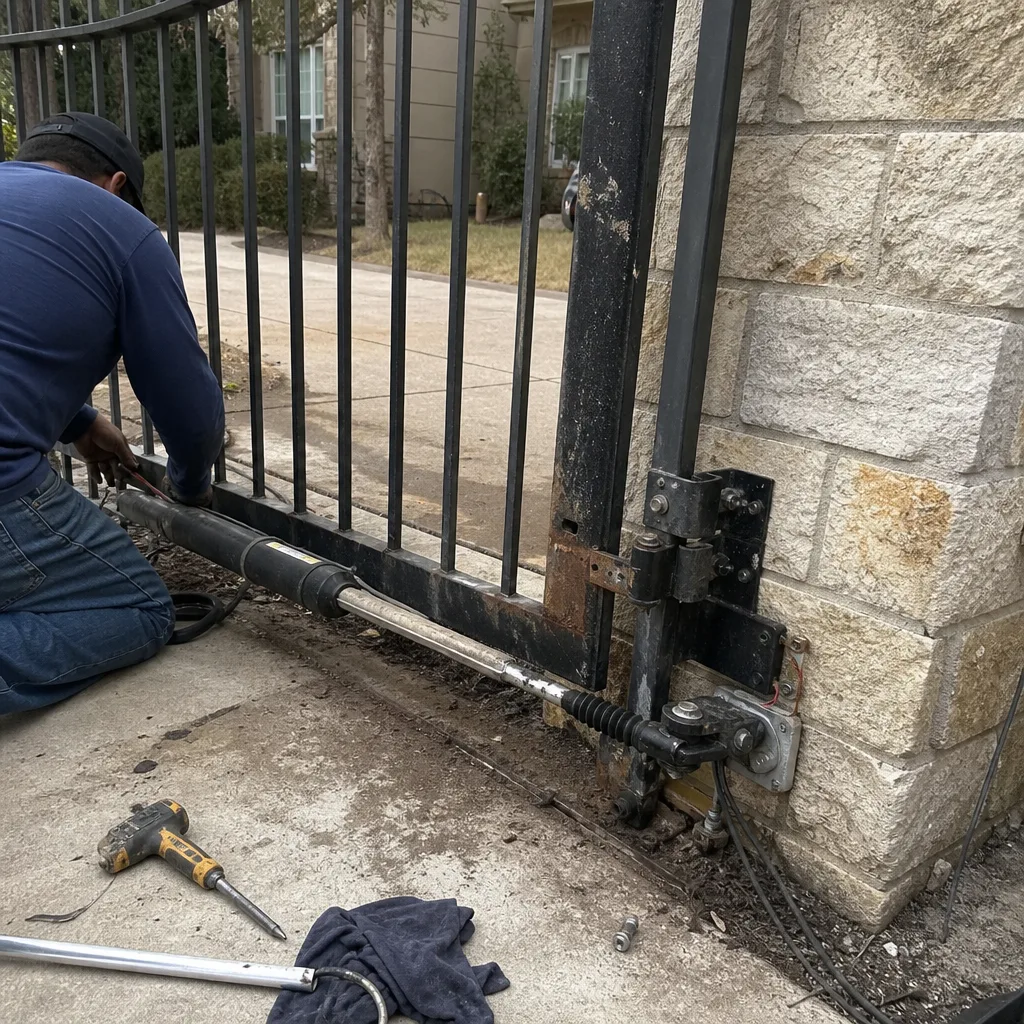 Before
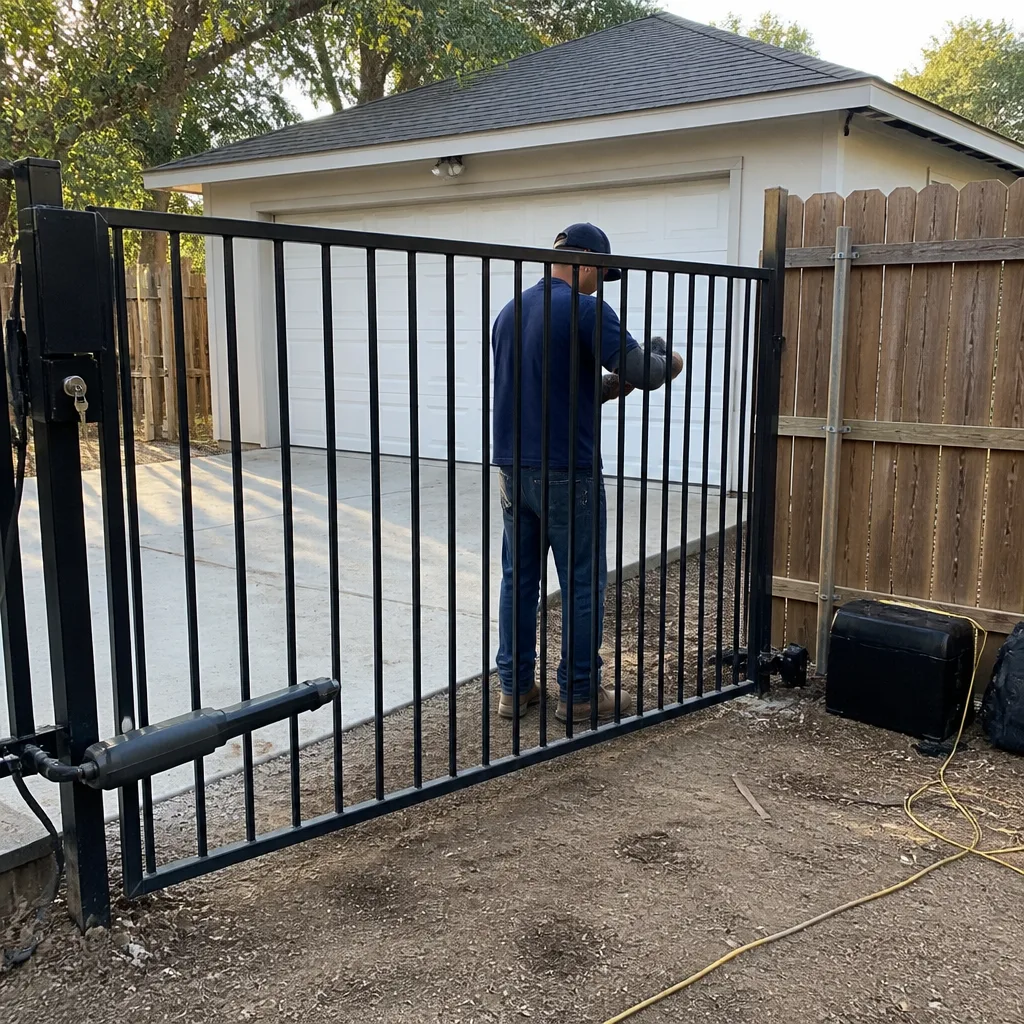 After
After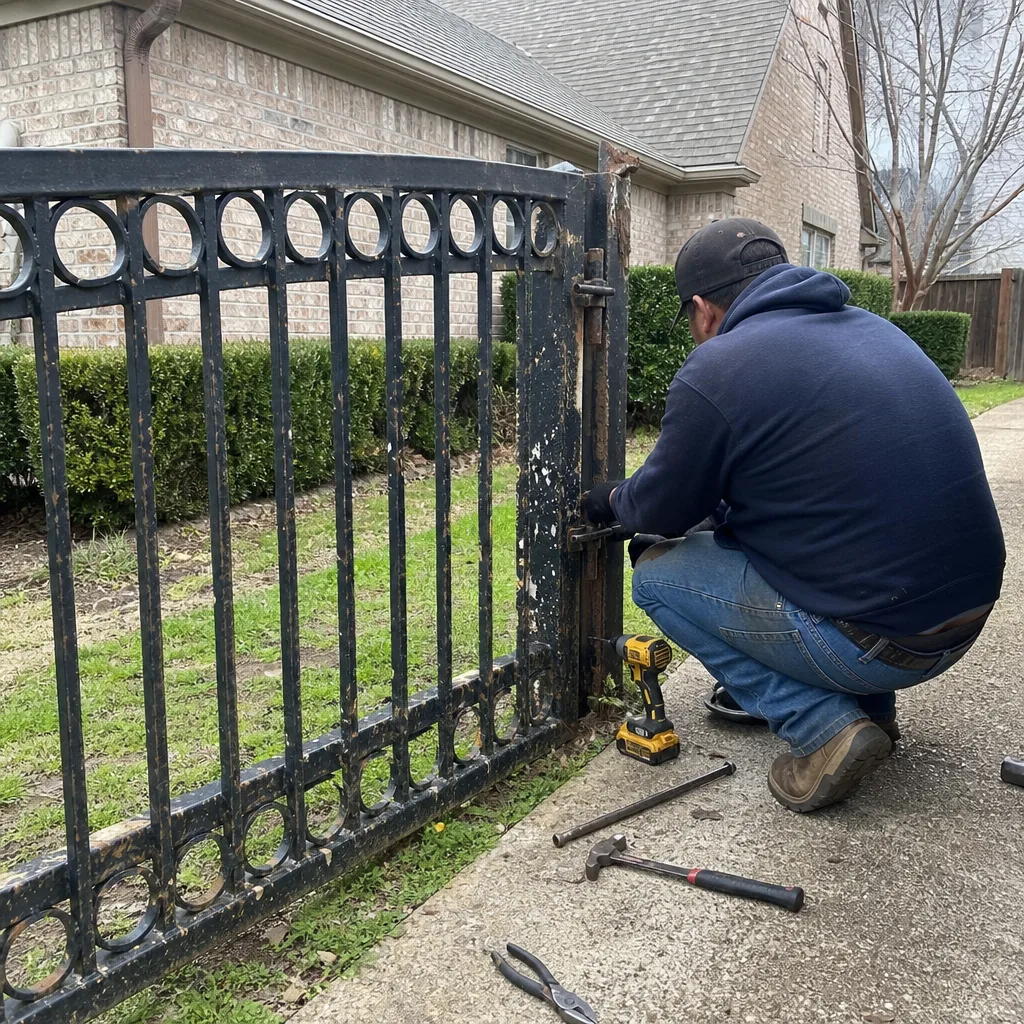 Before
 After
AfterThe Complete Guide to Gate Repair in Mesquite
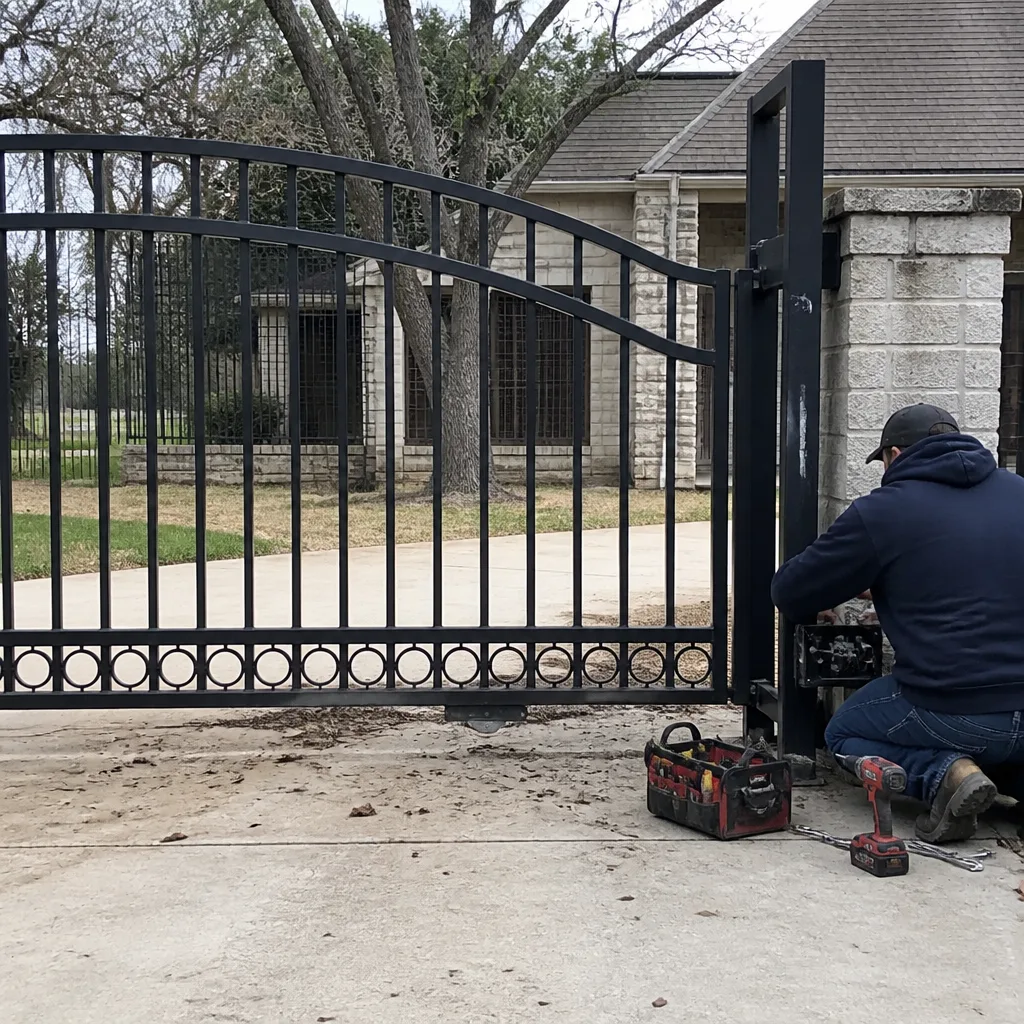
Most gate calls in Mesquite get misdiagnosed at the symptom level. A gate that “won’t open” gets a fresh battery when the actual fault is a corroded limit switch that will kill the next battery in three weeks. A gate that “grinds” gets a motor replacement quote when the real problem is a hinge post that has shifted half an inch in Mesquite’s clay soil. This guide walks you through every branch of the diagnostic tree so you know exactly where your problem sits before anyone rolls a truck to your driveway for gate repair. You’ll learn how to distinguish an operator failure from a structural failure, why our soil and climate create specific failure patterns, and what documentation you should demand after any repair.
Quick Answer
Gate repair in Mesquite costs between $145 and $2,800 depending on the root cause: sensor and limit-switch corrections run $145-$280, hinge and wheel work runs $225-$460, circuit board replacement runs $350-$875, and full motor replacement on a swing or slide gate runs $1,100-$2,800 installed. The single most important diagnostic distinction is whether the gate structure is failing or the gate operator is failing, because the two produce nearly identical symptoms but completely different repair paths. At Vance Gate Repair Mesquite, every repair starts with a written price before any work begins, and every visit ends with a photographed record of what was found, what was set, and what was installed.
Table of Contents
- The Two Root Causes That Share Identical Symptoms
- Why Mesquite’s Clay Soil Causes Hinge and Post Failures That Look Like Motor Problems
- Gate Types in Mesquite: Swing, Slide, and Barrier Arm Repair Categories
- The Repair Sequence an Honest Technician Follows
- What Documentation You Should Receive After Every Repair Visit
- Common Mistakes to Avoid
- When to Call a Professional
- Frequently Asked Questions
BeforeAfterThe Two Root Causes That Share Identical Symptoms
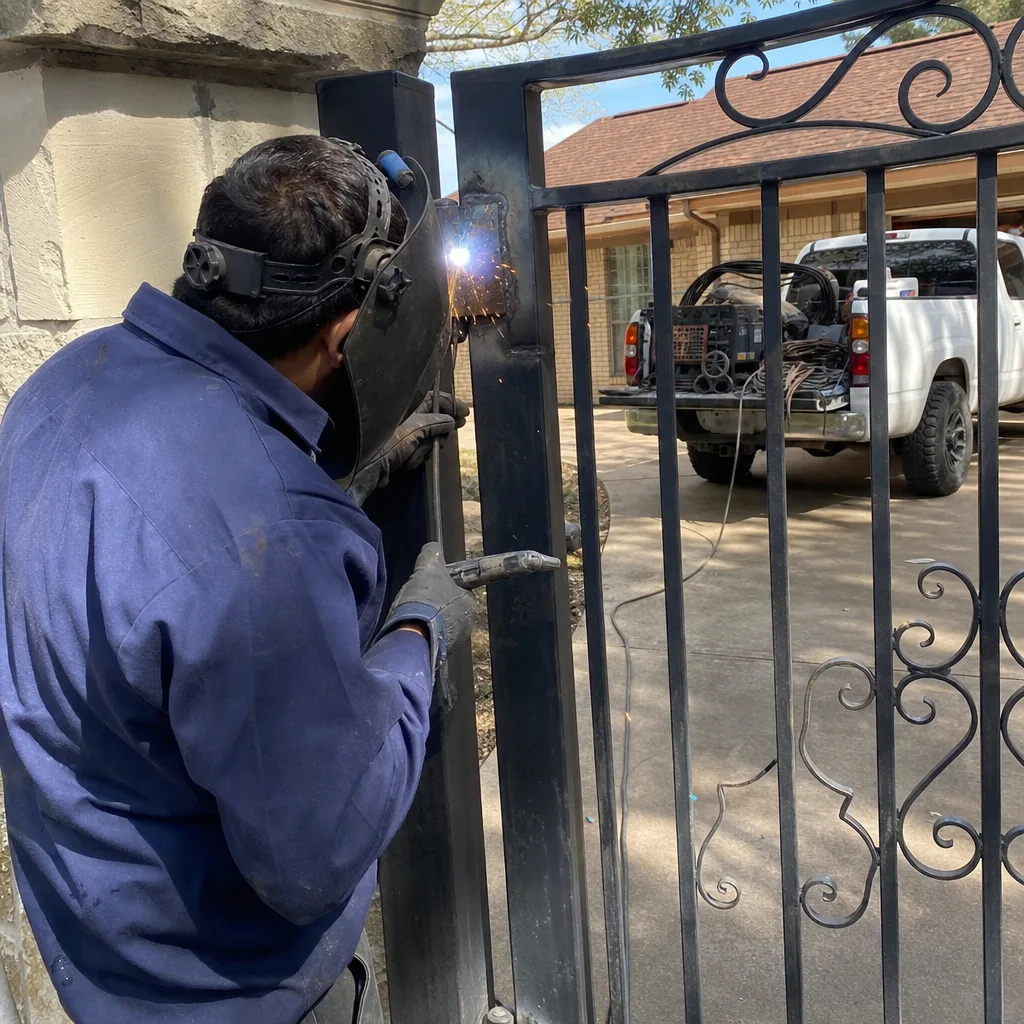
Every gate failure in Mesquite traces back to one of two root causes: the operator (motor, control board, limit switches, photo-eyes, receiver) or the structure (hinges, posts, wheels, track, gate frame). Here’s the problem: both root causes produce the same four symptoms. A gate will not open. A gate will open halfway and reverse. A gate will grind or squeal. A gate will drift closed after opening. The symptom tells you almost nothing. The test point tells you everything.
We’ve walked onto Mesquite properties where a homeowner had already paid another company to replace a motherboard, when the actual fault was a hinge bracket that had pulled loose from a post by a quarter inch. The gate cycled fine in manual. The motor wasn’t the problem. The bracket was.
Here’s how to separate the two before anyone touches a circuit board:
- Disengage the operator using the manual release loop on the motor housing. Most residential swing and slide gates have one; it’s often a red or yellow pull handle or knob.
- Push the gate by hand. A healthy gate on greased hinges or rolling smoothly on its track should move with one hand, no shoulder. If you find yourself leaning into it, the problem is structural or mechanical, not electronic.
- Listen while pushing. A creak at the hinge means a seized or dry bearing. A scrape underneath a slide gate means a wheel has flat-spotted or the track has shifted.
- Re-engage the operator. If the gate moves correctly with the motor engaged after a manual run, and then fails again on the next automatic cycle, you now know the fault is intermittent, not structural.
This ninety-second check has saved Mesquite homeowners thousands of dollars in unnecessary motor replacements. When you call a repair company, tell them what you found when you disengaged the operator. If they don’t ask about it, that’s information about their process.
Why Mesquite’s Clay Heavy Soil Causes Hinge and Post Failures That Look Like Motor Problems
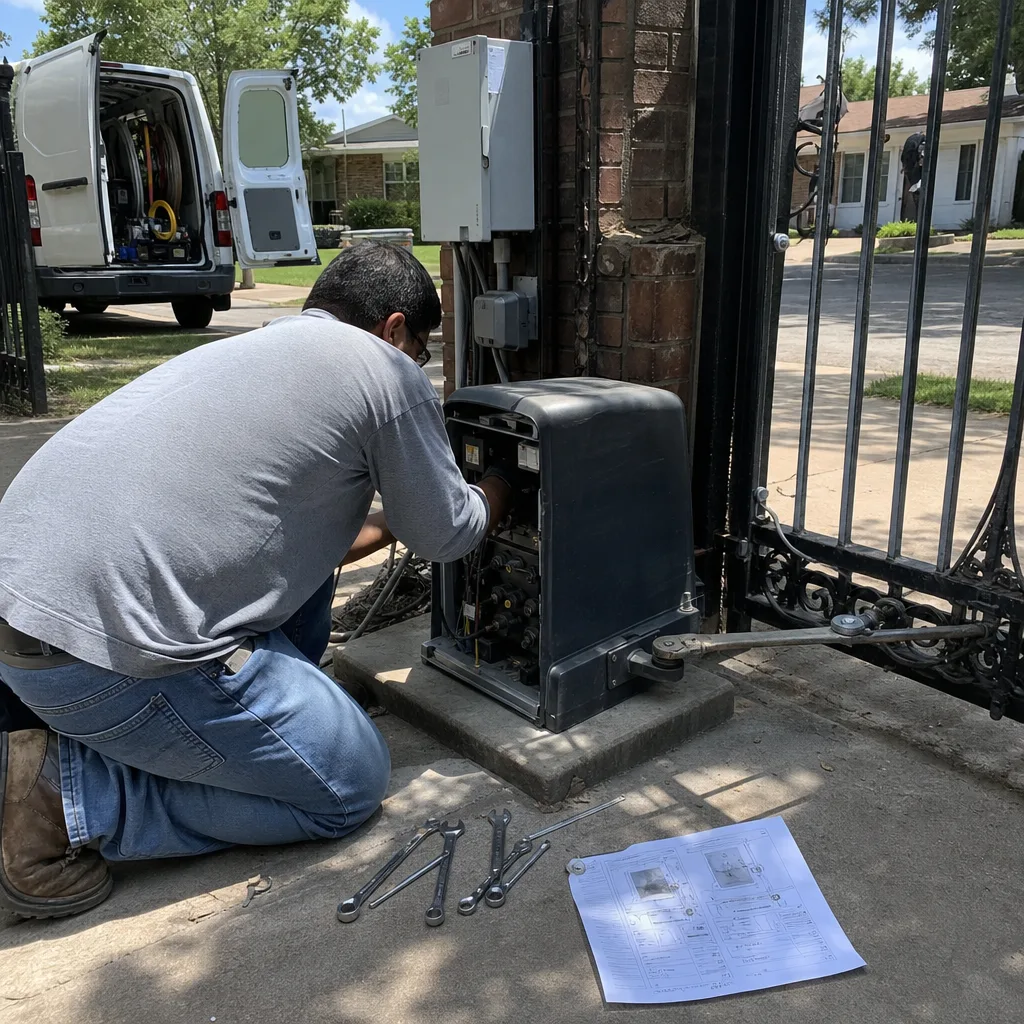
Mesquite sits on expansive clay soil, the Blackland clays and Trinity clays that swell dramatically when wet and shrink when dry. Drive around any Mesquite neighborhood after a drought summer and you’ll see the evidence: cracked residential slabs, pulled sidewalk joints, and driveway approaches that have heaved. The same forces work on gate posts year-round.
A steel post set in clay experiences two separate movements. During the rainy weeks of April and October, the clay absorbs water and swells upward, pushing the post with it. During the dry weeks of July and August, the clay contracts and the post settles. Cycles of swell and shrink don’t just shift the post vertically; they rotate it. A 3-inch steel post embedded in clay can rotate several degrees at the base over one full seasonal cycle. That rotation is invisible to the eye from inside the car, but it changes the geometry of the hinge line and the gate’s swing arc.
Here’s what that rotation does to a swing gate, specifically:
- The gate’s moving leaf no longer lines up with the catch or latch, so the operator strains for the last two inches of travel.
- The limit switch reads “not fully closed,” and the control board shuts the cycle down early or reverses the gate.
- The operator motor’s current draw climbs as it fights the misaligned hinge line. In our experience, a healthy residential swing operator should draw under 4 amps on a 12V system. A gate fighting a rotated post can draw 9 to 12 amps, which shortens motor life by a factor of three or more.
- After twelve to eighteen months of fighting, the motor triggers its thermal protection and the gate stops moving entirely. A tech arrives and declares “bad motor.” He’s looking at the symptom, not the cause.
Slide gates have their own soil-driven failure pattern. A slide gate depends on the track remaining perfectly straight and level. When the soil under the track bed shifts seasonally, the track bows or dips, and the gate begins to scrape. That scraping is often reported as a “grinding motor,” but it’s not the motor at all. It’s steel dragging across steel because the ground underneath moved.
When you call about a motor that “burns out,” a responsible technician should check the post’s plumb, the hinge line, and the track’s level before quoting any motor replacement. If your quote doesn’t include a level and a plumb line reading, ask how they ruled out the soil.
Gate Types in Mesquite: Swing, Slide, and Barrier Arm Repair Categories
Mesquite residential and light-commercial properties fall into three gate families, and each family has different failure points, part lifecycles, and repair costs. Here’s the map.
Swing Gates
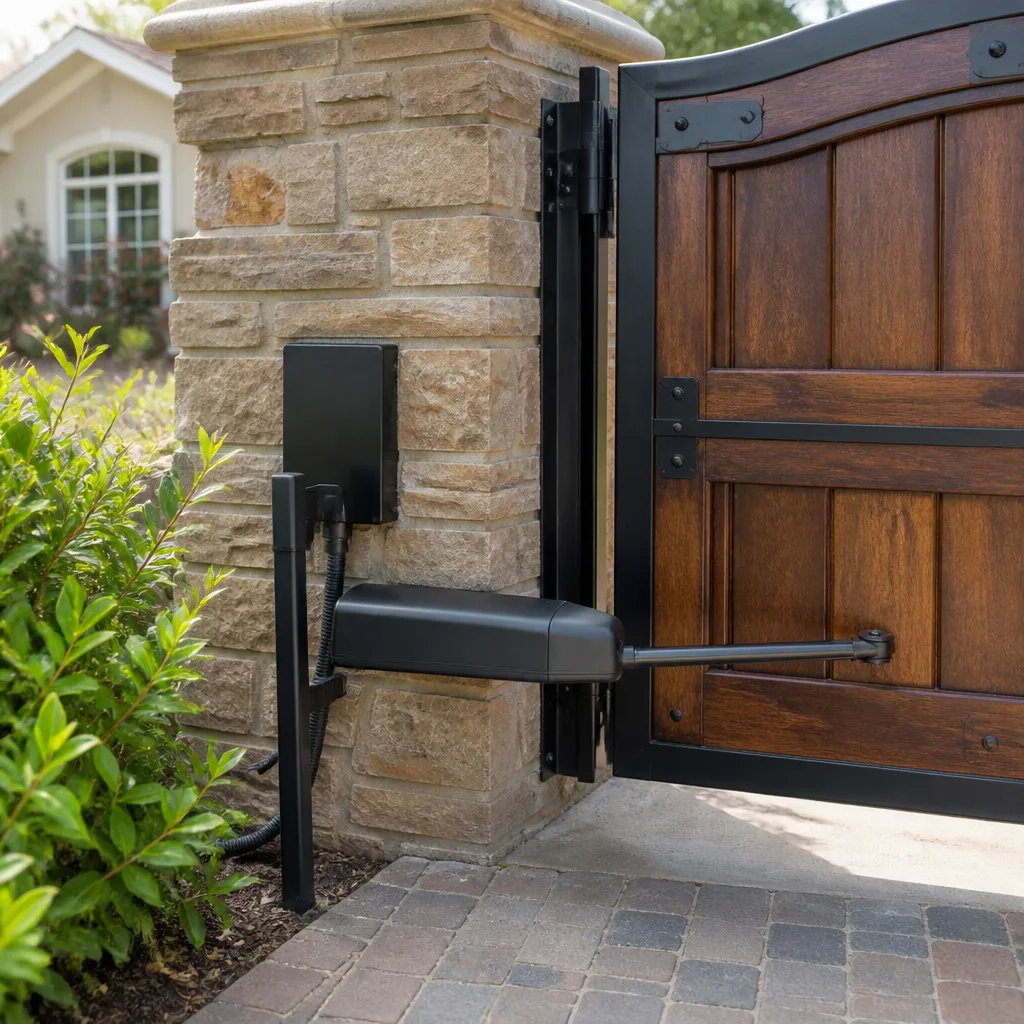
The most common residential gate type in Mesquite. A swing gate pivots on two hinges from a post or a column, driven by either a ram-style actuator or an articulated arm operator mounted on the post. The dominant failure points are hinge bearing wear, post rotation from clay swell, actuator or arm bracket failure, and limit switch drift. Typical part lifecycles:
- Hinge bearings: 5 to 8 years under normal Mesquite seasonal cycles
- Ram-style actuators: 6 to 10 years depending on daily cycle count
- Articulated arm operators (LiftMaster LA400, FAAC 400/402, BFT Deimos): 5 to 9 years
- Limit switches: 4 to 6 years or the first major soil-rotation event, whichever comes first
Slide Gates
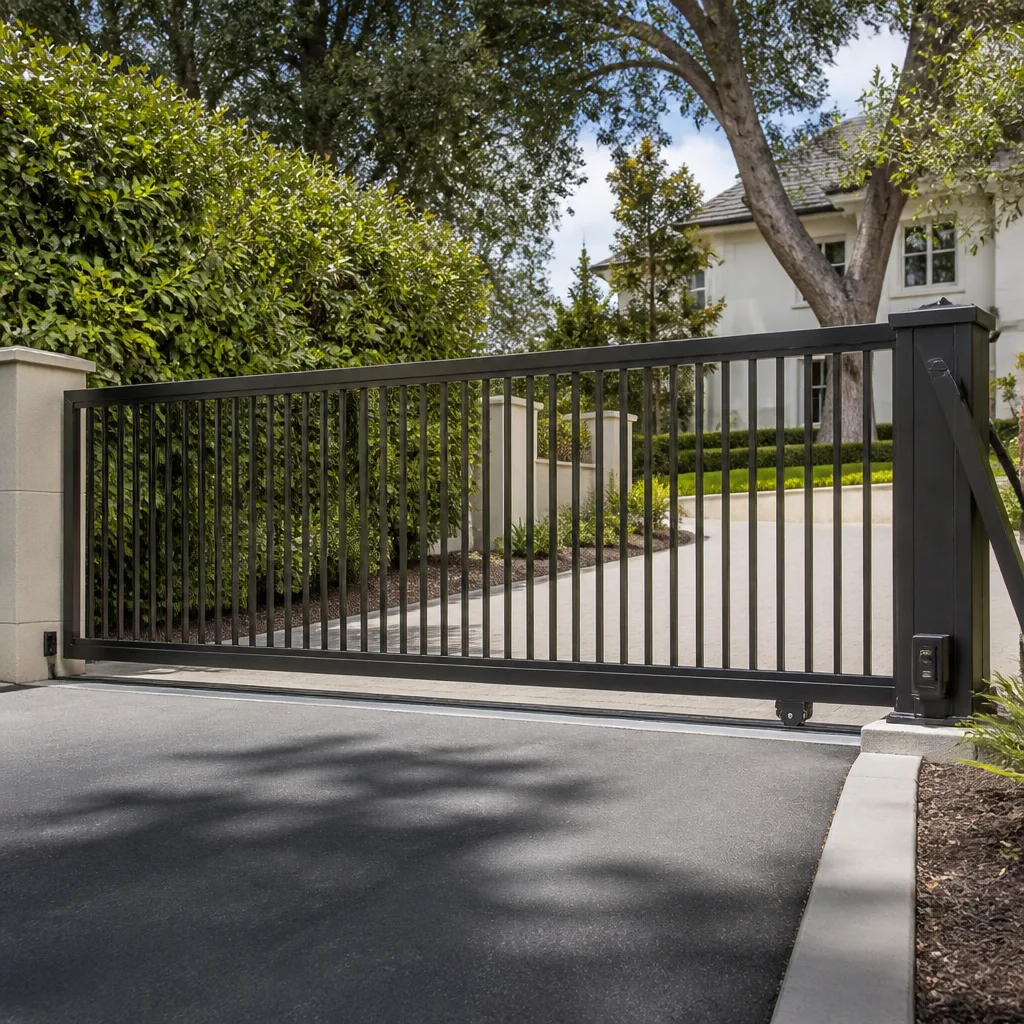
Common on wider driveways, commercial approaches, and longer properties where the setback won’t allow a swing arc. A slide gate travels on wheels along a steel track or rides on a cantilever system. Dominant failure points are wheel bearing seizure, track misalignment from soil movement, rack-and-pinion gear wear, and dirt packing in the track channel. Mesquite’s dry summers kick up fine dust that works into wheel bearings and track rails; we recommend clearing track debris monthly and greasing the wheel bearings at least twice a year.
Barrier Arm Gates
For driveway access control on smaller properties, townhome communities, and parking approaches. Barrier arm systems use an internal direct-drive motor and a counterbalanced arm. The dominant failures are spring balance failure, direct-drive gearbox wear, and photo-eye alignment drift.
One detail worth knowing: Mesquite homeowners with swing gates on a slope inherit the most complicated geometry. Sloped driveways require the gate to open uphill or downhill, and many factory-installed operators were never properly adjusted for that slope. An operator set on the same tension for a flat driveway will labor on a 6-degree grade. The symptom list is identical: halfway travel, reversal under load, thermal shutdown. If your gate sits on any grade, mention the slope when calling for a gate repair in Mesquite estimate.
The Repair Sequence an Honest Technician Follows
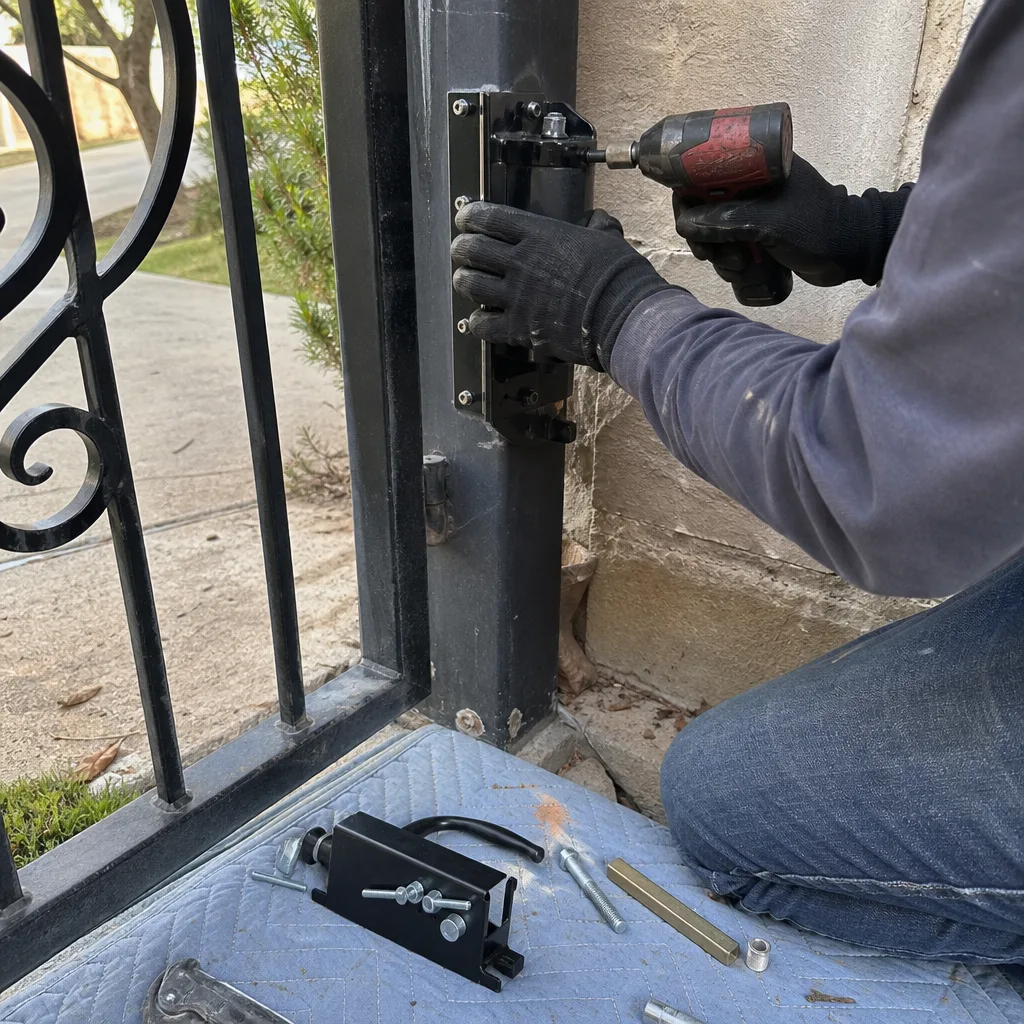
The difference between a thorough gate diagnostic and a guess comes down to sequence. An honest technician follows a traceable order: external, manual, electrical. Skipping steps is what produces invoices for parts that didn’t need replacing.
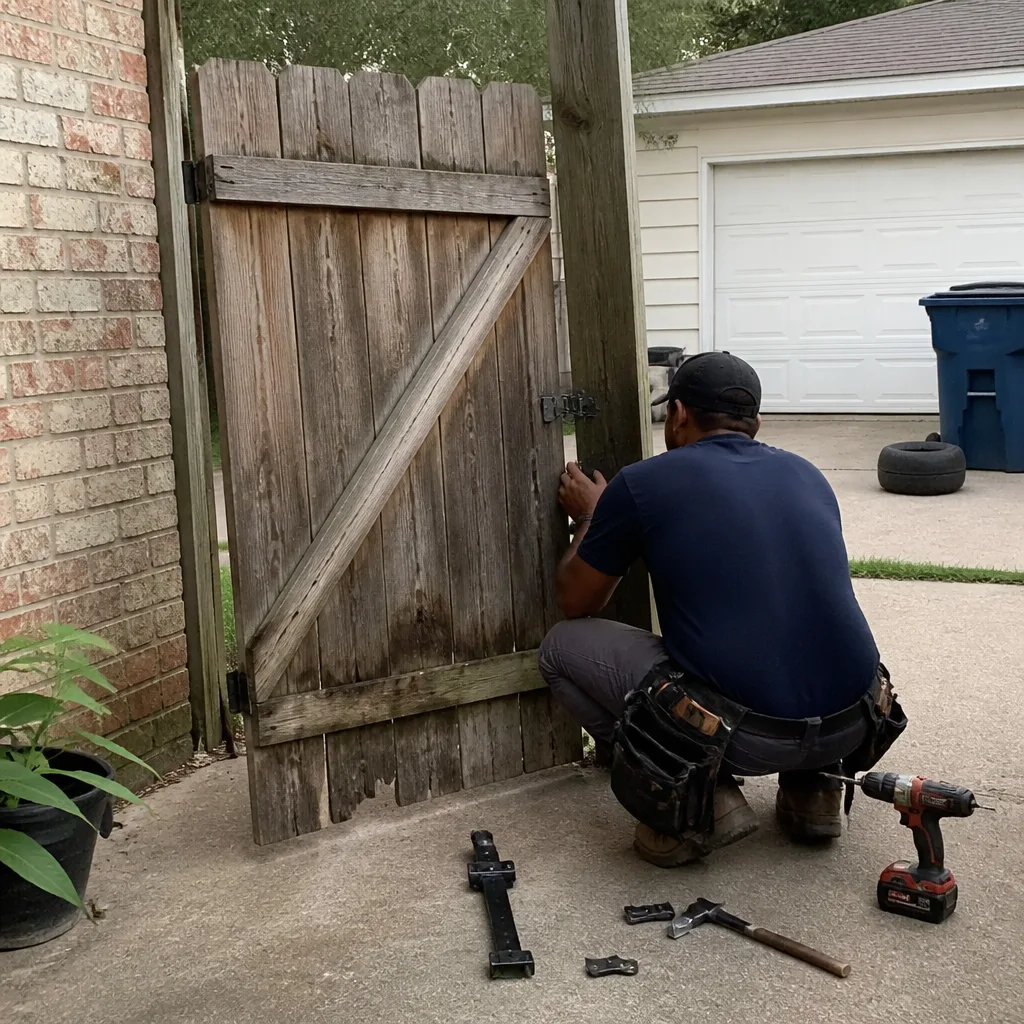
- Visual and physical inspection from the gate outward. Check hinges for wear and rust, check the post for plumb on both axes, check the track for level on a slide gate, and check brackets for looseness. Photograph every finding.
- Manual disengagement cycle. Disengage the operator, run the gate by hand, and measure the total hand-force needed to move the gate through its full travel. If the gate doesn’t move freely by hand, the first repair is mechanical, not electronic. Fixing structure before touching electronics is the cheapest correct sequence.
- Operator re-engagement and electrical test. Check incoming voltage at the control board, battery voltage on DC systems, and amperage draw during a full automatic cycle. Compare against the manufacturer’s spec for your specific motor brand.
- Limit switch verification. Confirm the gate travels to full open and full closed, and check the limit switch position relative to actual gate travel. This is where we commonly see a 12-degree over-travel setting on Mesquite gates, typically after a post has shifted and someone tried to compensate by adjusting the switch.
- Photo-eye alignment. The infrared beam that stops the gate if something crosses the path must be aligned to within a few degrees. Dust, fence movement, and post settle all knock photo-eyes out of alignment, especially on the north side of Mesquite properties where the wind comes strongest.
- Final cycle test and documentation. Run three full cycles, record the amperage, photograph the final settings, and hand you the record. If a step gets skipped, that’s the step that will be the reason for the callback.
Skipping looks like this on an invoice: the technician replaces the control board (Step 3 territory) without ever running the manual cycle (Step 2). Six weeks later, the same gate fails again because the hinge was the actual problem, and that “failed” new board is now paired with a hinge replacement you should have gotten first. If your invoice doesn’t reference a manual cycle test, you paid for a guess.
What Documentation You Should Receive After Every Repair Visit
Most Mesquite gate companies hand you a receipt and drive away. That receipt lists a part and a labor charge and leaves you guessing what was actually done. This is a cost risk, not just a record-keeping nicety. Without a written record of what was found and what was set, the next technician starts from zero and re-diagnoses everything you already paid to discover.
Here’s what a documented repair visit should include:
- A written listing of the found faults. Not “gate not working” but “right hinge bearing seized; limit switch set 12 degrees past travel; photo-eye misaligned by approximately two inches.” Specifics force accountability.
- The make, model, and part number of everything replaced. If a control board goes in, the paperwork should say which one. LiftMaster, FAAC, BFT, Linear: all of them have multiple board variants, and you need to know which one is now on your gate.
- Photo documentation. Before and after photos of the replaced part, the alignment, and the limit switch setting. A camera phone takes ten seconds and permanently answers the question of what a technician actually touched.
- Readings. Amperage draw on the motor after the repair, line voltage at the control board, battery voltage on DC operators. Numbers, not adjectives.
- The final adjustment values. Limit switch position, photo-eye alignment angle, close-force adjustment. If a repair is in-spec, the spec number should be on the page.
This is the documentation habit that defined Vance Gate Repair’s standard from the start: what was found, what was set, what was installed, in writing, with photos omitted from nothing. If your gate tech cannot or will not provide a written record after a repair, ask what exactly they don’t want you to be able to check.
Common Mistakes to Avoid
- Replacing the battery without checking the charging circuit. On DC swing and slide gate operators in Mesquite, a battery that drains repeatedly usually means a failed charging board or a short, not a weak battery. The new battery just hides the problem for another few weeks.
- Greasing a slide gate track. Grease attracts Mesquite’s fine dust and forms a grinding paste in the track channel. Use a dry silicone lubricant on wheels and a dry graphite on the track, or better, let a professional do it with the right product for our dust conditions.
- Adjusting the limit switch to fix a sagging or scraping gate. If the gate is scraping because a post rotated in clay, cranking the limit switch changes the symptom but not the cause. The motor still works just as hard; your open-close cycle just ends earlier.
- Ignoring the photo-eye fault light. Mesquite winds and soil movement knock photo-eyes out of alignment constantly. Many homeowners bypass a photo-eye signal by holding the remote button down, which defeats the safety function. If the gate reverses or refuses to close without the override, call someone who fixes the alignment instead of waiting for it to fail completely.
- Assuming a “burned out motor” quote is accurate. Before you approve that bill, ask specifically: what was the amperage draw, what does the spec say for this operator, and was the gate run manually to rule out structure? A technician who cannot answer those three questions has not diagnosed your gate.
- Accepting a verbal estimate. The single highest-risk moment in gate repair is the gap between “should be around” and the final invoice. Always ask for the written price before any work begins. If a company won’t put a number on paper, you’re gambling with someone else’s math.
- Paying for a full diagnostic and then declining the written record. The documentation is the only thing separating a diagnostic from a guess. Walk away from any repair visit that doesn’t end with a written fault list and photos.
When to Call a Professional
Some gate issues are weekend-jobs with a socket wrench: tightening a loose hinge bolt is ten minutes if you caught it early. But the line flips fast, especially on anything that involves high-tension springs, a motor you’re disengaging for the first time, or a slide gate that has started grinding. A slide gate weighs several hundred pounds. A swing gate that closes under power can do real damage to a person or a vehicle if the photo-eye has been bypassed. High-tension counterbalance springs on barrier arms and some swing gates carry enough stored energy to cause serious injury if released incorrectly – leave those to a trained technician, period. The same goes for any work involving the operator’s force adjustment: too much close force and your gate is now a crushing hazard. Most Mesquite home insurance policies won’t cover damage or injury from a gate that was serviced by a homeowner who altered a safety setting. Vance Gate Repair Mesquite offers free estimates in Mesquite, and under Haven Standard Clause 1, the price you get is the price on paper before anything is touched – call (469) 916-7097.
Frequently Asked Questions
Gate repair in Mesquite typically runs from $145 for a simple limit-switch or photo-eye correction to $2,800 for a complete swing-gate motor replacement with new brackets and wiring. Most mid-range repairs – control board replacement, hinge bearing replacement, or track realignment – land between $250 and $900. The exact number depends on what the diagnostic finds, which is why a written scope and price before any work starts protects you from the invoice that follows the guess. Call (469) 916-7097 for a written, no-cost estimate on your specific gate.
Yes. Mesquite gate repairs are dispatched same-day in most cases when the gate is inoperable or unsafe. A live person answers our phone 24 hours a day, seven days a week, and you’ll get the name of the technician assigned to your job before they arrive. Call (469) 916-7097 and tell us what the gate is doing, and we’ll have someone on the way.
We service nine major automation brands: LiftMaster, FAAC, BFT, Linear, Viking, Ghost Controls, DoorKing, Elite, and Mighty Mule. The right question when you call any repair company is not “which brands do you work on” but “which brands do you actually stock parts for and repair on a weekly basis.” On any gate motor or opener repair in Mesquite, we work with the motor already on your property rather than steering you toward a replacement. Replacement only comes up when the motor has failed beyond economical repair, and when it does, you’ll see the cost comparison in writing first.
A full gate installation in Mesquite is needed when the gate structure itself is compromised: severely rusted frames, posts that have shifted beyond adjustment, or a gate that no longer meets current safety codes. If the frame is sound and the posts are plumb, most problems are repairable at a fraction of replacement cost. The honest way to tell the difference is a manual-cycle test plus a level and plumb check on the posts and track. If a company quotes you a replacement without having done those two things, get a second opinion. We offer a free second opinion on any written estimate from another company – bring the paperwork and we’ll review it at no cost.
Clear the gate’s full travel path on both sides, remove any vehicles parked within ten feet of the gate’s swing or slide path, and if you have wired keypads or an intercom, make a note of which entries work and which don’t. Don’t try to force the gate open, don’t disassemble anything, and don’t grease the hardware with a spray can from the garage – adding the wrong lubricant can turn a simple repair into a cleaning job. Just write down what the gate is doing, when it started, and whether it behaves differently in wet weather. That’s the most useful information you can give a technician.
Mesquite summer temperatures push every component in a gate opener to its operating limit, and heat-related intermittent failures almost always trace back to one of three things: a thermal overload on the motor, a control board component that drifts when hot, or a battery on a DC operator that undervolts in direct sun. The diagnostic protocol matters here, because a thermal overload caused by a struggling motor fighting a misaligned hinge is repaired by fixing the hinge, not replacing the motor. If an intermittent gate gets worse in the afternoons and works again in the cool of the morning, tell your technician that. It narrows the diagnosis dramatically. Call (469) 916-7097 and describe the heat pattern, and we’ll tell you what we’d check first.
The Bottom Line
Gate repair in Mesquite starts with the right diagnosis and ends with a written record. For more guides & resources, visit our blog. The gate that won’t open has a root cause, and the root cause is either structural (hinges, posts, wheels, track) or operational (motor, board, switches, sensors). Mesquite’s clay soil and dust cycle play an underrated role in both. Before you approve any repair, ask for a manual-cycle test, a plumb and level check on the posts and track, the written price before work starts, and a photo record of everything that was touched. If a technician can’t produce those four things, call someone who can. You’re not paying for the part; you’re paying for the correct identification of the problem. That’s the whole job.
Written by Adrian Vance, Owner at Vance Gate Repair Mesquite, serving Mesquite since 2014.