
Free on-site gate assessment - hinges, posts, and your LiftMaster or Nice gate operator checked before anything is quoted
The assessment is free and the quote is the invoice.
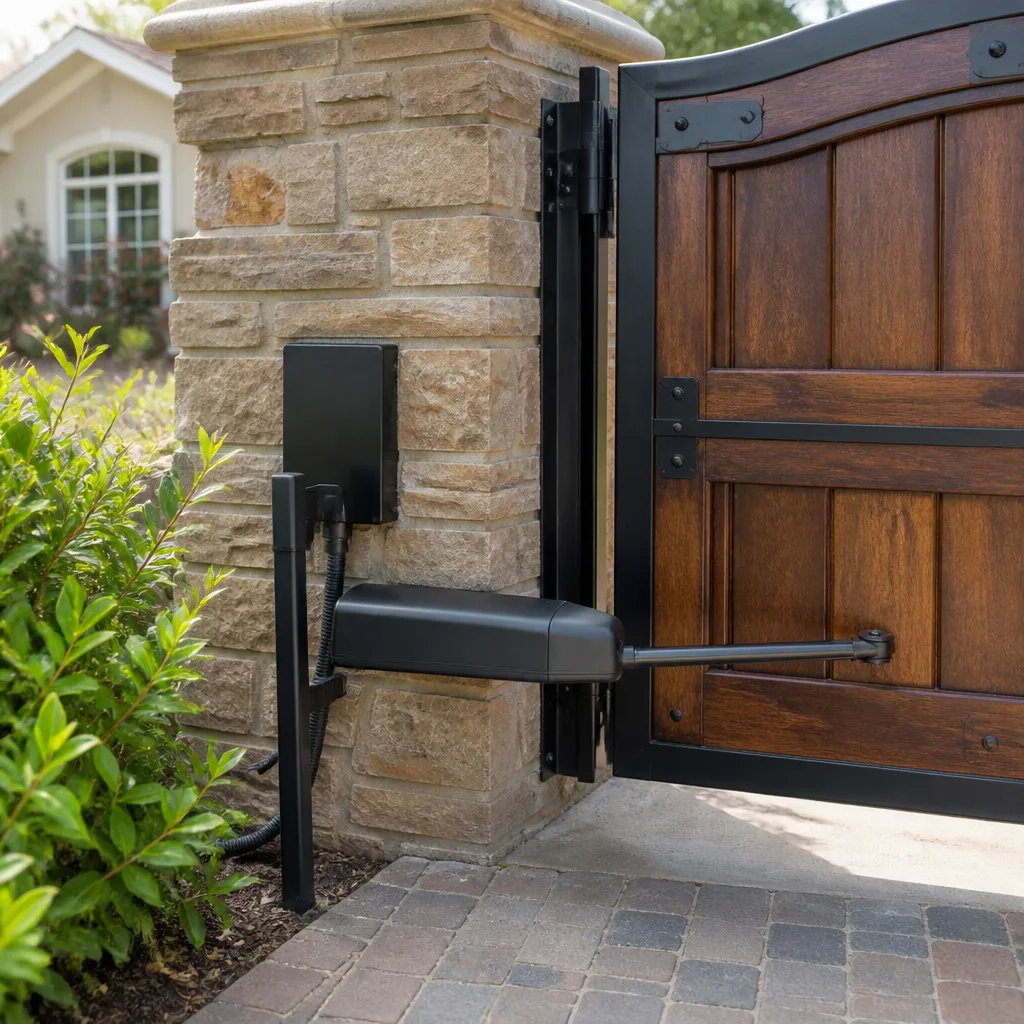
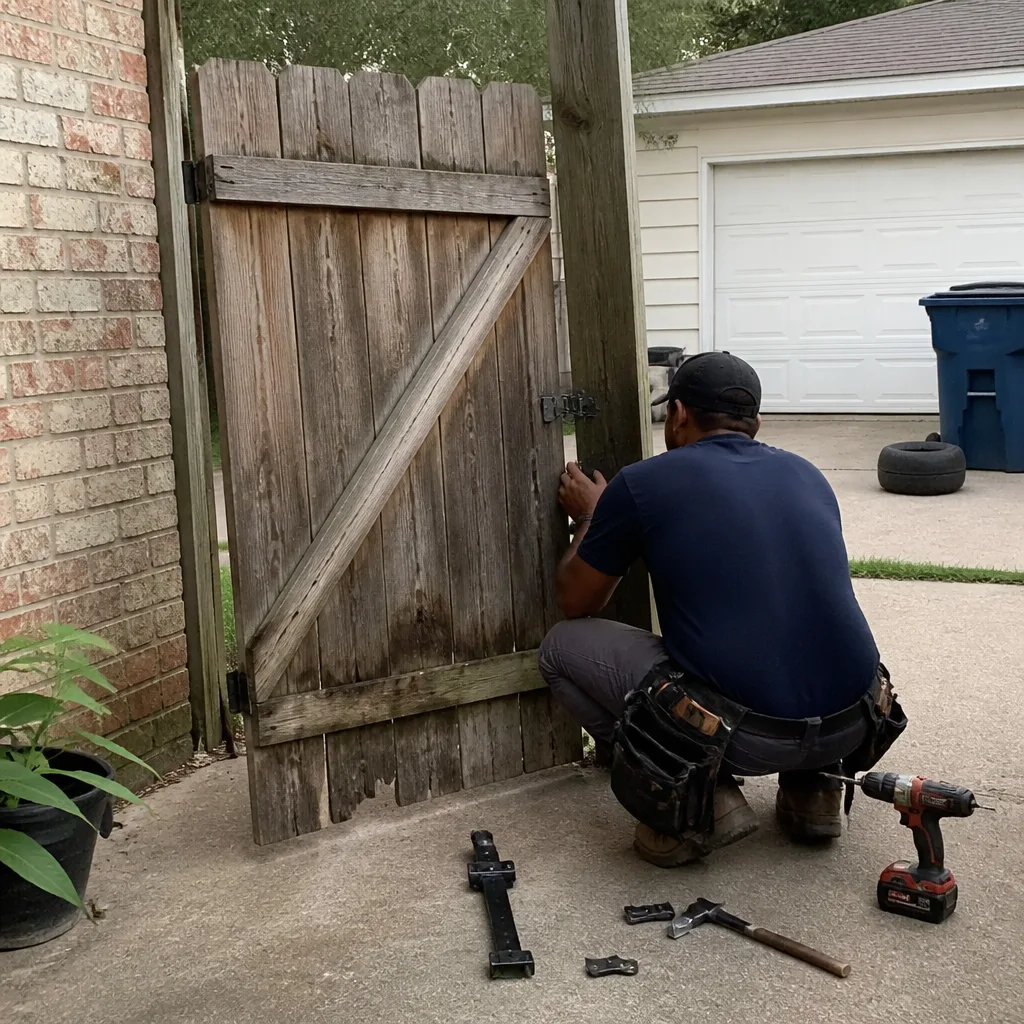 Before
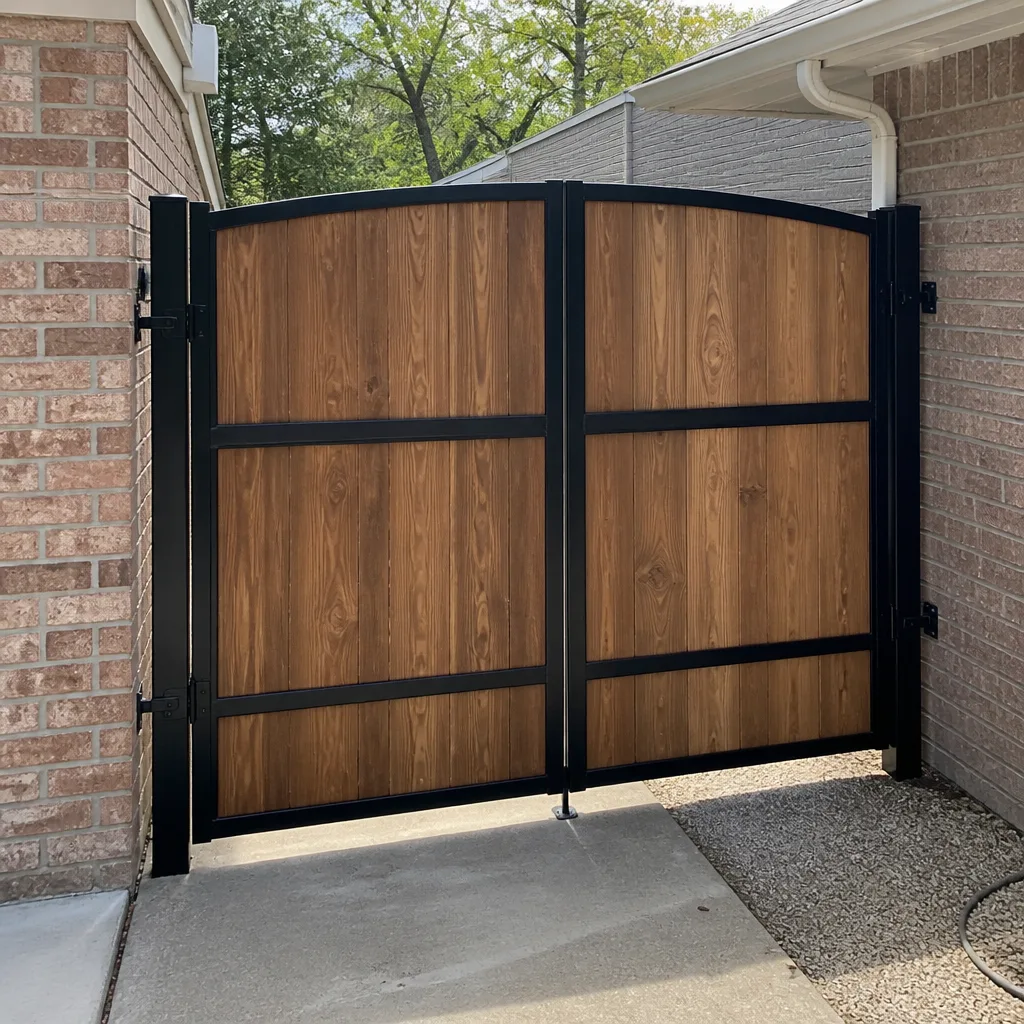 After
After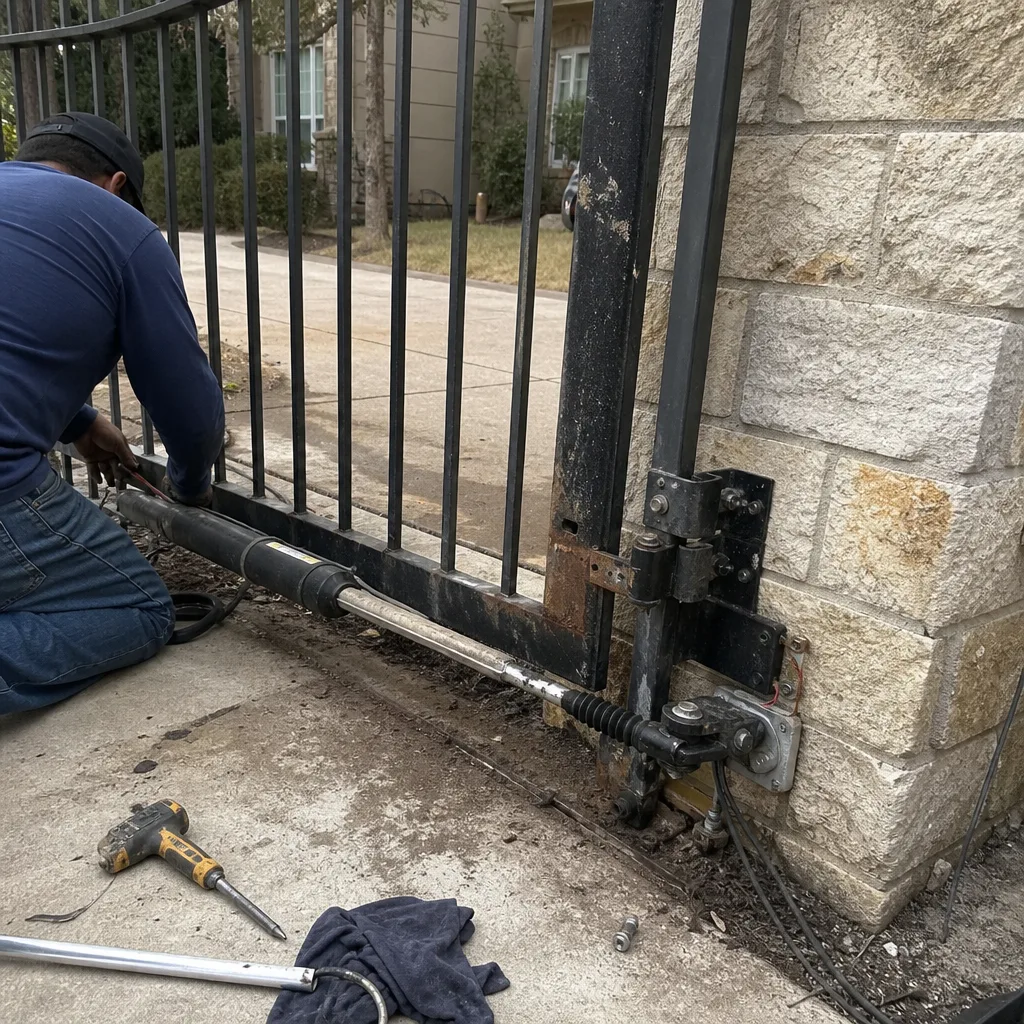 Before
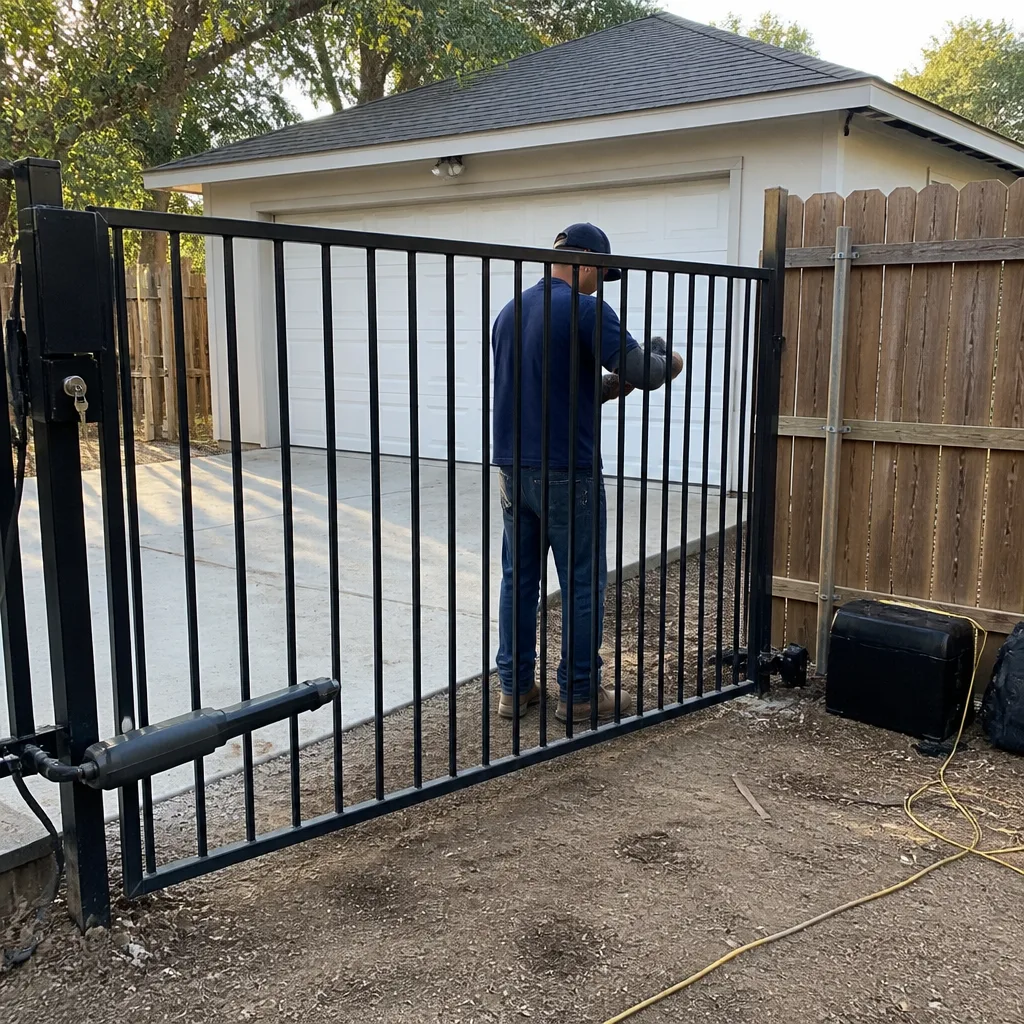 After
After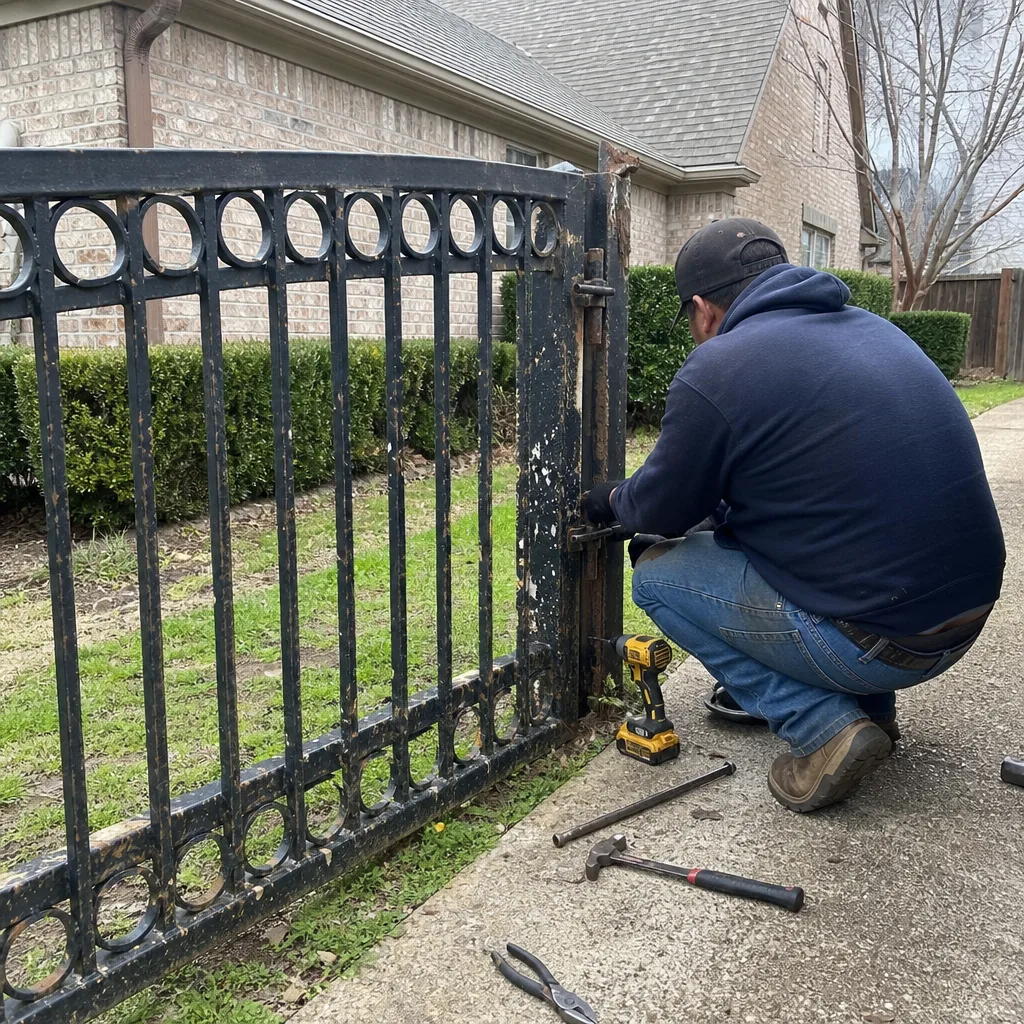 Before
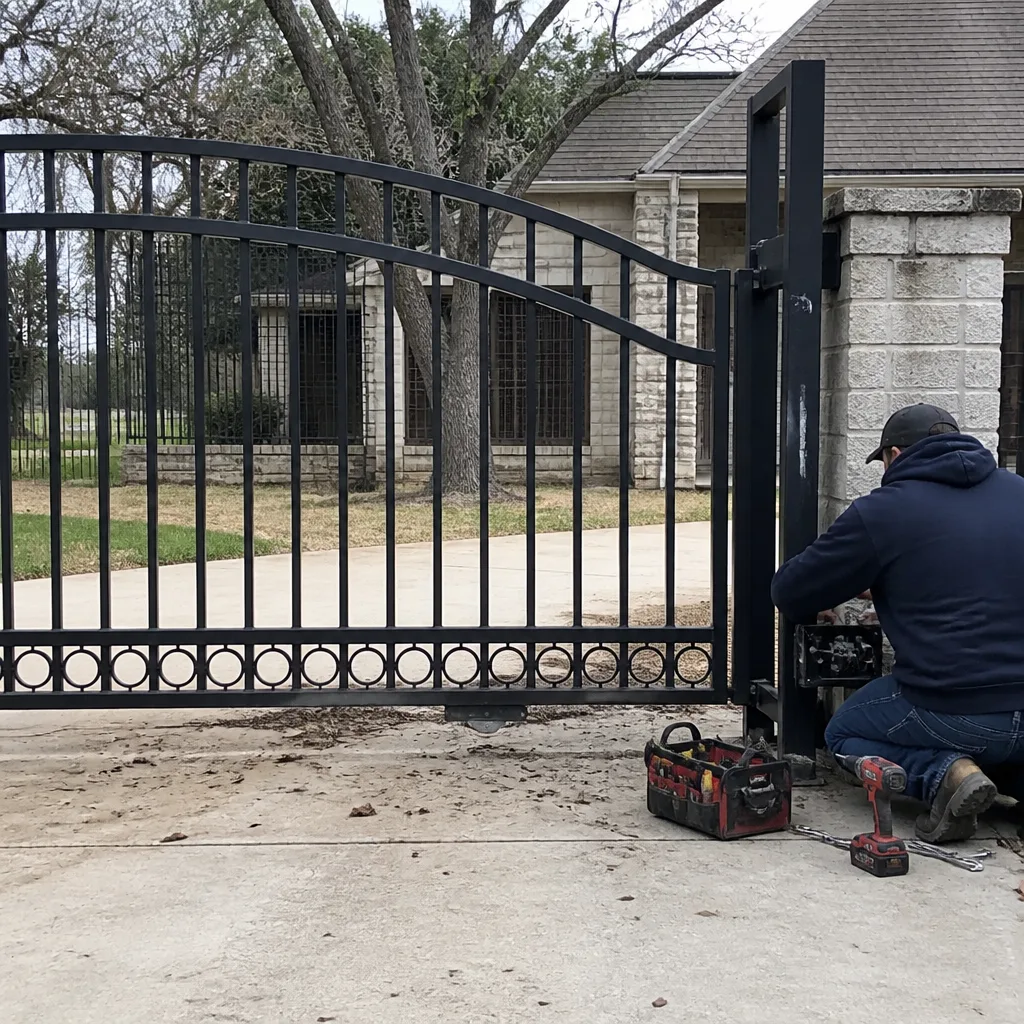 After
AfterLiftMaster Hinge & Roller Replacement: The Mesquite Owner’s Guide
We stock and install LiftMaster-compatible hinges and rollers for most residential and light-commercial gate systems in Mesquite, with typical replacement running $145-$285 installed depending on how many rollers have failed and whether the hinge brackets are still sound. Most Mesquite calls come in after the gate starts grinding, sagging, or binding halfway through its travel, and we can usually get a truck out same-day when it’s a safety issue. The part itself is rarely the whole story, which is why we write down what we find and what we install before we leave.
Hinges and rollers fail in two distinct ways. Rollers wear out: the nylon wheel flattens, the ball bearings inside seize, and suddenly the gate drags instead of rolls. Hinges fail more slowly, usually through rust or metal fatigue where the leaf meets the post, and once that joint loosens, the gate leans and every other component compensates for the sag. LiftMaster gates carry real weight, and a compromised hinge transfers that load somewhere it doesn’t belong, which is how a simple roller swap becomes a bent track or a burned-out opener motor.
Which LiftMaster Models This Applies To
LiftMaster’s residential gate lineup shares common hardware across several series, and we routinely match hinges and rollers to the LA400, LA412, LA500, and RSL12V models, along with their newer equivalents using the same rail and post mounting patterns. The easiest way to confirm what you have is to check the silver model plate on the opener arm or control box, then measure the roller stem diameter - LiftMaster uses both 7/16″ and 1/2″ stems depending on the series and the gate weight, and guessing wrong means the roller wobbles in the bracket or won’t seat at all. We carry both sizes on the truck in Mesquite, so the measurement happens once, at your gate, not twice in a warehouse.
For OEM versus aftermarket, the honest answer depends on what failed. Original LiftMaster rollers use a sealed nylon wheel over a steel bearing, and they hold up well until the seal lets North Texas dirt in. Quality aftermarket equivalents - we stock hardware from suppliers who build to the same stem and wheel dimensions - often cost 30-40% less and perform identically for residential use. Where we steer clients to genuine LiftMaster is the hinge bracket itself, because that’s a structural piece where a casting flaw or a soft steel leaf turns into a gate that sags again in eighteen months. We’ll show you both options, quote both prices in writing, and let you decide before any work starts.
Signs Your LiftMaster Hinge & Roller Replacement Is Failing
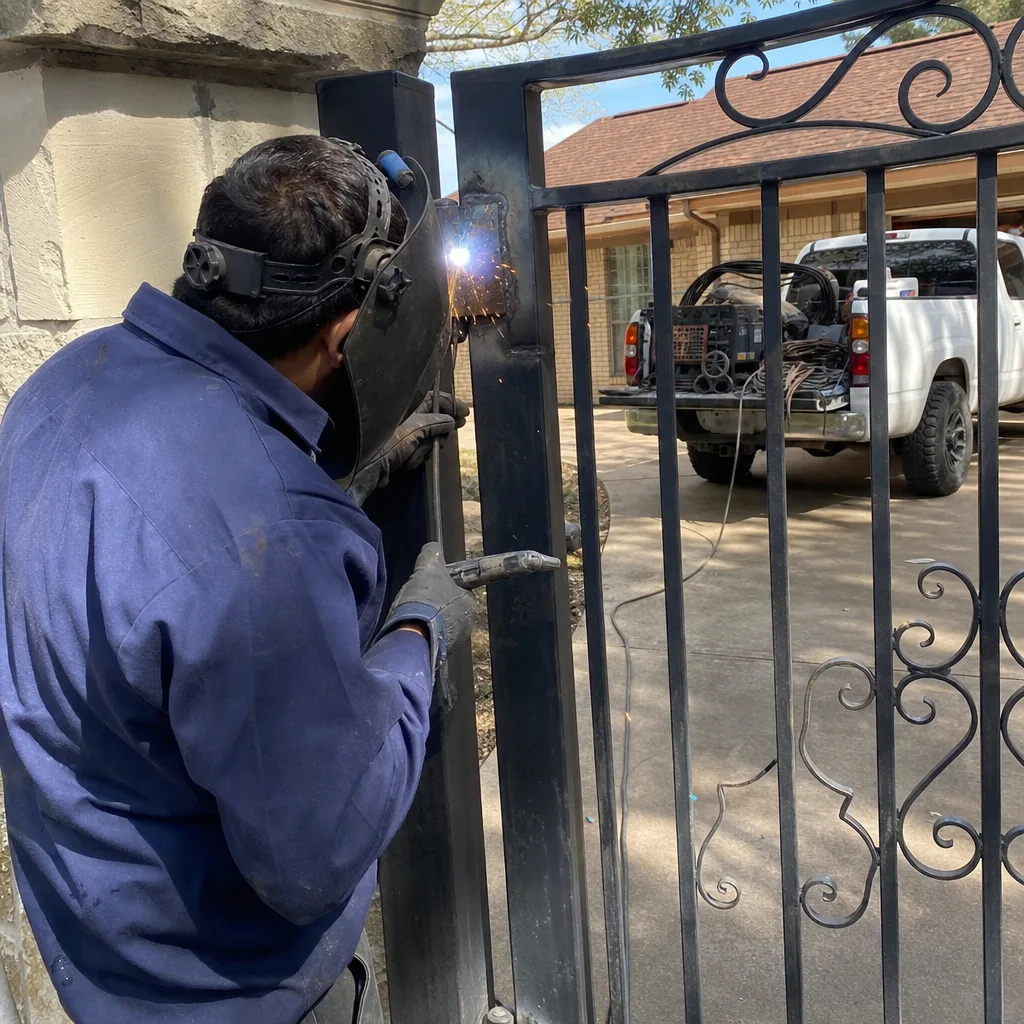
- The gate scrapes or grinds mid-travel. A flattened roller wheel rides on its steel hub, and that’s metal-on-metal contact against the rail. You’ll hear it before you see it, and every cycle shaves material off the track.
- The gate leans toward the latch side. When a hinge leaf stretches or the mounting bolts wallow out, the gate drops at the free end. The opener then works harder on every cycle, and the limit switches read a gate position that’s no longer true.
- Visible rust staining at the hinge pins. In Mesquite’s humidity swings and occasional ice, untreated hinge steel rusts from the pin outward. A seized pin transfers the pivot force into the post and the gate frame instead of letting them move independently.
- The gate shudders or jerks during opening. Rollers with flat spots or collapsed bearings don’t roll; they stutter. Each catch sends a jolt through the chain or belt and back into the LiftMaster gearbox, which shortens the opener’s life unnecessarily.
- The gate stops partway and reverses for no obvious reason. When a hinge binds, the opener’s obstruction sensing reads the added resistance as an obstacle. The opener isn’t broken; it’s protecting a gate that can no longer move freely.
BeforeAfterReplacement Cost & What’s Included
In Mesquite, expect to pay $145-$285 for a typical LiftMaster hinge and roller replacement, with most residential jobs landing around $185-$220 for two hinges and four rollers. The spread exists because gate weight, hinge bracket condition, and how many parts actually need replacing vary from property to property. We hand you a written flat price before the first tool comes off the truck, and that price is the price - no surprise line item for “additional labor” at the end.
Every replacement includes the parts, installation, removal of the old hardware, and a photographed record of exactly what was installed and where. Under our 365-Day Done Right Promise, if anything we installed fails within a year, we make it right at no charge. The job typically takes under an hour, and we leave the gate running quieter than it has in months. If you’ve got a written quote from another gate company, bring it - we’ll review it with you at no cost and match the scope line by line.
DIY or Call Us?
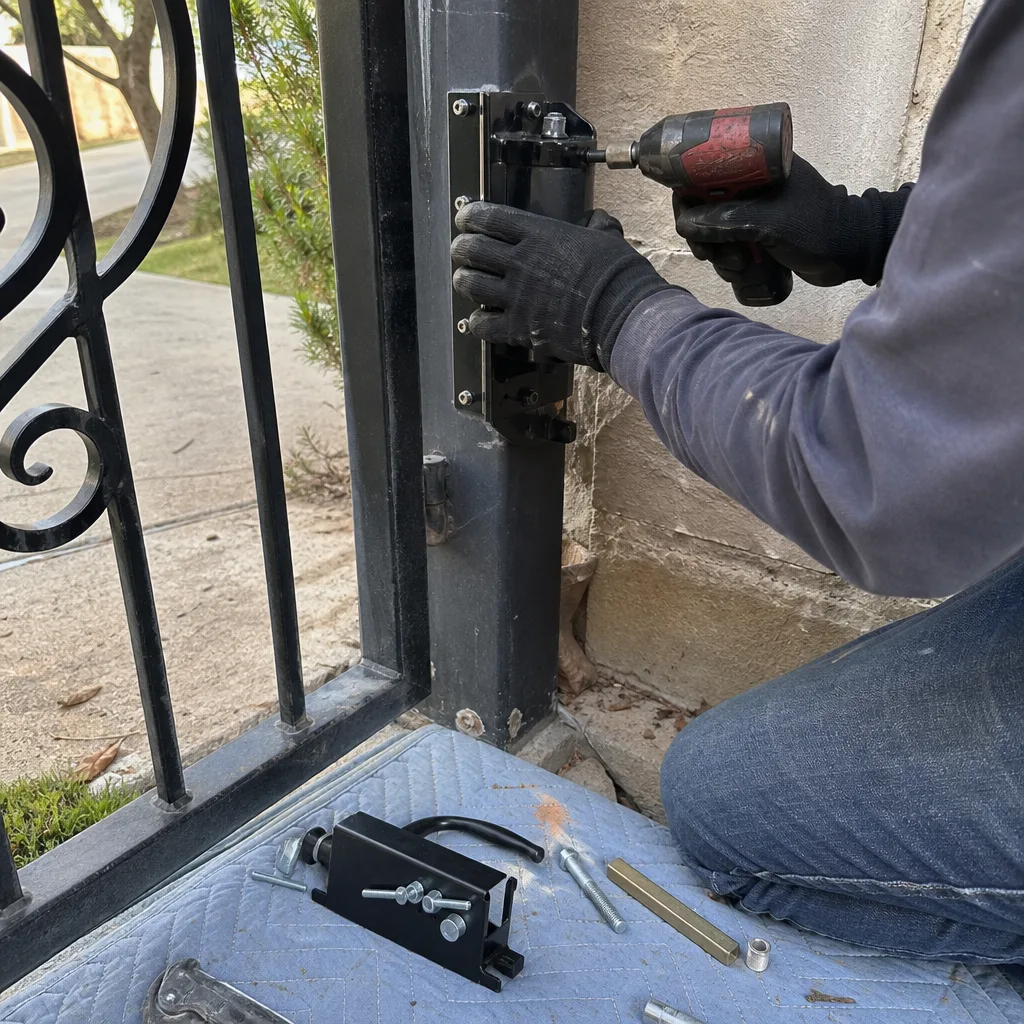
There’s a portion of this job a handy owner can do safely, and there’s a portion where we’ve seen the aftermath of good intentions. Checking roller play, confirming the model number, and listening for grinding are all reasonable homeowner tasks. Replacing the rollers themselves is also doable if the gate is properly supported and the hinge bolts are accessible. Where DIY goes wrong is when the gate is heavy enough that lifting it off the hinge pins turns into a two-person job done by one person with a floor jack, or when a rusted bolt snaps off in the post and the “quick swap” becomes drilling and tapping fresh threads. Mesquite gates see real sun and real rust, and seized hardware doesn’t care how determined you are.
If the gate is binding, sagging, or shuddering, call us at (469) 916-7097 and we’ll schedule a time that works. We’ll quote you a written price before work starts, show you the old parts, and photograph what goes in. That way, if anything ever moves again, you’re not starting from memory.
FAQs
Most LiftMaster rollers last 5-8 years in North Texas before the seals break down and dirt kills the bearings; hinges typically last 10-15 years unless the gate takes impact or the original install left the bolts under-torqued. Mesquite’s heat and occasional ice accelerate rust on exposed hardware, so gates with full sun exposure tend to need hardware attention sooner than shaded ones. Call us at (469) 916-7097 for a wear check - estimates are free.
Usually no, because a stretched hinge leaf or ovaled bolt hole can’t be safely restored to original strength without welding and re-drilling, which costs more than a new bracket. The exception is a hinge that’s only surface-rusted with a sound pin, which sometimes just needs cleaning and re-lubrication. We’ll show you the wear before you decide, and our written price covers exactly what we recommend.
A standard LiftMaster hinge and roller replacement takes 45-90 minutes on site, including setup, removal of the old hardware, installation, lubrication, and a full cycle test. If we find additional damage to the track or brackets, we’ll quote that separately before proceeding. Call (469) 916-7097 to schedule - a live person answers.
Yes, we keep LiftMaster-compatible rollers in both common stem sizes, along with hinge brackets for the LA400, LA412, and LA500 series, stocked on our Mesquite service vehicles. We also carry parts for Mighty Mule, Ghost Controls, and DoorKing systems, so mixed-brand properties don’t need two different companies. If your exact hinge variation isn’t on the truck, we can typically have it installed within one to two business days.
If your LiftMaster gate is grinding, sagging, or fighting itself every time it opens, call us at (469) 916-7097 for a free estimate. We’ll name what we found, name what it costs, and name what we left behind - in writing, before you pay a dollar.
Written by Adrian Vance, Owner, Vance Gate Repair Mesquite at Vance Gate Repair Mesquite, serving Mesquite and nearby areas.